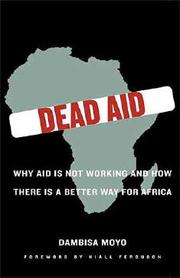
Dead Aid
Polemical, but the case for bond-market financing over aid is argued in investor terms.
Summary
Moyo, a Zambian economist who had worked at Goldman Sachs and the World Bank, argued that development aid to Africa has done more harm than good and should be phased out.
Her argument distinguishes systematic government-to-government and concessional multilateral aid, which she attacks, from humanitarian relief and from charitable giving to specific projects, which she does not.
The mechanisms she identifies are political and economic. Aid revenue funds governments without requiring them to tax citizens, which removes the accountability that taxation creates and makes governments answerable to donors rather than to their populations. Aid creates a large resource available for capture, which raises the returns to holding office and to corruption. Aid inflows can appreciate the currency, which damages exporting sectors, a mechanism analogous to resource curse effects. Aid supports governments that would otherwise fall, which entrenches poor governance. Aid displaces private enterprise where it supplies goods that domestic producers would otherwise sell, and she uses the mosquito net example, where donated nets destroy local manufacturers.
Her alternatives are market-based: sovereign bond issuance, which imposes market discipline and requires governments to satisfy investors who will not lend again if they default; foreign direct investment including Chinese investment, which she treats more favourably than Western commentators; trade access, particularly removal of agricultural protection in rich countries; remittances; and microfinance.
The book was widely read and heavily criticised. Development economists including Jeffrey Sachs disputed both the empirical claims and the proposed alternatives, arguing that aid effectiveness varies enormously by type and that health interventions in particular have measurable results Moyo does not address. Her bond market alternative was tested when several African countries issued sovereign debt in the following decade and subsequently faced distress. The political economy argument about accountability is the part most widely accepted.
Key takeaways 7
- Aid revenue funds governments without requiring them to tax citizens, which removes the accountability taxation creates.
- A large aid flow is a resource available for capture, which raises the returns to holding office.
- Aid inflows can appreciate the currency and damage exporting sectors through the same mechanism as a resource curse.
- Aid can support governments that would otherwise lose power, which entrenches the governance it is meant to improve.
- Donated goods displace domestic producers who would otherwise supply the same market.
- Sovereign bond issuance imposes market discipline that concessional lending does not, because investors will not lend again after a default.
- Trade access and removal of agricultural protection in rich countries would deliver more than aid transfers do.
Who should read it
Readers who want the strongest argument against government-to-government aid, read against the evidence on aid effectiveness that the book does not engage.
Where it sits in the reference 2
Similar books 6
Chosen by shared topics, the entries that hold them, and the people who recommended both.