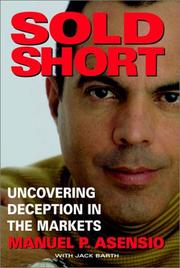
Sold Short
An activist short seller's account of his campaigns.
Summary
Manuel Asensio ran a small brokerage and research firm that took short positions in companies it publicly accused of fraud, and this account covers his campaigns and the responses to them. He is unusual among short sellers in having published his research under his own name and having sought publicity for it.
The campaigns he describes include Diana Corporation, Solv-Ex, Turbodyne, Hemispherx Biopharma and PolyMedica, among others. His method was to research a company's claims, take a short position, publish a detailed report asserting fraud or misrepresentation, and press regulators and journalists to act. He describes the responses: litigation against him, complaints to regulators, personal harassment, and pressure on his clearing broker.
Asensio's argument is that public short selling with published research is a legitimate and necessary market function, that the regulatory and legal system is structured to favour the accused company over the accuser, and that market makers and brokers face commercial pressure not to facilitate short positions. He is a partisan writing about his own record, and the record itself is mixed: some of his targets were subsequently shown to have serious problems and others were not, and he faced regulatory sanction himself. Readers should treat it as one practitioner's account of a contested activity rather than as a settled record.
Key takeaways 6
- Publishing short research under one's own name invites litigation, regulatory complaint and personal harassment from the target.
- The legal and regulatory system provides an accused company with remedies against its accuser that the accuser does not have.
- Short sellers depend on clearing brokers and stock lenders who face commercial pressure from the companies concerned.
- Asensio argues that public accusation is more effective than quiet positioning because it forces a company to respond in writing.
- Companies with fraudulent claims respond to research with litigation rather than with evidence, which is itself informative.
- Asensio's own record was mixed and he faced regulatory sanction, so his account should be read as partisan.
Who should read it
Investors interested in activist short selling and in the practical and legal obstacles it faces, treating the account as one interested party's version.
Where it sits in the reference 2
Similar books 6
Chosen by shared topics, the entries that hold them, and the people who recommended both.