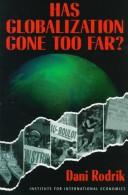
Straight Talk on Trade
The trilemma between democracy, sovereignty and deep integration.
Summary
Dani Rodrik collects and develops his arguments about globalisation, written after the political events of 2016 that he had substantially anticipated. His position is not against trade but against what he calls hyperglobalisation, meaning the pursuit of deep economic integration at the expense of national policy space.
His central framework is the trilemma: deep economic integration, national sovereignty and democratic politics cannot all be had at once, and any arrangement must give up one. The European Union attempted to give up national sovereignty; the global trading system as constructed after the 1990s gave up democratic policy space; the Bretton Woods arrangement gave up deep integration and, Rodrik argues, worked better than either alternative because it permitted countries to pursue different domestic arrangements.
His specific claims about trade agreements are that they have moved beyond tariff reduction into areas including intellectual property, investor protection and regulatory harmonisation, where the gains are distributional rather than efficiency-generating and where the beneficiaries are identifiable interests. He also argues that economists overstated the aggregate gains and understated the concentrated losses, and that the profession's public advocacy diverged from what its own models actually showed. On development, he argues that premature deindustrialisation has closed the manufacturing-led growth route for late developers. Critics respond that he underweights the poverty reduction achieved through trade integration and that his policy space would be used badly by most governments. The book is essays rather than a single argument and repeats itself.
Key takeaways 7
- Deep economic integration, national sovereignty and democratic politics cannot be pursued simultaneously, and every arrangement sacrifices one.
- Trade agreements now concern intellectual property, investor protection and regulatory harmonisation, where the effects are distributional rather than efficiency-generating.
- Standard trade models predict large distributional shifts alongside modest aggregate gains, and economists emphasised the second while dismissing the first.
- Late-developing countries face premature deindustrialisation, which closes the manufacturing-led growth path that earlier developers used.
- Rodrik argues that the Bretton Woods arrangement worked better precisely because it permitted countries to maintain different domestic institutions.
- Countries need policy space to build their own social arrangements, and international agreements that remove it generate political backlash.
- The economics profession's public advocacy for trade diverged from what its own models showed about who loses.
Who should read it
Investors and policymakers assessing the politics of trade who want the most rigorous economic case for limiting the depth of international integration.
Where it sits in the reference 2
Similar books 6
Chosen by shared topics, the entries that hold them, and the people who recommended both.