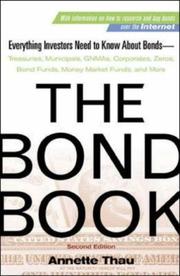
The Bond Book
Retail-investor guide with the clearest chapters on buying munis.
Summary
Annette Thau wrote the standard reference for individual investors in fixed income, covering what bonds are, how they are priced and traded, and what the different sectors involve.
The foundational chapters cover yield and its several definitions, including current yield, yield to maturity and yield to call, and why the distinctions matter; the inverse relationship between price and yield; duration as a measure of interest rate sensitivity; the yield curve and what its shape indicates; and credit ratings and what they measure. Thau is careful about the specific ways individual investors are disadvantaged in bond markets, particularly the opacity of dealer markdowns on retail transactions.
The sector chapters cover Treasury securities including inflation-protected issues, agency and mortgage-backed securities with their prepayment behaviour, municipal bonds and their tax treatment and credit analysis, corporate bonds, and international issues. She then covers bond mutual funds and exchange-traded funds, comparing them with direct ownership, and portfolio construction including laddering and the matching of maturities to needs. The book is aimed at individual investors and is unusually honest about the transaction costs they face. Editions matter for the market structure and yield environment described.
Key takeaways 7
- Yield to maturity, current yield and yield to call answer different questions, and confusing them produces wrong purchase decisions.
- Individual investors pay dealer markdowns on bond transactions that are not disclosed as commissions and can be substantial.
- Duration measures a bond's price sensitivity to rate changes and is the number an investor should manage rather than maturity.
- Callable bonds transfer the benefit of falling rates to the issuer, which caps the holder's upside while leaving the downside.
- Mortgage-backed securities shorten when rates rise and lengthen when they fall, which is the opposite of what a holder wants.
- Bond funds have no maturity date, so they never return principal at par the way an individual bond does.
- Thau argues that individual investors should ladder maturities to match anticipated needs rather than attempting to forecast rates.
Who should read it
Individual investors buying bonds directly or through funds who need the mechanics and the specific costs they face.
Where it sits in the reference 2
Similar books 6
Chosen by shared topics, the entries that hold them, and the people who recommended both.