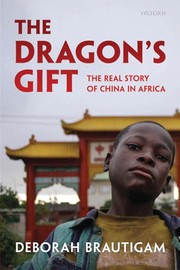
The Dragon's Gift
What Chinese finance and contractors actually do in Africa; Ethiopia recurring.
Summary
Deborah Brautigam has researched Chinese engagement in Africa for decades, and this book corrects the account that circulated in Western media around 2009. Her method is field research, Chinese-language sources and the actual terms of the agreements.
Her corrections are specific. Chinese aid to Africa is much smaller than commonly reported, because the figures cited generally conflate concessional aid with export credits and commercial loans. Chinese firms in Africa employ substantial local workforces, contrary to claims that they import all labour. Resource-backed loans, in which infrastructure is financed against future commodity output, are not a Chinese invention; Japan used the same structure with China in the 1970s, which is where China learned it. Chinese engagement is driven by its own commercial interests and by the export promotion mandate of its policy banks rather than by a coordinated strategic plan.
Brautigam is not uncritical. She documents the environmental and labour problems, the debt sustainability questions, the limited technology transfer, and the governance consequences of dealing with regimes that Western donors avoid. Her broader argument is that China's approach reflects its own development experience, in which infrastructure and export processing zones preceded institutional reform, and that this is a coherent theory rather than an absence of one. The book was published in 2009, before the Belt and Road expansion and the subsequent debt distress in several African borrowers, which Brautigam has addressed in later work.
Key takeaways 7
- Chinese aid figures reported in Western media conflate concessional aid with export credits and commercial lending.
- Resource-backed infrastructure loans were used by Japan with China in the 1970s, which is where China learned the structure.
- Chinese firms in Africa employ substantial local workforces, contrary to the claim that they import all labour.
- Chinese engagement is driven by policy bank export promotion mandates and commercial interest rather than by a coordinated strategic plan.
- China's approach reflects its own development sequence, in which infrastructure and export zones preceded institutional reform.
- Brautigam documents environmental, labour and governance problems while rejecting the specific claims she finds unsupported.
- African governments negotiate these agreements and their terms reflect the negotiating capacity each brings.
Who should read it
Investors and analysts working on African markets or on Chinese overseas lending who want field research rather than the circulating claims.
Where it sits in the reference 2
Similar books 6
Chosen by shared topics, the entries that hold them, and the people who recommended both.


