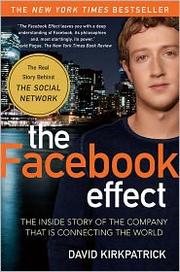
The Facebook Effect
The authorised early history, written at peak optimism.
Summary
Kirkpatrick, a Fortune technology journalist, had extensive access to Mark Zuckerberg and to Facebook's executives and wrote the first substantial history of the company, covering the Harvard origin through 2010, when Facebook had about five hundred million users and had not yet gone public.
The useful material is on the product and business decisions. Kirkpatrick documents the deliberate slow rollout school by school, which created density and scarcity simultaneously; the requirement of real identity, which Zuckerberg treated as the core principle and which distinguished Facebook from MySpace; the introduction of News Feed and the user revolt against it, which Zuckerberg refused to reverse and which became the product's engine; the Beacon advertising failure; the Platform launch; and the repeated refusals to sell, including the reported one billion dollar offer from Yahoo in 2006 that the board wanted to accept.
Kirkpatrick also documents Zuckerberg's stated position on radical transparency, that people having a single identity across all contexts is a better arrangement and that privacy norms are shifting toward openness, which was stated as a design principle rather than as a business necessity. That claim reads very differently now.
The book was written with cooperation and it shows: it is sympathetic, it accepts the company's framing of its mission, and it predates Cambridge Analytica, the 2016 election, the Myanmar findings and every subsequent controversy. It remains valuable as a documented account of the early product and governance decisions, and particularly for the record of what Zuckerberg said he believed before the consequences arrived.
Key takeaways 7
- Facebook required real identity from the beginning, and Zuckerberg treated it as a principle rather than a feature, which was the main product difference from MySpace.
- The school-by-school rollout created network density within each community before expanding, which is why engagement held as the network grew.
- News Feed produced the largest user revolt in the company's history and Zuckerberg refused to withdraw it, and it became the mechanism that made the product habitual.
- Zuckerberg retained voting control through the company's early financings specifically so he could refuse acquisition offers the board favoured.
- Zuckerberg argued that people should have a single identity across all contexts and that privacy expectations were shifting, and he stated this as a normative position rather than a commercial one.
- Facebook's advertising model developed slowly and late, and the company grew for years without a clear revenue plan.
- Opening the platform to third-party applications produced rapid growth and simultaneously created the data access arrangements that caused later crises.
Who should read it
Founders and investors who want the documented record of Facebook's early product and governance decisions, written before the consequences were known.
Where it sits in the reference 2
Who recommended it 2
Similar books 6
Chosen by shared topics, the entries that hold them, and the people who recommended both.