The Foreclosure of America: The Inside Story of the Rise and Fall of Countrywide Home Loans, the Mortgage Crisis, and the Default of the American Dream
Insider account by a Countrywide marketing executive; the one dedicated book.
Summary
Adam Michaelson was a marketing executive at Countrywide Financial, the largest American mortgage originator before its collapse, and wrote this account from inside the company.
His perspective is unusual: he worked on the marketing of the products rather than on their underwriting or funding, and the book describes how the loans were sold. He covers the pay-option adjustable rate mortgage, which allowed borrowers to make payments smaller than the accruing interest so that the balance grew, and describes the internal discussions about how to market it. He describes the growth targets, the market share objective that Angelo Mozilo set, and the competitive dynamic in which Countrywide matched whatever underwriting standards its competitors abandoned.
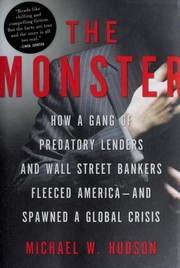
Michaelson is candid that he participated and that he raised concerns only weakly, and he writes about the internal culture in which questioning the products was career-limiting. The book is a memoir rather than an investigation and does not cover the funding structure, the securitisation, the regulatory position or the legal aftermath in any depth. Readers wanting those should go elsewhere, including to Michael Hudson's The Monster and to the Securities and Exchange Commission's case against Mozilo. Its value is the account of how these products were presented to borrowers and to the sales force.
Key takeaways 7
- Pay-option mortgages allowed borrowers to make payments below accruing interest, so balances grew while borrowers believed they were paying.
- Countrywide matched whatever underwriting standards its competitors abandoned, because market share was the stated objective.
- Marketing presented negative amortisation products in terms of monthly payment rather than of total obligation.
- Employees who questioned the products found it career-limiting, which Michaelson describes from personal experience.
- Growth targets set at the top translated into underwriting decisions at the bottom without any explicit instruction to lower standards.
- Michaelson participated and raised concerns only weakly, which he states directly.
- The book covers marketing and internal culture and does not address funding, securitisation or the regulatory position.
Who should read it
Readers wanting an insider account of how subprime and option mortgage products were marketed, with awareness of the narrow perspective.
Where it sits in the reference 2
Similar books 6
Chosen by shared topics, the entries that hold them, and the people who recommended both.