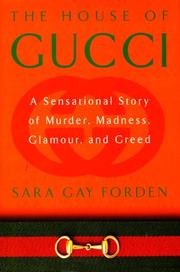
The House of Gucci
The takeover battle in which LVMH was the aggressor.
Summary
Forden, a fashion trade journalist based in Milan, covers Gucci from Guccio Gucci's leather goods shop in Florence through the family's collapse, the takeover by Investcorp, the turnaround under Domenico De Sole and Tom Ford, and the takeover battle with LVMH that ended with Pinault's PPR taking control.
The business material is the useful part. Forden documents how the family destroyed the brand through licensing: by the 1980s the Gucci name appeared on thousands of products of declining quality, sold through duty-free and discount channels, which generated revenue and eliminated the exclusivity the brand was built on. The turnaround under De Sole consisted of cancelling licences, buying back distribution, closing stores, cutting the product range and rebuilding the wholesale relationships, before Ford's design work created demand for the restored product.
The takeover fight is covered in detail: Bernard Arnault's accumulation of a stake, Gucci's defensive issue of shares to an employee trust, the Dutch court proceedings, and the arrival of Francois Pinault as a white knight. It is a well-documented case of takeover defence in a jurisdiction whose rules the parties did not fully anticipate.
The family narrative, including Patrizia Reggiani's conviction for arranging Maurizio Gucci's murder, is the part the book is known for and the part later dramatised. Forden is a careful trade reporter and the business detail is reliable. The book ends in 2000 and does not cover Gucci Group's later development under Kering.
Key takeaways 7
- Uncontrolled licensing destroyed the Gucci brand by placing the name on thousands of low-quality products in discount and duty-free channels.
- The turnaround required cancelling licences, buying back distribution and cutting the product range before any design work could matter.
- Brand equity can be rebuilt after dilution, but only by removing the diluted product from the market first and accepting the revenue loss.
- Family ownership without a governance mechanism produced decisions driven by internal conflict rather than by the business.
- Controlling distribution directly rather than through wholesalers is what allows a luxury brand to set its own price and presentation.
- A takeover defence structured around issuing shares to an employee trust worked in Dutch law in ways the acquirer had not anticipated, which shows jurisdiction determines outcomes in contested control situations.
- Pairing a commercial operator with a creative director, each with clear authority in their own area, was the structure that made the turnaround work.
Who should read it
Brand operators and investors interested in how licensing destroys premium positioning and what recovering it requires.
Where it sits in the reference 5
Similar books 6
Chosen by shared topics, the entries that hold them, and the people who recommended both.