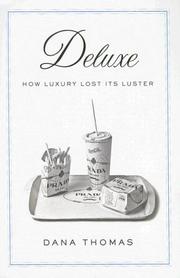
Deluxe: How Luxury Lost Its Luster
The best-known account of LVMH-led mass luxury and outsourcing.
Summary
Thomas, a fashion journalist, traces how European luxury houses moved from family-owned workshops serving a few thousand customers to publicly traded conglomerates selling accessories to a mass affluent market. The pivot centres on Bernard Arnault's construction of LVMH, on the parallel building of Gucci Group and Richemont, and on the discovery that handbags, sunglasses, perfume and cosmetics carry the brand's aura at a price point millions of people can reach.
The reporting is the strength. Thomas visited factories in China producing goods for houses that market themselves as Italian or French, documented the legal boundaries of the made-in labelling rules that make this possible, sat in on perfume launches, and followed the counterfeit trade to its production sites. She shows how licensing, duty-free retail, celebrity fragrance deals and airport distribution generate the cash that funds the loss-making couture that supplies the brand image.
The book is useful to operators as a study in brand economics: how a house converts scarcity signals into volume revenue, where the actual margin sits in a luxury profit and loss statement, and what happens to pricing power when a brand widens its customer base. Thomas writes as a critic and the moral register is consistent throughout, which some readers will find sharpens the argument and others will find crowds out the counter-case. The financial detail is now well out of date, and the industry has since consolidated further, moved substantially online, and shifted its demand base toward China, none of which the 2007 text anticipates.
Key takeaways 7
- Luxury houses make most of their money from accessories, fragrance and cosmetics, not from the clothing that defines the brand.
- Conglomerate ownership replaced the founding families and changed the objective from craft continuity to quarterly growth in accessible product lines.
- Country-of-origin labelling rules allow substantial production in low-cost countries while a final assembly step preserves the European label.
- Widening the customer base raises revenue in the short term and erodes the scarcity that justifies the price in the long term.
- Counterfeiting is funded and organised by the same criminal networks that move other contraband, and its scale is a direct function of brand ubiquity.
- Loss-making runway shows function as marketing expenditure that supports the margin on licensed and mass-market products.
- Celebrity endorsement replaced craftsmanship as the primary mechanism for communicating luxury status.
Who should read it
Founders and operators in consumer brands who want a concrete account of how premium positioning converts into volume economics and what that trade costs.
Where it sits in the reference 6
Similar books 6
Chosen by shared topics, the entries that hold them, and the people who recommended both.