The Islamic Republic of Iran: Reflections on an Emerging Economy
Former finance minister on subsidies, privatisation and the rial.
Summary
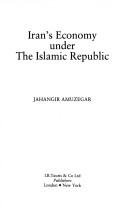
Jahangir Amuzegar, a pre-revolutionary Iranian finance minister and former International Monetary Fund executive director, wrote this assessment of the Iranian economy more than three decades after the revolution, extending the analysis of his earlier book.
The assessment covers the record against the revolution's own stated goals: economic independence, self-sufficiency in food and industry, social justice and redistribution, and an Islamic economic order distinct from capitalism and socialism. He examines oil dependence, which has persisted; the state and quasi-state sector, including the foundations and the Revolutionary Guard's commercial holdings, which has grown; the privatisation programme, which transferred assets to entities connected to the state rather than to private owners; the subsidy reform attempted under Ahmadinejad; inflation and exchange rate policy; and the effects of sanctions.
Amuzegar's judgement is that the Islamic Republic has failed on most of its own economic criteria while surviving through oil revenue and repression. He writes from an identifiable position as a member of the displaced pre-revolutionary elite, which readers should weigh, and his analysis is technically competent. The book was published in 2014, before the nuclear agreement, the American withdrawal, the reimposition of sanctions and the currency collapse that followed.
Key takeaways 7
- Iran's oil dependence increased over three decades despite economic independence being an explicit revolutionary goal.
- The privatisation programme transferred state assets to foundations and entities connected to the security apparatus rather than to private owners.
- Revolutionary foundations and Revolutionary Guard commercial holdings constitute a large economic sector outside both budget and market discipline.
- Subsidy reform under Ahmadinejad replaced price subsidies with cash transfers and produced inflation rather than fiscal savings.
- Multiple exchange rates function as untargeted subsidies transferring rents to holders of import allocations.
- Amuzegar argues that the Islamic Republic has failed against its own stated economic objectives on almost every measure.
- The author is a member of the displaced pre-revolutionary elite, which readers should weigh against his conclusions.
Who should read it
Analysts of Iran who want a technically competent economic assessment measured against the regime's own stated goals, from a hostile source.
Where it sits in the reference 2
Similar books 6
Chosen by shared topics, the entries that hold them, and the people who recommended both.