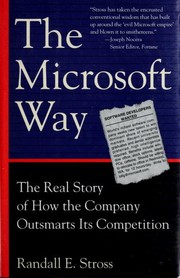
The Microsoft Way
Sympathetic 1990s analysis of Microsoft's competitive method.
Summary
Randall Stross, a business historian, wrote this in 1996 with cooperation from Microsoft, examining what accounted for the company's dominance at a point when it appeared unassailable.
His argument concerns the company's specific practices rather than any single product. He identifies the recruitment strategy, which sought raw intelligence over experience and hired directly from universities; the retention of technical people in technical roles rather than promoting them into management; the willingness to release inadequate first versions and improve them, which he treats as a deliberate strategy rather than a failure; the practice of entering markets late and winning through persistence and resources rather than through innovation; and the maintenance of a very large cash position that allowed the company to sustain losing efforts for years.
Stross covers specific products including Windows, Word and Excel against Lotus and WordPerfect, and the multimedia and encyclopaedia efforts. Written in 1996, the book precedes the internet response, the antitrust case, the Ballmer decade and the subsequent recovery under Nadella, and its confidence about the company's invincibility reads oddly. The observations about hiring and about the strategy of persistent iteration against established competitors have held up better than the specific product analysis.
Key takeaways 7
- Microsoft recruited for raw intelligence directly from universities rather than for industry experience.
- Technical people were kept in technical roles rather than promoted into management, which retained capability the company needed.
- Releasing an inadequate first version and improving it across releases was a deliberate strategy rather than a quality failure.
- The company entered markets late and won through persistence and resources rather than through being first or best.
- A very large cash position allowed Microsoft to sustain losing product efforts for years until they succeeded.
- Stross argues that Microsoft's advantage was organisational rather than technological.
- The book's confidence about the company's invincibility predates the internet response and the antitrust case.
Who should read it
Readers of technology business history who want a contemporaneous account of Microsoft's methods at its point of maximum dominance.
About Randall E. Stross
Business historian and journalist, longtime professor at San Jose State University; wrote reported histories of Edison, Microsoft, Google and Y Combinator.
Each book reports one organisation from inside over a defined stretch of time: a year among Y Combinator's batch companies, Benchmark's partners through the dot-com IPO wave, Edison's Menlo Park laboratory. The result records how venture firms and inventors actually spent their days, which reads as evidence rather than retrospective summary.
Where it sits in the reference 2
Similar books 6
Chosen by shared topics, the entries that hold them, and the people who recommended both.