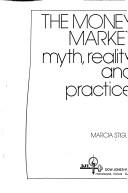
The Money Market
Stigum's institutional bible of bills, repo, CP and Fed funds.
Summary
Marcia Stigum wrote the reference work on the American money market, and it has been revised across editions, latterly with Anthony Crescenzi. It is the book practitioners in short-term funding markets are told to read.
The coverage is exhaustive. It explains what the money market is: the set of markets in short-term debt through which banks, corporations, governments and dealers fund themselves. It covers each instrument in turn, including Treasury bills, federal funds, repurchase agreements, certificates of deposit, commercial paper, bankers acceptances, eurodollars and short-term municipals, with the mechanics of issuance, trading, settlement and pricing for each. It covers the participants: commercial banks and their asset and liability management, the dealer community and how dealers finance positions, money market funds, corporate treasurers and the Federal Reserve's open market operations.
Stigum's method is to explain how the market actually works rather than how it is described in textbooks, drawing on extensive interviews with practitioners. The book's greatest value is in the operational detail: how a repo trade is actually done, how a dealer's book is financed, how settlement failures propagate. Editions matter substantially, since the 2008 crisis, money market fund reform, the growth of central clearing and the change in Federal Reserve operating procedures all altered these markets fundamentally. It is a reference rather than a book to read through.
Key takeaways 7
- The money market is where banks, dealers, corporations and governments fund themselves short-term, and its instruments are substitutes for each other.
- Repurchase agreements are the mechanism through which dealers finance securities inventory, which makes repo the market's foundation.
- Dealer positions are almost entirely financed, so a dealer's capacity depends on repo availability rather than on capital.
- Commercial paper is unsecured corporate borrowing whose issuers rely on bank lines they expect never to draw.
- Money market instruments trade on small yield differences, so operational and settlement details determine profitability.
- Federal funds trading is how banks manage reserve positions, and its rate is the transmission point for monetary policy.
- Stigum's method is to explain how the market operates in practice, which frequently differs from its textbook description.
Who should read it
Anyone working in short-term funding, treasury or fixed income who needs the operational mechanics of money markets in one reference, using a current edition.
Where it sits in the reference 2
Similar books 6
Chosen by shared topics, the entries that hold them, and the people who recommended both.