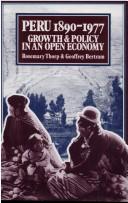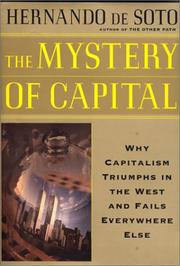
The Mystery of Capital
Generalises the Peruvian findings into a theory of dead capital and titling.
Summary
De Soto asks why capitalism produces prosperity in the West and in a few other places while failing elsewhere, and answers that the difference lies in property records. He argues that poor people in developing countries are not poor in assets. They hold houses, farms and businesses worth, by his teams' estimates, many trillions of dollars. What they lack is legal title recorded in a system that strangers can verify.
The consequence, in his account, is that these assets cannot be pledged as collateral, sold to people outside a local network, divided into shares, or used to establish creditworthiness. He calls the assets dead capital. Formal property, by contrast, does more than record ownership: it fixes the economic potential of an asset in a form that can be transferred and combined.
The evidence comes from field surveys by his Institute for Liberty and Democracy in Peru, Egypt, the Philippines and Haiti. His teams counted extralegal dwellings and enterprises, valued them, and timed the bureaucratic process of formalisation, famously finding that legally registering a small business in Lima took 289 days. He also argues from American nineteenth-century history that the United States solved the same problem by recognising squatters' claims rather than by enforcing existing law.
The titling prescription has not performed as promised. Randomised and quasi-experimental studies of titling programmes in Peru, Argentina and Africa have generally found improvements in tenure security and investment in the home but little increase in formal credit, because banks will not lend against property they cannot easily foreclose or resell. Critics including Timothy Mitchell also dispute his measurement of dead capital and argue that formal title can dispossess as easily as it enriches.
Key takeaways 7
- The poor in developing countries hold enormous asset value that is invisible to formal legal and financial systems.
- Property records matter because they let strangers verify ownership, not because they protect owners from theft.
- Assets without recorded title cannot serve as collateral, so they cannot be converted into investable capital.
- The cost of formalising a small business in many countries is measured in years of bureaucratic steps, which drives people into the extralegal sector.
- Extralegal sectors have their own functioning property conventions, and formal law should be built to recognise them rather than replace them.
- The United States resolved the same problem in the nineteenth century by legalising squatters rather than evicting them.
- A single national property registry is worth more than the sum of local records because it enables transactions across social networks.
Who should read it
Investors and operators in emerging markets who need to understand why informal sectors persist and why collateral-based lending fails there.
Where it sits in the reference 2
Who recommended it 1
Similar books 6
Chosen by shared topics, the entries that hold them, and the people who recommended both.