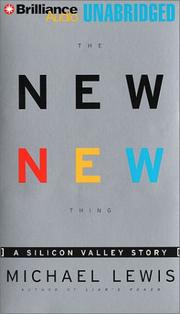
The New New Thing
OL lists title as 'New New Thing, The'
Summary
Lewis follows Jim Clark, who founded Silicon Graphics, Netscape and Healtheon, during the period around 1998 and 1999 when Clark was building a large computerised sailboat and starting his third billion dollar company. The book is a portrait of the late 1990s technology economy through one person.
The business material covers Clark's role in changing how technology companies were financed. Netscape went public in 1995 with almost no revenue and a large loss, which had not previously been possible, and Lewis argues that this single event opened the window through which every subsequent unprofitable technology public offering passed. Clark's insistence on retaining a large founder stake, and his willingness to walk away from investors who would not accept his terms, changed the balance between founders and venture capitalists.
The Healtheon sections document a company built on a story about restructuring healthcare transactions, funded and taken public on the strength of Clark's record rather than on any working business. Lewis is ambivalent about his subject and does not resolve whether Clark was a visionary or a person who had learned to extract capital from a system that wanted to give it to him. The recurring theme is that Clark could not stop, and that each success made the next objective larger rather than sufficient.
The book is journalism written during the bubble and published shortly before it burst, which gives it an unintended documentary quality. It offers no analysis of what the period meant. The account of how the Netscape offering changed public market financing is the substantive contribution.
Key takeaways 8
- Netscape's 1995 public offering with almost no revenue opened the window through which subsequent unprofitable technology offerings passed.
- Clark's insistence on retaining a large founder stake and his willingness to refuse investors shifted the balance between founders and venture capital.
- A company could be funded and taken public on the strength of a founder's record and a story rather than on any working business.
- The value in the period attached to the new thing itself, which meant a company's prospects depended on how the story was framed rather than on its operations.
- Engineers rather than professional managers ran the companies Clark founded, which he treated as the source of their capability.
- Clark could not stop after each success, and the objective became larger rather than sufficient, which Lewis presents as the defining trait.
- The technology economy of the period transferred wealth to people who could construct a narrative about the future, whether or not it materialised.
- Lewis wrote during the bubble and does not resolve whether his subject was a visionary or an extractor of available capital.
Who should read it
Readers who want a contemporaneous portrait of the late 1990s technology financing environment and how public market appetite for unprofitable companies began.
About Michael Lewis
Financial journalist and author; former Salomon Brothers bond salesman
Liar's Poker, The Big Short and Flash Boys are the primary narrative sources later writers build on for Wall Street of the 1980s, the subprime crisis and high-frequency trading.
Where it sits in the reference 2
Who recommended it 4 · 1 direct
Similar books 6
Chosen by shared topics, the entries that hold them, and the people who recommended both.