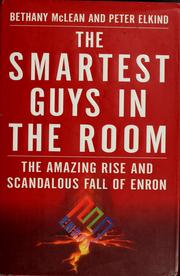
The Smartest Guys in the Room: The Amazing Rise and Scandalous Fall of Enron
The canonical account, by the Fortune reporter who asked the first question.
Summary
McLean and Elkind, Fortune journalists, reconstruct Enron's rise and its 2001 bankruptcy. McLean wrote the March 2001 Fortune article asking how Enron made its money, which was the first serious public challenge to the company.
The accounting mechanisms are explained clearly. Mark to market accounting, which Enron obtained approval to use for its energy trading business, allowed the company to book the entire estimated future profit of a long-term contract at signing, which meant reported earnings reflected estimates made by the people compensated on them. The special purpose entities, particularly the LJM partnerships run by chief financial officer Andrew Fastow, moved debt off the balance sheet and were capitalised partly with Enron's own stock, which meant the structures failed exactly when the share price fell.
The cultural material covers the performance review committee that ranked and removed employees annually, the compensation structure that rewarded deal signing rather than deal performance, and the promotion of traders whose reported profits were estimates. The enabling institutions receive substantial attention: Arthur Andersen earned large consulting fees alongside its audit work, the banks structured the entities and sold the securities, the rating agencies maintained investment grade until days before bankruptcy, and equity analysts maintained buy recommendations throughout.
The book is journalism and the accounting explanation, while clear, is necessarily simplified. It concentrates on individuals rather than on the regulatory structure that permitted the arrangements. It remains the standard account and the best available explanation of how the specific mechanisms worked.
Key takeaways 8
- Mark to market accounting allowed Enron to book estimated future profits at contract signing, which meant reported earnings were forecasts made by the people paid on them.
- Special purpose entities moved debt off the balance sheet while being capitalised with Enron stock, which guaranteed they would fail when the share price fell.
- The chief financial officer ran partnerships that transacted with the company, which the board approved by waiving the conflict of interest policy.
- Compensation rewarded signing deals rather than the performance of those deals, which produced a pipeline of transactions nobody expected to work.
- Annual forced ranking and removal of employees produced a culture in which reporting a problem was more dangerous than concealing it.
- Auditors earning substantial consulting fees alongside audit fees could not function as an independent check.
- Rating agencies maintained investment grade ratings until days before bankruptcy, and analysts maintained buy recommendations throughout.
- A company whose business model cannot be explained by its own executives in plain terms is the observable warning sign that preceded everything else.
Who should read it
Investors and directors who want the clearest account of how off-balance-sheet structures and mark to market accounting were actually used to conceal losses.
About Bethany McLean
Investigative business journalist; Vanity Fair contributing editor, formerly Fortune
The Smartest Guys in the Room remains the definitive account of Enron and her Fortune reporting broke the story before the collapse.
Where it sits in the reference 5
Who recommended it 3 · 2 direct
Similar books 6
Chosen by shared topics, the entries that hold them, and the people who recommended both.