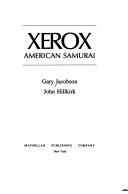
Xerox: American Samurai
The parent company's quality turnaround against Japanese copiers.
Summary
Gary Jacobson and John Hillkirk, both journalists, wrote this account of Xerox's quality programme and its response to Japanese competition in copiers, published in 1986 while the recovery was underway.
The narrative covers Xerox's position after its patents expired, the entry of Canon, Ricoh and others selling small copiers at prices below Xerox's manufacturing cost, and the loss of most of its market share. It covers the discovery of the competitive gap through benchmarking, which the company conducted partly through its Fuji Xerox joint venture, and the Leadership Through Quality programme that followed under David Kearns, including the training of the entire workforce, the supplier certification programme, the reduction of the supplier base, and the changes to product development.
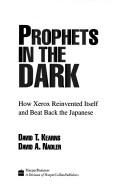
The book was written from outside with company cooperation and is admiring of the turnaround, which at the time appeared complete. It predates Xerox's subsequent failures, including the inability to commercialise the personal computing work done at its Palo Alto Research Center, the accounting scandal of 2000 and 2001 and the near-bankruptcy that followed. It covers similar ground to David Kearns's own Prophets in the Dark from an outside perspective. The benchmarking and quality material is the durable content.
Key takeaways 7
- Patent expiry removed the protection under which Xerox had developed a cost structure that could not survive competition.
- Japanese competitors sold small copiers at prices below Xerox's manufacturing cost, which no incremental improvement could answer.
- Benchmarking against competitors, conducted partly through the Fuji Xerox joint venture, revealed a gap internal analysis had not.
- Training the entire workforce in a shared problem-solving method was the mechanism through which the quality programme operated.
- Reducing the supplier base and certifying quality at the supplier removed inspection cost and defect rates together.
- The book was written while the recovery appeared complete and predates the failures that followed.
- Companies protected from competition develop cost structures and habits that cannot survive the protection ending.
Who should read it
Operators facing a step change in competitive cost position who want an outside account of a large-company quality turnaround.
Where it sits in the reference 2
Similar books 6
Chosen by shared topics, the entries that hold them, and the people who recommended both.