The Investor's Shelf — one person

Peter Thiel

Co-founder of PayPal and Palantir; co-founder and partner, Founders Fund; former manager of Clarium Capital

Zero to One is the primary text for the monopoly-and-secrets school of startup strategy, and his essays are cited far beyond venture capital.

2 books of their own · 6 biographies about them · 6 articles · 40 books they recommend

Books they wrote 2

Blake Masters · 2014 · Open Library records first_publish_year as 2001; actual publication 2014
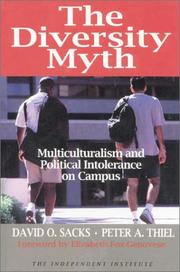
David O. Sacks · 1995 · Subtitled 'Multiculturalism and Political Intolerance on Campus'

Biographies about them 6

One biography plus two books that cover the PayPal cohort and the Gawker campaign.

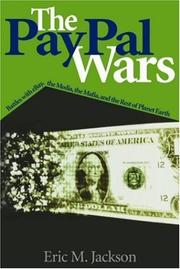
Eric M. Jackson · 2004 · Insider account by an early PayPal marketing hire; partisan but first-hand.
Adam Fisher · 2018 · Oral history; Thiel and the PayPal cohort speak in their own words.
Michael Steinberger · 2025 · On Karp and Palantir, the company Thiel founded and still shapes.

Articles and essays 6

Books they recommend 40

Thiel's list coheres around a single anxiety: that Western civilization may be stuck — technologically, politically, and spiritually — even as it tells itself otherwise. René Girard's mimetic theory provides the unifying lens. The political philosophy cluster (Plato, Aristotle, Machiavelli, Hobbes, Schmitt, Strauss) traces how thinkers have grappled with order, power, and the friend-enemy distinction; Hayek and Nozick anchor the libertarian strand. Tolkien sits here not as escapism but as myth. Zero to One closes the loop — his own synthesis, argued through the lens of startups but aimed at civilization. The picks surface through his book, his Stanford CS183 lectures, and long-form interviews.

Books Thiel has recommended in talks, interviews and reviews 18

Fiction 5

J. R. R. Tolkien · not in an entry yet
Mikhail Bulgakov · not in an entry yet
Neal Stephenson · not in an entry yet
Ayn Rand · not in an entry yet

Philosophy 4

Leo Strauss · not in an entry yet

Economics 2

Politics and Government 1

James Dale Davidson, William Rees-Mogg

Technology and Computing 1

Sociology and Culture 1

Science 1

General History 1

Timothy Snyder · not in an entry yet

Entrepreneurship and Startups 1

Education and Learning 1

Superbook reading list 12

Not yet given a topic 6

Carl Schmitt · not in an entry yet
“Schmitt's short 1932 treatise defines the political through the friend-enemy distinction and argues that liberalism's refusal to acknowledge genuine conflict is a category error. Thiel has cited this in interviews as a book that illuminates dynamics that mainstream political theory papers over—particularly relevant to his views on sovereign decision and the limits of technocratic governance.”
F. A. Hayek · not in an entry yet
“Hayek's warning about central planning and the knowledge problem underpins Thiel's skepticism of large institutions—government bureaucracies, but also incumbent corporations. In his Stanford lectures he returned repeatedly to the idea that distributed knowledge resists aggregation, and that monopoly power held by a startup differs fundamentally from monopoly held by a state.”
Robert Nozick · not in an entry yet
“Nozick's defense of the minimal state and individual rights as side-constraints rather than goals gives Thiel the philosophical vocabulary for his libertarianism. His early career—founding the Stanford Review, writing The Diversity Myth—drew on Nozick's critique of redistributive justice as a form of forced labor.”
Thomas Hobbes · not in an entry yet
“Hobbes's argument that sovereignty is a necessary fiction to escape the state of nature sits in productive tension with Thiel's libertarianism. He has spoken about Hobbes alongside Schmitt as thinkers who take the problem of order seriously rather than assuming it away. The question of who decides in a genuine emergency recurs throughout his public arguments.”
Aristotle · not in an entry yet
“Aristotle's ethics grounds the classical philosophy strand. Thiel's argument in Zero to One that the best career is not the most competitive but the most singular echoes Aristotle's eudaimonia—a life fully actualized in its own specific excellence rather than in comparison to others. The contrast with Girard is deliberate: where Girard sees mimesis as inescapable, Aristotle points toward a way out.”
Leo Strauss · not in an entry yet
“Strauss's recovery of classical natural right—against the modern slide into historicism and relativism—is a background influence on how Thiel frames the question of whether there are permanent truths about political life. The Straussian method of reading between the lines of canonical texts, taking esoteric meaning seriously, matches Thiel's own habit of mining intellectual history for contrarian positions.”

Philosophy 2

René Girard
“The book Thiel has named as the most influential he has read. Girard argues that human desire is mimetic—we want what others want—and that sacrificial violence, culminating in the scapegoat mechanism, is the hidden foundation of culture. Thiel applies this framework to markets, startups, and geopolitics with striking consistency.”
Plato · not in an entry yet
“Plato's dialogues, especially the Republic, are a recurring reference in Thiel's speeches and writing. The allegory of the cave maps cleanly onto his account of how mimetic conformity keeps people from seeing first-principle truths. His interest in philosopher-kings—technically competent decision-makers shielded from mob opinion—is a thread he picks up from Plato and runs through to his political investments.”

Politics and Government 2

Francis Fukuyama · not in an entry yet
“Fukuyama's thesis that liberal democracy represents the endpoint of ideological evolution is exactly the kind of consensus Thiel builds his career against. He has engaged with it publicly not to dismiss it but to argue that Fukuyama's endpoint may have arrived prematurely, and that the real contest between order and chaos is still open.”
Niccolò Machiavelli · not in an entry yet
“Machiavelli's realism—the gap between how men live and how they ought to live—resonates with Thiel's insistence on facing the world as it is rather than as conventional morality says it should be. The Medici dedicatee is also a figure in Thiel's preferred historical arc: the Renaissance patron who understood that power and culture are not separable.”

Entrepreneurship and Startups 1

Peter Thiel
“Thiel's own book, which distills his Stanford CS183 lecture notes. The argument that every truly new thing escapes competition by being genuinely singular—a secret no one else believes—follows directly from Girard: if everyone is copying everyone else's desires, the entrepreneur who notices something others dismiss has an edge that compounds.”

Fiction 1

J.R.R. Tolkien · not in an entry yet
“Thiel has cited Tolkien's mythology directly as one of the few modern works that takes the reality of evil seriously without domesticating it. The rejection of industrial modernity in Tolkien—Saruman as the technocrat who believes he can improve on nature—resonates with Thiel's own ambivalence about what Silicon Valley actually builds. He has contrasted Tolkien's pre-modern cosmology with the progressive optimism he finds naive.”

Book recommendations listed on their Good Books profile 10

Philosophy 2

Francis Bacon aggregator only

Psychology and Behaviour 1

Robert B. Cialdini, PhD aggregator only

Decision Making 1

Nassim Nicholas Taleb aggregator only

Company Histories 1

Jimmy Soni aggregator only

Fiction 1

Mikhail Bulgakov · not in an entry yet aggregator only

General History 1

Tom Wolfe · not in an entry yet aggregator only

Religion and Spirituality 1

War and Strategy 1

Edward Shepherd Creasy · not in an entry yet aggregator only

Politics and Government 1

Niccolò Machiavelli · not in an entry yet aggregator only

Where they publish 7

Tags

paypalpalantirfounders-fundclarium-capitalfacebookblake-mastersdavid-sacksrene-girardleo-straussventure-capitaltechnologymacromonopoly-theorycontrarianismtechnological-stagnationdefinite-optimism