Updates

  1. 137 new fund letters and reports, each with its own page: Kayne Anderson Rudnick (48 market briefings, KayneCast episodes and TV commentaries), Shelton Capital Management (48 shareholder reports and a commentary), Lakehouse Capital (10 Small Companies Fund letters), Smead (5 newsletters), RIT Capital Partners (5 monthly commentaries), Kovitz, Legal & General, Generation, Hosking, Marram, Munro, Oldfield and others.
  2. 200 new fund letters and reports, each with its own page: Spheria (41 monthly reports), Peapack Private (41 weekly recaps and planning newsletters), Fort Washington (23), Polen Capital (15), Aristotle Pacific (14), Riverwater (13), Chou (10), Apollo Asia Fund (8, back to 1998), Personal Asset Trust, Rockwood Strategic, J Capital Research, I/O Fund, Penn Davis McFarland, Pomona and others.
  3. Investor pages have one Investments tab with shares, changes, % owned, class, market cap and Market cap and Status filters, a Funds tab listing each fund the firm runs, and assets under management from Form ADV. The Investors table shows AUM and current investments, and its search finds investors by what they hold.
  4. Filters, search and sort stay as you left them when you come back to a section. Person cards look like book cards. Company pages name their Investors tab Ownership. Kind and Sector filters use four kinds and GICS sectors with industries. Dead links left the Links tabs.
  5. 190 more investors from fiscal.ai's list, with their sites, letters, partners and 13F holdings; 556 more partner descriptions. Experts now lists only people.
  6. Fund letters lists 144 new documents from 23 firms, each with its own page: a summary, key insights and quotes. Among them: 37 BlackRock articles, 21 Value Partners monthly notes, eight Baron Capital letters, six Stone Sentinel letters to partners, seven Value Line portfolio manager Q&As, BNY's 2026 earnings releases and Starboard Value's 2026 conference presentations.
  7. 584 more investors, with their websites, 6,776 letters from their own sites, 1,385 partners with pages and the 13F holdings of 213 firms. New letters arrive daily from 290 more archives.
  8. Media and Companies filter by GICS sector and industry group, taken from the companies an episode or page names. 1,860 more company pages show a logo, the SEC's list included.
  9. The home page counts what the platform holds and lists features such as the document reader, the player and saved marks. Settings sits at the foot of the rail. Book cards are a quarter wider, so rows hold fewer. Companies drops the Named in filter, and the Role list in your account runs A to Z.
  10. Investor pages of 13 firms show their newsroom's latest posts. New 13F filings are read as the SEC publishes them.
  11. Investor pages have an Investments tab: 13,975 holdings for 105 investors, from their 13F filings with the SEC and their own portfolio pages, with status and sector. 7,338 more companies have a page of their own.
  12. A podcast or YouTube episode keeps playing while you move around the site, in a bar with skip, speed and volume. Media tables show each episode's length and description.
  13. Press releases come from each company's own newsroom (167 companies); SEC filings sit on the Filings tab. Tickers name their exchange, and a company's Experts tab includes guests whose episode description names it.
  14. Letter types now include Market commentary, Fact sheet, Interim report, Annual report, Proxy circular and Governance document. The reader opens over the whole window.
  15. Partners of investment firms have 2,836 appearances and 580 pieces of writing on their pages; Derek Sivers's page lists every book he rates, with his rating.
  16. Fund letters lists three Akre Focus shareholder reports: the ETF's annual report for the year to July 2026, its semi-annual report to January 2026 and the fund's semi-annual report to January 2025, each with its own page: a summary, key insights and quotes.
  17. 837 partners of 73 investment firms now have their own pages, with title, description, photograph and social accounts; Andreessen Horowitz partners' pages also list their writing on a16z.com.
  18. Company pages have a Press releases tab: 8,229 releases for 203 companies, from SEC filings and company newsrooms. Companies filter by For-profit or Non-profit. Own media is a table with filters. Media filters by sector and industry. Publication pages link their publisher in the description.
  19. The Unilever page's Letters tab shows what each fund letter says about Unilever, word for word with its page, and whether the letter is bullish, bearish, mixed or neutral. Filter by sentiment, and see 10 letters at a time.
  20. 492 more fund letters and 3,183 more articles show the day they were published, read from each letter's first page or each article's own page.
  21. The PDF reader has a search box: type words to see every match in the document and step through them. About 540 letters that were web pages, among them Oakmark's commentaries, Bill Miller's letters and Howard Marks's memos, now open in the reader.
  22. Person pages: recommendations open with tier 1 books; one button per organisation; transcripts sit on their episodes; the books on 129 reading lists joined the Recommends tabs.
  23. Companies lists every company with a ticker on the SEC's list, with a Source filter. A quote on a company page opens the letter at that page with the words marked. A company's Media tab lists only episodes that name it, and a new Own media tab lists its podcasts, publications and YouTube channel. Show pages link their publisher. A page opened from a table no longer shows that table's filters beside it.
  24. Company, investor and person pages show more of their social accounts: Facebook, TikTok, Bluesky, Medium, GitHub, Discord and podcast shows. Investor pages list every partner the firm's own team page names: 965 people across 73 investors, 98 for Andreessen Horowitz.
  25. About 170 more letters and papers open in the reader: Mohnish Pabrai's letters and transcripts from his site's new folder, and free copies of papers by Asness, Harvey, Altman, Lo and others from their own or their schools' sites.
  26. Every company a fund letter names has a page, with the letters and quotes that name it: 47 new pages, among them Atom Computing, Hugging Face, Rolls-Royce Holdings and Westinghouse Electric. Company pages have a Quotes tab.
  27. A person's Writing tab has a Type column and filter (Article, Essay, Transcript, Speech, Foreword, Interview and the rest), and Publication names only the publication that published each piece.
  28. Fund letters opens on the newest published letter, and a letter or paper found by search opens its own page here instead of the publisher's site.
  29. A letter or paper with a copy on the site opens its PDF over its page, with a button to open it in a new tab. Select text to highlight or underline it; signed-in readers keep their marks in their account. Each quote opens the PDF at its page with its words marked, and a Source link leads to the publisher's original.
  30. Fund letters lists 61 more documents, each with its own page: Fairfax's 2025 and 2026 interim reports, proxy circulars and 2025 annual report (with their French editions), 26 Charlie Munger meeting transcripts, talks and essays, Third Point's 2026 monthly reports and Malibu Life's interim results, and a Seth Klarman interview. Papers adds Richard Thaler's two 2020 editorials on nudges.
  31. Fund letters lists Lux Capital's letters for Q2 and Q3 2026, by Josh Wolfe, each with its own page: a summary, key insights and quotes.
  32. Fund letters lists Brookfield's letter to shareholders for Q3 2026, by Bruce Flatt, with its own page: a summary, key insights and quotes.
  33. Fund letters lists Howard Marks's memo of 11 November 2026, A Layman Thinks About AI, with its own page: a summary, key insights and quotes.
  34. Fund letters lists 118 more letters, each with its own page: 44 weekly commentaries by Jeremy Siegel from 2026, 31 issues of Van Tharp's newsletter from 2018, 23 Pabrai Investment Funds letters from 2021 to Q3 2026, 13 Efficient Frontier essays by William Bernstein, Oakmark's three 3Q 2026 commentaries, two Lindsell Train reports, a John Hussman comment and Third Point's Q3 2026 letter.
  35. 2,027 more books carry a one-line description in the Books table and on their pages; 7,067 of 7,715 have one, every tier 1, 2 and 3 book among them.
  36. Fund letters lists 187 more letters from 19 firms, among them Permanent Equity, Social Capital, Lux Capital, Square Peg, Bestinver, Cobas, Sequoia Fund, Marketfield and EquityCompass; each shows on its investor's page and has a page of its own.
  37. 2,928 more books carry a one-line description in the Books table and on their pages, so every tier 1, 2 and 3 book has one; 5,040 in all.
  38. Every publication on Newsletters has its own page: its writing, its writers, its staff and who recommends it. Investor pages have a Management tab; a company's Experts tab now leaves out its own people, who list under Management. Tabs on a phone move sideways only.
  39. Every fund letter and research paper has its own page: the thesis, the PDF, the companies and books it names, and for 176 letters and 24 papers so far a summary, key insights and quotes with their page.
  40. 99 books that no page listed now sit under their topics in Books, among them Caste, American Prometheus and Pale Blue Dot.
  41. Newsletters lists every newspaper, magazine, investment newsletter, journal and blog the reference holds, 442 in all, with the people who write there. The search box keeps your last 20 searches. You can create an account.
  42. 283 books that fund managers recommend in their letters are on the shelf, each with the letter's own words and page; investor pages have a Recommends tab.
  43. Person, company, investor and show pages link their own accounts on X, Threads, Instagram, LinkedIn, YouTube and Substack: 275 people, 552 companies and organisations, 88 investors and 478 shows.
  44. 716 more book recommendations name their source: the person's own reading list, letter, blog post, speech or interview, or an article that reports it. 232 of them quote the person's own words about the book, on the book card and on the book's page.
  45. Every US-listed company has a page with its SEC filings. Company pages list their experts and their management, past and present. Fund managers sit under Investors. Each show has a page of its episodes, and an episode page names its guests and hosts. Biographies lists groups, then people. Breadcrumbs show where a page sits.
  46. Media lists every podcast episode, video, interview and talk, over 10,000, by person, company, publisher and event; each filter searches its own choices. Books opens on its table, then Browse, then Authors and Recommenders. A filter's count no longer covers its arrow.
  47. A book that no company, country or subject page lists shows its topics under Where it sits in the reference. On a phone, a page's tabs scroll sideways only. Descriptions read the same on every page. See them in the Experts tab lists every expert the page names.
  48. Every podcast episode, video and interview has its own page with a video or audio player and a link to the source. Investor pages show each company's sector and market cap; firms such as Berkshire Hathaway have one page that holds their letters and their company tabs. Letters tabs filter by company and search the theses. Companies filter by Public, Private and Defunct and link each company's website.
  49. Every tab, view and search has its own address, such as /books/table/asset or /letters/companies, so Back works and a link opens the same place. Page addresses no longer end in .html. Fund letters, Investors, Companies and Papers load about a fifth of the data they did.
  50. Fund letters has a Companies tab: every company the letters name, with its market cap, sector, country, and how many letters and investors name it. Investor pages link each investor's website. Lists in table cells end with “… and N more” at every width.
  51. 1,120 more book summaries; descriptions for 373 papers; pages for 137 more companies, each with the fund letters that discuss it; 215 official photographs; search has its own page.
  52. 411 more books have a summary; person pages list 930 more of the books they wrote; 147 people show their official photograph.
  53. Every investor has a page with its letters and the companies they discuss; company pages list the investors whose letters name them.
  54. A Companies section at the top of the rail lists every company the books, experts and fund letters name.
  55. Person pages list letters, writing, profiles and links as sortable tables with filters, and show each person's companies as links; Fund letters show each letter's description in its own column.
  56. Experts show a checked job title and a short description of each person; 30 more people have photographs.
  57. Every company, fund, university and publication the experts work for has a page listing the people there.
  58. Fund letters show each letter's thesis and filter by it; 225 person pages list the essays, columns and newsletter issues the person wrote.
  59. Person pages list every essay and newsletter issue a person wrote, and their own books as a table in List view.
  60. Recommends shows the five largest kinds of book and the rest under More; browse pictures load sooner.
  61. Podcasts and talks link the original episode, filter by Audio and video or Press, and list each publisher once.
  62. Pages are wider, Recommends has List and Grid, and a filter clicked again turns off.
  63. Book cards sit in a ruled grid with Open Library and Goodreads links and each book's one-line note.
  64. Funds is now Investors; each investor's styles are buttons that filter the table.
  65. Podcasts and talks on a person's page filter by year and publisher and show as a list or a grid of pictures.
  66. Quotes show only people's own words: 472 summaries written by list sites are gone.
  67. Country pages open from Browse again, and every link on the shelf lands on a page.
  68. Subject and person pages show their sections as tabs, and each book appears once on a person's page.
  69. Book cards show the quote, who said it and the source; grids show five cards to a row.
  70. On a phone, a menu holds the sections, search, Updates, Feedback and dark mode.
  71. Feedback takes a screenshot of the page with no browser prompt, opens a screenshot full size when you click it, and clears itself once sent.
  72. Book cards are centred, search names the topic each book sits in, and any text cut short shows whole on hover.
  73. Search groups its results by kind: people, companies, geographies, subjects, topics, books, funds, fund letters and papers.
  74. The Books table lists who recommended each book by name, and the browser tab names the section you are in.
  75. Feedback can take a screenshot of the page, or one you paste or choose, and opens in the corner beside Updates.
  76. Each rail button reopens its section where you left it, and Browse, Table and People show on every book and subject page.
  77. Filters grey out choices that hold nothing instead of hiding them, and Books › People filters by authors or recommenders.
  78. Feedback takes a subject line and up to three screenshots.
  79. Biographies are grouped by the person they are about: 41 new pages, from Abraham Lincoln to Lee Kuan Yew.
  80. Sport splits into 23 sports, and Religion into one topic per faith.
  81. Book lists show as cards: the cover, one recommendation quote and every recommender by name.
  82. Seventeen subjects that had two or three pages under different names now have one page each.
  83. Every page lists its Experts as authors and recommenders, with a link to them on the Experts tab.
  84. Economics, Financial history, Financial panics and Accounting are subjects of their own, with one page per financial crisis.
  85. Book, person and subject pages open inside the app, so the tabs stay in view.
  86. 996 more book covers, and photographs or logos for 227 more people and companies.
  87. Books › Browse shows every subject as cards, and the rail holds Fund letters, Papers, Experts, Books and Funds.
  88. Every topic over 150 books splits into narrower topics, each with a page of its own.

Send feedback

What is it?
Screenshots, up to 3 (optional)
or paste one with Ctrl+V

We use your email only to reply to you.

C

Podcast · 9 episodes in the reference, 2015 to 2026

Creating Wealth Real Estate Investing with Jason Hartman

Published by Jason Hartman

Host
JHJason Hartman

Episodes

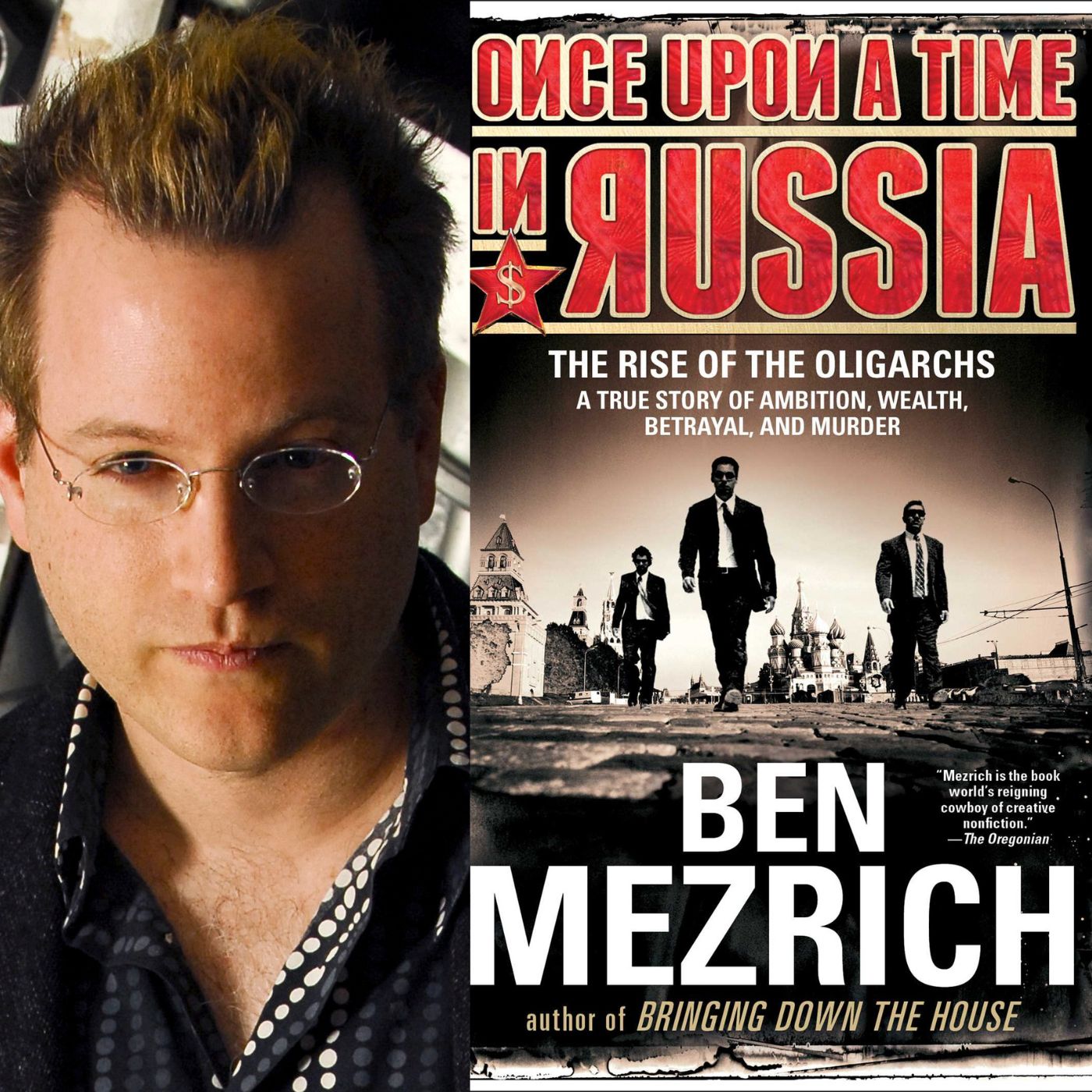
2489 FBF: Ben Mezrich - Dangerous Putin - Is Russia Living in a State of Crony Capitalism and Do Rich Russians Invest in the U.S.Ben Mezrich30 October 202641 minThis Flashback Friday is from episode 547 published on July 28, 2015. Vladimir Putin's rise to the top is a Shakespearean drama. Putin the President was created by a group of wealthy businessmen to replace Boris Yeltsin. While believing they found a man who aligned with their own desires to keep the money at the top, Putin had different ideas. He successfully brought down elite families who disagreed with his politics. Russians embraced the leader and made him one of most popular Russian presidents of all time. Ben Mezrich shares his journey of writing his latest book, soon to be movie, Once Upon a Time in Russia. Mentions: JasonHartman.com reviews@investwithjason.com Ben Mezrich Bringing Down the House The Accidental Billionaires Once Upon A Time in Russia @benmezrich _______________________________________________________________ https://empoweredinvestor.com/wednesday https://empoweredinvestorpro.com Contact our Investment Counselors today!
2084: Predicting the Next Economic Recession & Revolutionizing Banking with Decentralized Finance | Campbell HarveyCampbell R. Harvey29 November 202339 minJason discusses the topic of decentralized finance (defi) and its potential advantages in the cryptocurrency world. He also touches on the issue of the US housing shortage and how it presents opportunities for real estate investors. Additionally, Jason highlights the benefits of joining the "Fire Your Managers" program and announced an upcoming Empowered Investor pro meeting that will host a guest who will present a special "tenant insurance" product . Finally, he invites everyone to join their community to grow their real estate portfolio. Jason then interviews Professor Campbell R. Harvey from Duke University's Fuqua School of Business and the author of DeFi and the Future of Finance as they talk about the yield curve and Decentralized Finance. Harvey discusses the phenomenon of an inverted yield curve, which has predicted every recession for the last several decades. Harvey expressed his concern about the current inverted yield curve, which has been in place for 12 months, traditionally leading to a recession. Jason and Campbell also discuss the significance of an inverted yield curve and the potential of decentralized finance (defi) in the financial world. They identified problems with the current financial system and the possibility of solutions through DeFi, such as the need for an alternative to the SWIFT system for wire transfers and the ability to store and use value in transactions.
1941 FBF: 'The End of Wall Street' with Roger Lowenstein of the Wall Street Journal's 'Heard on the Street' ColumnRoger Lowenstein30 December 202248 minToday's Flashback Friday is form episode 237 published last 27 January 2012. Get more awesome content when you follow Jason's YouTube channel ! Join Jason Hartman as he interviews author and financial journalist Roger Lowenstein regarding the history of Wall Street's demise. Roger talks about the increases in choice, risk, hedging, more volatility, and how free markets are open to speculation, greed, fear and manipulation. There are more markets today susceptible to booms and busts. In the old days, local bankers determined loan eligibility. Today, bankers internationally, who don't know anything about their clientele, determine eligibility, often to the detriment of the borrowers. Roger and Jason debate whether Wall Street needs more regulation or deregulation, and discuss the consequences of government interference. They also talk about many of the Wall Street mistakes and the corporations that were rescued by the bailouts and the unprecedented number of failed mortgages. They end their discussion with observations of the Occupy Wall Street movement.
1899 FBF: Ben Mezrich - Dangerous Putin - Is Russia Living in a State of Crony Capitalism and Do Rich Russians Invest in the U.S.Ben Mezrich23 September 202239 minToday's Flashback Friday is from episode 547, published last July 27 2015. Vladimir Putin's rise to the top is a Shakespearean drama. Putin the President was created by a group of wealthy businessmen to replace Boris Yeltsin. While believing they found a man who aligned with their own desires to keep the money at the top, Putin had different ideas. He successfully brought down elite families who disagreed with his politics. Russians embraced the leader and made him one of most popular Russian presidents of all time. Ben Mezrich shares his journey of writing his latest book, soon to be movie, Once Upon a Time in Russia.
1454: Never Bet Against America, Optimism & Preparation, James Altucher Part IIJames Altucher5 May 202038 min"Never bet against America," says Warren Buffet. Jason Hartman agrees with Buffet and reminds you to align yourself with those in a position of power. Be optimistic, and prepared. There are several ways to be a prepared investor from an emergency fund to understanding the depths of your rental insurance. James Altucher is back with Jason Hartman to discuss his moves in the stock market, and why he favors certain positions. As well, this pandemic will accelerate our development with technology and how we perceive colleges vs certificates. Key Takeaways: [3:00] An emergency fund is a good, prudent idea. [4:30] Check your policies for insurance against lost rent. [6:00] The insurance business is the only business with a negative cost of capital. [9:26] Buffet said, "Never bet against America" [10:00] Buffet video: https://youtu.be/JPlRNQtjOHc [13:10] We, the proverbial We, all live better now than the richest people of the past. [21:39] Don't buy SPY "the spider", go with RVT instead. Royce Value Trust Inc [22:20] Anything that was going to happen in ten years, will happen tomorrow [25:00] Altucher shares his preferences on stocks based on some forced trends bound to happen in the next ten years. [28:45] Florida has "luxury weather." [32:30] 40 alternatives to college, with James Altucher.
1331 FBF: Core Causes of Economic Crisis with William D. Cohan NY Times Bestselling Author of 'Money and Power' & 'House of Cards'William D. Cohan22 November 20191:04Today's Flash Back Friday comes from Episode 243, originally published in February 2012. Jason Hartman interviews author, former Wall Street senior banker, and best-selling investigative journalist, William (Bill) D. Cohan on the events that led up to the current economic crisis. Bill explains the choices that the big firms, such as Goldman Sachs, JP Morgan, etc, made regarding what type of institution they were going to be, the path of these firms that led up to the current crisis, and how they used the bailout money gifted to them. He said it was one big party on Wall Street, during which brokers were to bring in revenue using a lot of whacky products, until everything came crashing down. Huge bonuses were paid out from the revenue collected from unsuspecting clients. Bill and Jason also discuss the Occupy Wall Street Movement. Bill expressed disappointment in the message of the movement, saying it isn't clear and they need to learn how Wall Street really works so that they can be more effective in bringing about reform. Wall Street has been influencing what goes on in Washington and paying lobbyists and donating to congressional coffers so that they can get the regulations, or lack thereof, that they want, i.e. the Dodd-Frank Wall Street Reform and Consumer Protection Act. Bill talks about how the expansion of Wall Street into Middle Class America was not an accident, using the example of Merrill Lynch being a public company.
CW 840 - William Poundstone - Head in the Cloud, Why Knowing Things Still Matters When Facts Are So Easy to Look Up & Fortune's FormulaWilliam Poundstone8 June 201740 minJason is in the big apple, New York City, for this 10th episode show. He is definitely not looking for income properties as the Hartman Risk Evaluator said there were no good rent-to-value ratios to be found there. Jason's welcomes author William Poundstone to tell us about his new book, Head in the Cloud: Why Knowing Things Still Matters When Facts are So Easy to Look Up . Mr. Poundstone is also the author of the New York Times best-selling books, Fortune's Formula: The Untold Story of Scientific Betting System that Beat the Casinos and Wall Street , Priceless: The Myth of Fair Value and How to Take Advantage of It and Gaming the Vote: Why Elections Aren't Fair and What We Can Do About it . Key Takeaways: [04:11] Income property is the 'ideal' multi-dimensional asset class but there are others. [07:28] Corporate raiders would creatively acquire a company and part it out akin to income property investors today. [12:29] The upcoming Venture Alliance Mastermind in Chicago includes an appearance by Mish Shedlock. William Poundstone Interview: [17:22] William explains the premise of his latest book, Head in the Cloud . [21:13] Having a general knowledge of baseline facts and the Dunning-Kruger effect have humbling assets. [23:38] The larger a person's vocabulary is akin to their ability to think. [27:22] How does America stack up on the map of ignorance? [29:53] Americans will vote for judges with less ethnic sounding names if they don't know the candidates.
CW 639 FBF – Roger Lowenstein- The End of Wall Street' The Wall Street Journal's 'Heard on the Street' ColumnRoger Lowenstein27 February 201648 minJoin Jason Hartman as he interviews author and financial journalist Roger Lowenstein regarding the history of Wall Street’s demise. Roger talks about the increases in choice, risk, hedging, more volatility, and how free markets are open to speculation, greed, fear and manipulation. There are more markets today susceptible to booms and busts. In the old days, local bankers determined loan eligibility. Today, bankers internationally, who don’t know anything about their clientele, determine eligibility, often to the detriment of the borrowers. Roger and Jason debate whether Wall Street needs more regulation or deregulation, and discuss the consequences of government interference. They also talk about many of the Wall Street mistakes and the corporations that were rescued by the bailouts and the unprecedented number of failed mortgages. They end their discussion with observations of the Occupy Wall Street movement. Roger Lowenstein graduated from Cornell University and was a reporter for the Wall Street Journal for more than a decade, including two years writing it’s “Heard on the Street” column. He has published five books, including The End of Wall Street, When Genius Fails, and Buffet: The Making of an American Capitalist. He is also the director of Sequoia Fund. Roger is the son of Helen and Louis Lowenstein. His father was an attorney and Columbia University law professor who wrote books and articles critical of the American financial industry.
CW 547 - Ben Mezrich - Dangerous Putin - Is Russia Living in a State of Crony Capitalism and Do Rich Russians Invest in the U.S.Ben Mezrich28 July 201538 minVladimir Putin’s rise to the top is a Shakespearean drama. Putin the President was created by a group of wealthy businessmen to replace Boris Yeltsin. While believing they found a man who aligned with their own desires to keep the money at the top, Putin had different ideas. He successfully brought down elite families who disagreed with his politics. Russians embraced the leader and made him one of most popular Russian presidents of all time. Ben Mezrich shares his journey of writing his latest book, soon to be movie, Once Upon a Time in Russia.