 D
Podcast · 18 episodes in the reference, 2018 to 2026
Design Better
Published by The Curiosity Department
Hosts
EWEli WooleryAWAarron Walter
Episodes
 Nir Eyal: Beyond Belief and how to change your mind to change your life | Nir Eyal | 14 May 2026 | 1:07 | Visit our Substack for bonus content and more: https://designbetterpodcast.com/p/nir-eyal-returns If you want to understand how much your beliefs shape your reality, try this quick exercise. Google the “checkerboard illusion” below and you can witness first-hand that even when you know two squares are the same shade of gray, your brain still refuses to show you the truth. If it can’t get a simple shade right, imagine what it’s doing with everything else. In his book Hooked , Nir Eyal helped people build habit-forming products for good. Then he wrote Indistractable to help people break free from the ones that weren’t. But after years of hearing from readers who knew exactly what to do and still couldn’t make themselves do it, he realized something was missing from the equation entirely. His new book, Beyond Belief , argues that motivation isn’t a straight line between behavior and benefit — it’s a triangle, and the third side is belief. The convictions we carry about ourselves, our abilities, and our circumstances quietly determine what we see, what we feel, and ultimately what we do. In this conversation, we dig into why your brain actively resists changing its mind, how the placebo effect is reshaping what we know about pain and performance, and what all of this means for designers and creative thinkers navigating the uncertainty of AI. |
| Design Better Experts in Residence: Roundtable at Sequoia Capital | James Buckhouse | 14 January 2026 | We recorded this special live episode of Design Better at Sequoia Capital in Silicon Valley, with our Experts in Residence : Irene Au, Kevin Bethune, and James Buckhouse. Longtime listeners will recognize these names— Irene appeared on Episode 1 of Design Better, we explored Kevin’s remarkable journey from nuclear engineer to Air Jordan designer in episode 72 , and we visited James at Sequoia Capital for a live AMA last year. Together, they’ve shaped how businesses build, how design operates at scale, and how creativity thrives inside technology and venture capital. Irene Au led the design practices at Yahoo! and Google during their formative years. Now a Design Partner at Khosla Ventures, she coaches designers, executives, and founders from seed stage through exit. Kevin Bethune is a multidisciplinary design and innovation executive. His career spans nuclear engineering, product creation at Nike, and formal design training at ArtCenter. Kevin wrote two MIT Press books— Reimagining Design and Nonlinear . And he’s the host of the TV show, America ByDesign on CBS. James Buckhouse is a Design Partner at Sequoia working with founders from idea to IPO to design companies, products, and cultures. His multidisciplinary career spans film ( Shrek , Madagascar , The Matrix) , fine art (exhibited at the Whitney Biennial and Guggenheim), ballet, and technology (Senior Experience Architect at Twitter). | |
 Jessica Hische and Chris Shiflett: Designing business tools that support how creatives actually work | Jessica Hische | 9 December 2025 | 1:09 | Jessica Hische and Chris Shiflett first crossed paths at Studiomates, a Brooklyn based co-working space where some of New York’s most talented designers built businesses and influential organizations. Visit our Substack for bonus content and more: https://designbetterpodcast.com/p/jessica-hische-and-chris-shiflett Jessica, known for her lettering and illustration work with clients like Wes Anderson and The New York Times, and Chris, whose career spans from the early foundations of the web to co-founding Brooklyn Beta, both experienced firsthand what happens when passionate, independent creatives come together. Today, they’re channeling those lessons into Studioworks, a business platform built specifically for independent studios and creative professionals. They’re tackling the unglamorous but essential parts of running a creative practice—invoicing, project management, client relationships—with the same care and community spirit that defined those Brooklyn days. In this conversation, we talk about the magic of Studiomates and Brooklyn Beta, what they learned from running their own studios for years, and why they decided to bootstrap a tool for the creative community rather than chase venture capital. It’s a story about building something sustainable, beautiful, and genuinely useful for the people who make things. Bios Jessica Hische is one of the most beloved and influential designers of the past two decades. |
 Astro Teller & Ivo Stivoric: Why moonshots require unlearning everything you know | Astro Teller | 10 September 2025 | 27 min | This is a preview of a premium episode. To hear the full episode, head to our Substack: https://designbetterpodcast.com/p/astro-teller-and-ivo-stivoric-why When a company talks about taking a “moonshot,” it often ends up being something trivial: a new emoji keyboard, or delivering a pizza in less than 30 minutes. But at X, the Moonshot Factory , which is part of Google, they’re tackling some of the world’s thorniest problems: sustainably feeding the world’s population, climate change, education, and much more. Today we’re speaking with Astro Teller, Captain of Moonshots, and Ivo Stivoric, Vice President at X. Astro has a PhD in artificial intelligence from Carnegie Mellon and wrote a prophetic 1997 novel about AI called Exegesis . He's the grandson of Edward Teller of Manhattan Project fame, but his own legacy is built on creating protected spaces where multidisciplinary teams can tackle humanity's biggest challenges—from self-driving cars to internet access delivered by balloons. Ivo leads a portfolio focused on climate, sustainability, and social justice. A designer by training who cut his teeth in the early days of wearable computing at Carnegie Mellon's Engineering Design Research Center, Ivo brings a unique perspective on bridging human needs with breakthrough technology. Together with Astro, he co-founded BodyMedia, one of the pioneering companies in wearable health monitors, which was later acquired by Jawbone. |
 Scott Belsky: Adobe's Chief Strategist on navigating the creative Cambrian Explosion | Scott Belsky | 11 February 2025 | 43 min | Visit our Substack for bonus content and more: https://designbetterpodcast.com/p/scott-belsky We live in an era where it’s easy to get overwhelmed by the pace of new technology. As designers, creatives, and technologists, we have a wealth of tools at our disposal that people in our roles only a decade ago could only have dreamed of. Yet it can be daunting to know where to focus our efforts: what new skills and workflows should we be learning to stay relevant? Scott Belsky, co-founder of Behance and Chief Strategy Officer at Adobe, calls the rapid spread of generative AI tools a “Cambrian Explosion,” referring to an evolutionary event 500 million years ago when many new animal species appeared in a relatively short time. We talk to Scott about how we might navigate this explosion, and why it might make sense to move toward a more “boundaryless” workflow. We also talk with Scott about his book The Messy Middle , and how to manage emotional turbulence during challenging parts of our career. Bio Scott Belsky is a builder, author, and investor who currently serves as Adobe’s Chief Strategy Officer and Executive Vice President of Design & Emerging Products. As a co-founder of Behance—a platform now used by over 50 million creatives—Scott has been instrumental in shaping Adobe’s Creative Cloud, pioneering mobile and service strategies, and later advising innovative companies like Pinterest, Uber, and Airtable. |
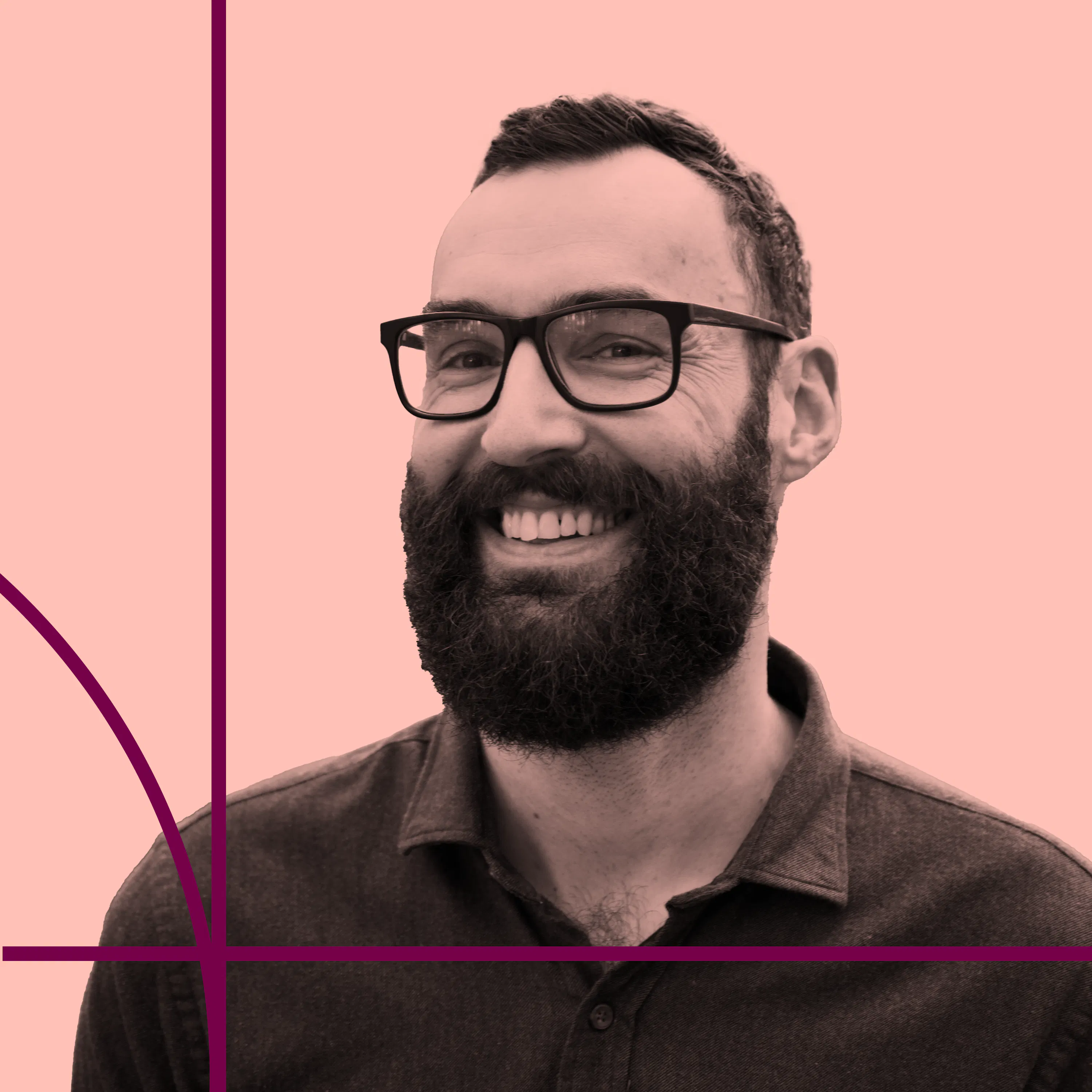 Jake Knapp: Click—How to make what people want | Jake Knapp | 28 January 2025 | 55 min | Design sprints have become a staple of the creative process at companies around the world and an indispensable tool in the pursuit of innovation. We owe a debt of thanks to Jake Knapp and his former colleagues at Google Ventures (now known as GV) who pioneered the design sprint. Visit our Substack for bonus content and more: https://designbetterpodcast.com/p/jake-knapp-click There is one gap that design sprints have not entirely addressed, though. What do you do if you’re starting a new product or company from scratch? That is the subject of Jake Knapp and co-author John Zeratsky’s newest book, Click: How to make what people want . Jake lays out the elements of what he calls a “foundation sprint” in this book. We chat with Jake about what makes a foundation sprint different than a design sprint, and some examples from the book of companies that have used foundation sprints effectively. We also talk to Jake about his decision to start Character, a VC fund aimed at helping startups at seed stage with capital and sprints, and the qualities that they look for in their founders when deciding to invest. Pre-order "Click" Bio Jake Knapp is a New York Times bestselling author and co-founder of Character . Previously, Jake built products like Microsoft Encarta and Gmail, co-founded Google Meet, and invented the Design Sprint. |
 Rewind: Julie Zhuo: Facebook's former VP of Product Design on what she got right and wrong as a leader | Julie Zhuo | 6 August 2024 | 51 min | Hi folks! We hope your summer is going well. Aarron and I are traveling and spending some time with our families this week, so we thought we’d rewind to one of our favorite episodes, with Julie Zhuo. The episode came to mind because one of our listeners asked us what episodes we’d recommend to someone who is growing their team, and Julie’s book The Making of Manager has a lot of helpful advice. Find the full episode, transcript, and more on our Substack: https://designbetterpodcast.com/p/rewind-julie-zhuo We also suggested Tony Fadell’s episode to our listener…the inventor of the iPhone and iPod has some great tips about hiring people who are skilled but don’t necessarily have the experience that ticks all the boxes of the posted job description. We first aired the interview with Julie back in 2019, when she was the VP of Product Design at Facebook. Since then, she’s gone on to found her own company called Sundial , with the mission to help teams make faster, smarter decisions with data. Original episode description Listen as Julie Zhuo, former VP of Product Design at Facebook and author of The Making of a Manager , recalls some of her earliest professional experiences at one of the fastest growing companies on the planet. She reveals how she got her start and grew to be a highly influential design leader renowned for building top-notch teams. Julie talks about the difference between leading and managing, and shares personal examples that can help you advance your career. |
 Ed Catmull: Creative lessons from Lucasfilm to Pixar and beyond | Ed Catmull | 27 September 2023 | 1:09 | Welcome to our second Design Better episode on the creative process. You may not know Ed Catmull’s name, but there’s almost no doubt you’re familiar with his work. As the co-founder of Pixar, he’s responsible for helping to create movies ranging from the original Toy Story on through The Incredibles , Wall-E , Moana , and Inside Out. Ed has a background in computer science, and as someone who pioneered many of the computer graphics and digital animation techniques that we now take for granted, he has a unique perspective on the intersection of technology and creativity. We chat with Ed about his transition from creating things himself, to leading creative teams; the elements of a sustainable creative culture, and how to give people feedback so they’ll actually listen to you. Ed also collaborated with Steve Jobs longer than probably anyone else who knew him—for over 30 years—and we hear some stories that haven’t been told anywhere else. One more quick thing before we go: we have some amazing guests lined up for our upcoming AMAs, like Judy Wert Debbie Millman, which are filling up quickly. Go to our events page and you can register for free. Show notes: https://designbetterpodcast.com/p/ed-catmull-the-journey-from-lucasfilm#details Bio Dr. Ed Catmull is co-founder of Pixar Animation Studios and the former president of Pixar, Walt Disney Animation Studios, and Disneytoon Studios. |
 John Maeda: AI + Design | John Maeda | 23 May 2023 | 35 min | Show notes: https://designbetterpodcast.com/p/john-maeda-ai-design Today we welcome back John Maeda, who is currently Vice President of Design and Artificial Intelligence at Microsoft. You’re probably familiar with John’s work, but if not, take a listen to Episode 42 of this show, where he talks about the arc of his remarkable career. In today’s episode, we talk with John about his role at Microsoft, what’s most misunderstood about AI, and his optimistic take on what the future holds for designers who embrace these new tools. One more thing before we get to the show…if you can take a moment to leave us a review on Apple Podcasts , or rate the show on Spotify, that will help us reach new people. Go ahead and hit the pause button right now and leave your review, we’ll wait for you. 😉 Thank you for listening, and thanks for your support. Bio John Maeda is an American technologist, designer, engineer, artist, investor, author, and teacher. He is currently the VP of Design and Artificial Intelligence at Microsoft. He’s the author of five books including a gentle intro to AI/ML " How To Speak Machine (Penguin) " and the " Laws of Simplicity (MIT Press). " John is represented in the permanent collections of the Museum of Modern Art, NYC, and the Cartier Foundation, Paris. He’s the first recipient of the White House’s National Design Award for algorithmically-generated visualizations informed by data. |
 Matt Mullenweg: WordPress, AI, and jazz | Matt Mullenweg | 25 April 2023 | 1:06 | Show notes: https://designbetterpodcast.com/p/matt-mullenweg-wordpress-ai-and-jazz Matt Mullenweg started out as a jazz saxophonist, and went on to create WordPress, which is the platform behind an astonishing 42% of the websites in the world. We chat with Matt about his journey from musician to developer to entrepreneur, his perspective on distributed work, and his thoughts on the transformative capabilities of the latest generation of Generative Artificial Intelligence. We also come back to Matt’s roots in jazz and his continued love for music and musicians. Get the show transcript, bonus content, and access to episodes a week early on our Substack: https://thecuriositydepartment.substack.com/ Bio (via Wikipedia) Matthew Mullenweg is an American entrepreneur and web developer living in Houston. He is known for developing and founding the free and open-source web software WordPress, and its parent company Automattic. After dropping out of the University of Houston, he worked at CNET Networks from 2004 to 2006 until he quit and founded Automattic, an internet company whose brands include WordPress.com, Akismet, Gravatar, VaultPress, IntenseDebate, Crowdsignal, and Tumblr. |
 Julie Zhuo, Rewind: Facebook's VP of Product Design on what she got right and wrong as a leader | Julie Zhuo | 6 July 2021 | 52 min | Show notes: https://designbetterpodcast.com/p/julie-zhuo Listen as Julie Zhuo, VP of Product Design at Facebook and author of The Making of a Manager , recalls some of her earliest professional experiences at one of the fastest growing companies on the planet. She reveals how she got her start and grew to be a highly influential design leader renowned for building top-notch teams. Julie talks about the difference between leading and managing, and shares personal examples that can help you advance your career. Bio Julie Zhuo is one of Silicon Valley’s top product design executives and author of The Making of a Manager . Aside from her day job as VP of Product Design at Facebook, Julie writes about technology, design, and leadership on her popular blog The Year of the Looking Glass and in The New York Times and Fast Company . Learn more about your ad choices. Visit megaphone.fm/adchoices |
 Brian Chesky: Airbnb’s co-founder on designing for trust | Brian Chesky | 15 December 2020 | 45 min | Show notes: https://designbetterpodcast.com/p/brian-chesky It all started with a box of cereal. Well, that’s not exactly the beginning, but when Brian Chesky and his roommates had maxed out their credit cards while starting up what would become Airbnb, they had a crazy idea to continue funding the company by designing and selling limited-edition cereal boxes during the 2008 presidential election, and call them Obama O’s & Captain McCain. Now, 12 years later Airbnb just made its initial public offering—IPO—on the Nasdaq on December 10th, and what a ride it’s been. In this interview we speak with Airbnb co-founder and CEO Brian Chesky, and learn how being a designer has influenced the arc of his journey, leading a company from a 3-person startup to a public company. We talk about what it’s like to design for trust during a pandemic, and the power of having a clear company mission that all can align to. If— like some of our colleagues— you’re living in or working from an Airbnb right now, or have taken your family on a holiday made possible by them, we hope Brian’s story will be especially inspirational. As always, thanks for listening, and enjoy the show. Takeaways: Learn how Airbnb designs with a mission of belonging, to counteract the loneliness so common in our digital-first era. Hear why Airbnb organizes their teams by customer journey Learn about Project Lighthouse, Airbnb’s effort to combat discrimination. Learn more about your ad choices. Visit megaphone.fm/adchoices |
 John Maeda: Design in Tech Report | John Maeda | 27 October 2020 | 41 min | Show notes: https://designbetterpodcast.com/p/john-maeda Over the arc of his career, John Maeda has been many things: a professor at MIT, president at the Rhode Island School of Design, a Design Partner at Kleiner Perkins, head of Computational Design and Inclusion at Automattic, and now Chief Experience Officer at Publicis Sapient. In our interview with John, we learn how curiosity and humility have driven his wide-ranging and accomplished career. We also dive deep into his recent CX Report, which was formerly called the Design in Tech Report (we ask him about the name change). We discuss why algorithms have the potential to narrow our point of view, and why digital transformation is so hard for companies that are lower on what he refers to as the “Kardashev Scale.” Takeaways: Why “shipping your org chart” may not be a bad thing. What “L.E.A.D.” products are (Light, Ethical, Accessible, Dataful). How design becomes more important as the frequency of interactions with digital products increase Bio John Maeda is an American technologist, designer, engineer, artist, investor, author, and teacher. He is Chief Experience Officer at Publicis Sapient, the technology consulting and delivery arm of communications and marketing conglomerate Publicis. Maeda serves on the Board of Sonos and the Cooper Hewitt Smithsonian Design Museum. |
 Marty Cagan: Understanding product management and Agile | Marty Cagan | 2 June 2020 | 49 min | Show notes: https://designbetterpodcast.com/p/marty-cagan Are you on a product team or a feature team? After you listen to our interview with Marty Cagan, legendary product management guru, author, and partner at Silicon Valley Product Group, you’ll know just where you stand, and how to become a product team leader if you aren’t already one. We also discuss why product management is misunderstood, the dual track agile process, discovery sprints, and the four types of prototypes that Marty has classified, including user, feasibility, live data, and hybrid prototypes. Takeaways: How dual track agile can help to validate ideas in the fastest, cheapest way possible The four risks for every product launch Why good product teams all have the same qualities Learn more about your ad choices. Visit megaphone.fm/adchoices |
 Julie Zhuo: Facebook's former VP of Product Design on what she got right and wrong as a leader | Julie Zhuo | 29 April 2019 | 52 min | Show notes: https://designbetterpodcast.com/p/julie-zhuo Listen as Julie Zhuo, VP of Product Design at Facebook and author of The Making of a Manager , recalls some of her earliest professional experiences at one of the fastest growing companies on the planet. She reveals how she got her start and grew to be a highly influential design leader renowned for building top-notch teams. Julie talks about the difference between leading and managing, and shares personal examples that can help you advance your career. Bio Julie Zhuo is one of Silicon Valley’s top product design executives and author of The Making of a Manager . Aside from her day job as VP of Product Design at Facebook, Julie writes about technology, design, and leadership on her popular blog The Year of the Looking Glass and in The New York Times and Fast Company . Learn more about your ad choices. Visit megaphone.fm/adchoices |
 Jake Knapp: The guy who brought us the design sprint wants us to rethink time management | Jake Knapp | 9 October 2018 | 52 min | Show notes: https://designbetterpodcast.com/p/jake-knapp-make-time What if you could set aside a distraction-free space to accomplish one meaningful thing in your life each day? How might that change your relationships, hobbies, work, or mental wellbeing? In a special episode of the Design Better Podcast, we talk to Jake Knapp, co-author of the New York Times bestseller Sprint , about his new book, Make Time . The book advocates for forgetting about being productive and focusing instead on being purposeful by using design sprints thinking to define a “highlight” for each day. If you enjoy this episode, we hope you’ll leave a review on iTunes or Google Play to help others members of the design community discover the podcast. Bio Jake Knapp is the author of Make Time and the New York Times bestseller Sprint . Jake spent 10 years at Google and Google Ventures, where he created the Design Sprint . He has since coached teams like Slack, Uber, 23andMe, LEGO, and The New York Times on the method. Previously, Jake helped build products like Gmail, Google Hangouts, and Microsoft Encarta. He is currently among the world’s tallest designers. Learn more about your ad choices. Visit megaphone.fm/adchoices |
| James Buckhouse of Sequoia Capital on what film making taught him about product design | James Buckhouse | |||
| Making Design Better—better—with weekly episodes, an enhanced newsletter, and more | James Buckhouse |
DNir Eyal: Beyond Belief and how to change your mind to change your lifeNir Eyal · 14 May 2026DDesign Better Experts in Residence: Roundtable at Sequoia CapitalJames Buckhouse · 14 January 2026DJessica Hische and Chris Shiflett: Designing business tools that support how creatives actually workJessica Hische · 9 December 2025DAstro Teller & Ivo Stivoric: Why moonshots require unlearning everything you knowAstro Teller · 10 September 2025DScott Belsky: Adobe's Chief Strategist on navigating the creative Cambrian ExplosionScott Belsky · 11 February 2025DJake Knapp: Click—How to make what people wantJake Knapp · 28 January 2025DRewind: Julie Zhuo: Facebook's former VP of Product Design on what she got right and wrong as a leaderJulie Zhuo · 6 August 2024DEd Catmull: Creative lessons from Lucasfilm to Pixar and beyondEd Catmull · 27 September 2023DJohn Maeda: AI + DesignJohn Maeda · 23 May 2023DMatt Mullenweg: WordPress, AI, and jazzMatt Mullenweg · 25 April 2023DJulie Zhuo, Rewind: Facebook's VP of Product Design on what she got right and wrong as a leaderJulie Zhuo · 6 July 2021DBrian Chesky: Airbnb’s co-founder on designing for trustBrian Chesky · 15 December 2020DJohn Maeda: Design in Tech ReportJohn Maeda · 27 October 2020DMarty Cagan: Understanding product management and AgileMarty Cagan · 2 June 2020DJulie Zhuo: Facebook's former VP of Product Design on what she got right and wrong as a leaderJulie Zhuo · 29 April 2019DJake Knapp: The guy who brought us the design sprint wants us to rethink time managementJake Knapp · 9 October 2018DJames Buckhouse of Sequoia Capital on what film making taught him about product designJames BuckhouseDMaking Design Better—better—with weekly episodes, an enhanced newsletter, and moreJames Buckhouse