 T
Podcast · 15 episodes in the reference, 2023 to 2026
Talking Billions with Bogumil Baranowski
Published by Bogumil Baranowski
Host
BBBogumil Baranowski
Episodes
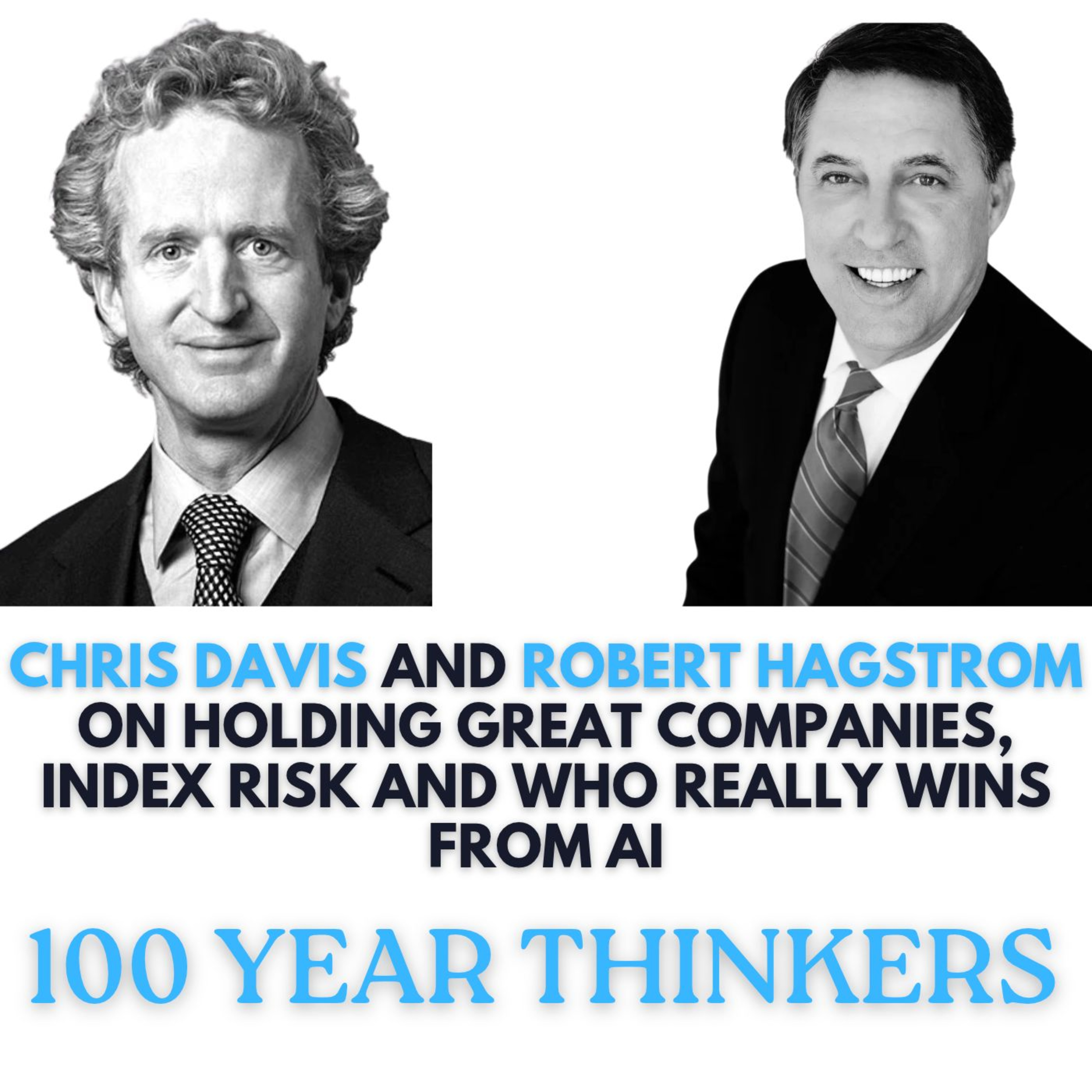 100 Year Thinkers: Chris Davis and Robert Hagstrom on Holding Great Companies, Index Risk and Who Really Wins From AI | Robert G. Hagstrom | 16 October 2026 | 1:14 | Chris Davis and Robert Hagstrom explore the tension between holding great businesses and keeping a winning stock from becoming too much of a portfolio risk. Why do two investors who believe in letting winners compound also use 10% position limits? On this episode of 100 Year Thinkers, Chris Davis of Davis Funds and Robert Hagstrom of EquityCompass join Matt Zeigler and Bogumil Baranowski to discuss position sizing, selling mistakes, index concentration and the cost of growth. From Chris Davis’s experience selling Costco to the debate over who will capture AI’s economic benefits, they examine what it takes to hold a business through uncertainty without ignoring risk. Stay for Matt and Bogumil’s closing discussion of the lessons for investors. Available now on Excess Returns Podcast and Talking Billions. 🎧 I’m excited to share this episode with you—it’s reposted here with permission and blessing from the Excess Returns team. Don’t miss it! And follow their work, links below. |
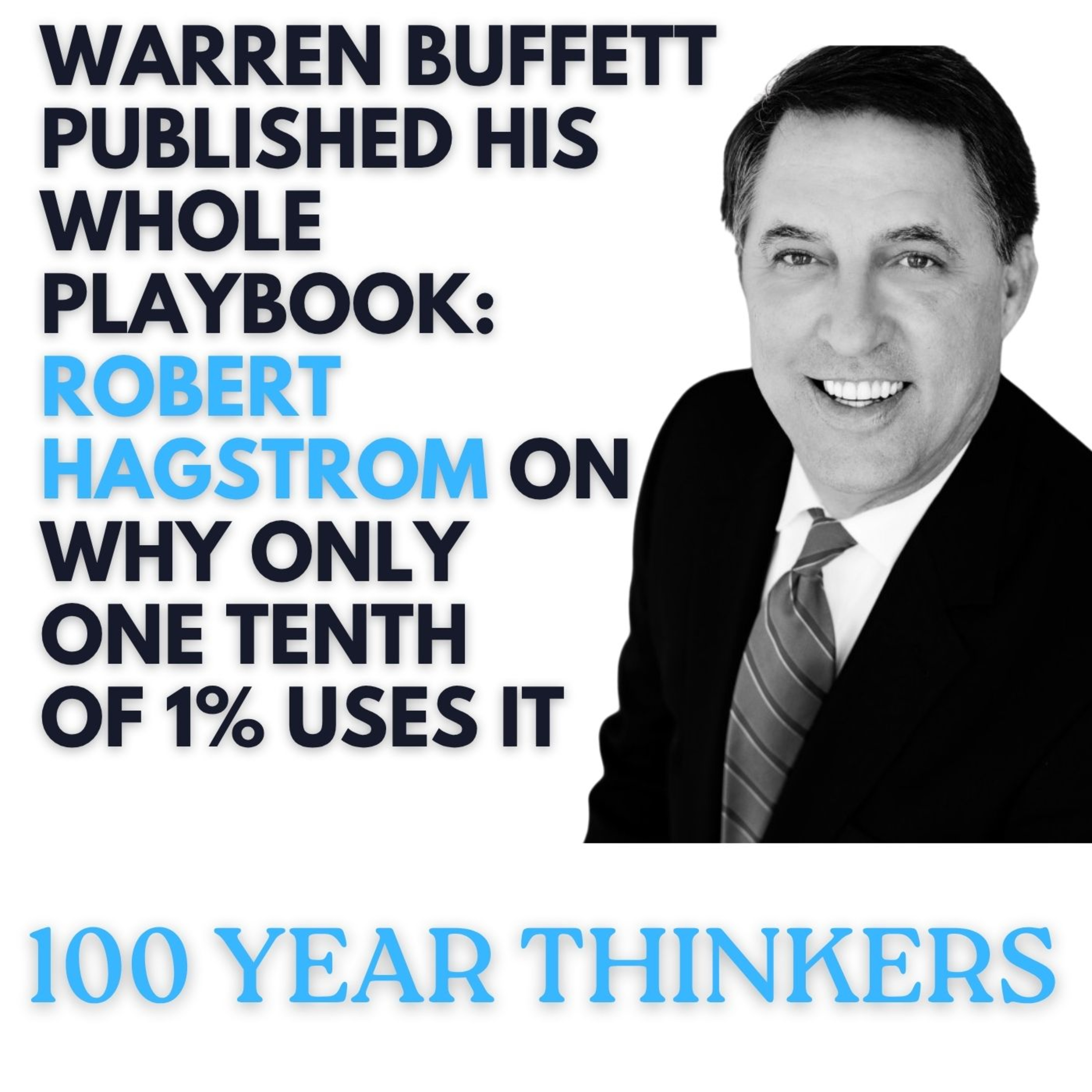 100 Year Thinkers: Warren Buffett Published His Whole Playbook | Robert Hagstrom on Why Only One Tenth of 1% Uses It | Robert G. Hagstrom | 7 August 2026 | 1:07 | Robert Hagstrom joins Matt Zeigler and Bogumil Baranowski to revisit the 25th anniversary edition of The Warren Buffett Portfolio and explain why volatility is not the same as investment risk. They discuss concentrated portfolios, active share, business valuation, behavioral finance, complex adaptive systems, and Warren Buffett’s warning that the market’s casino can overwhelm its cathedral. Matt Zeigler and I had the privilege of hosting Robert Hagstrom for a special 100-Year Thinkers Edition of the Excess Returns Podcast. Available now on Excess Returns Podcast and Talking Billions. 🎧 I’m excited to share this episode with you—it’s reposted here with permission and blessing from the Excess Returns team. Don’t miss it! And follow their work, links below. |
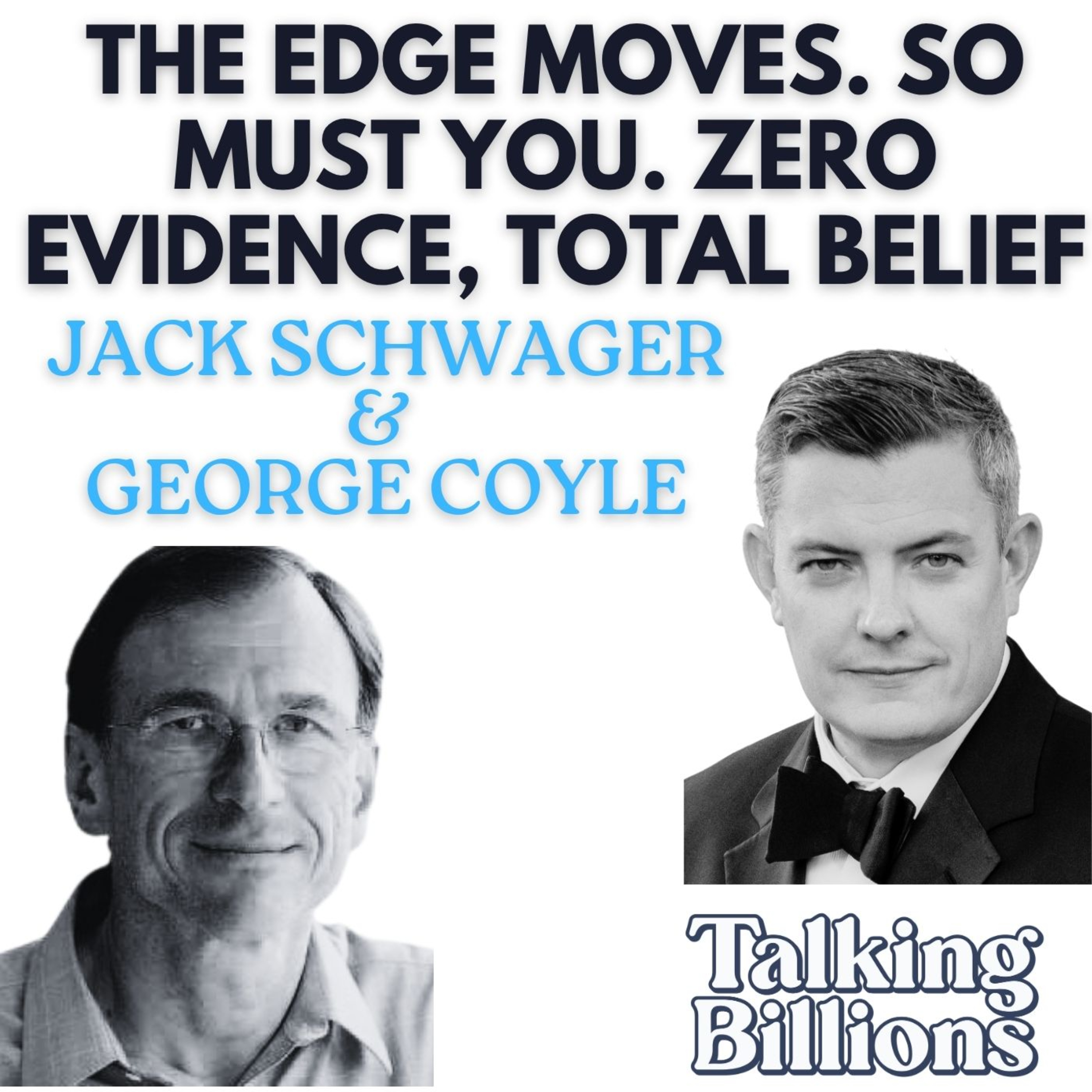 Jack Schwager & George Coyle: The Edge Moves. So Must You. Zero Evidence, Total Belief. | Jack D. Schwager | 8 June 2026 | 1:18 | Jack Schwager is the legendary author of the Market Wizards series and one of the most influential figures in trading literature, whose decades of interviewing elite traders have made him the definitive chronicler of exceptional market performance; George Coyle is a hedge fund manager and deep-dive trading historian whose years of original research into the patterns of great traders catalyzed their co-authored Market Wizards: The Next Generation . Episode Sponsor: Fiscal AI is a modern data terminal that gives investors instant access to twenty years of financials, earnings transcripts, and extensive segment and KPI data—use my link for a two-week free trial plus 15% off: https://fiscal.ai/talkingbillions/ 3:00 — Bogumil shares personal origin story: as a Polish grad student in Paris, Jack's books gave him the courage to manage money. Jack jokes: "Not the first one." 5:15 — George on his obsession: years of writing deep-dive papers on Soros, Marcus, Druckenmiller — getting inside feedback that he "hit the nail on the head." 7:30 — Jack's biggest surprise from the first Market Wizards: how many enormously successful traders had multiple initial failures before breakthrough. 9:10 — George on the youngest cohort: small-cap shorting is "the last rock you'd flip over" — yet that's precisely why these traders found edge where no one looked. |
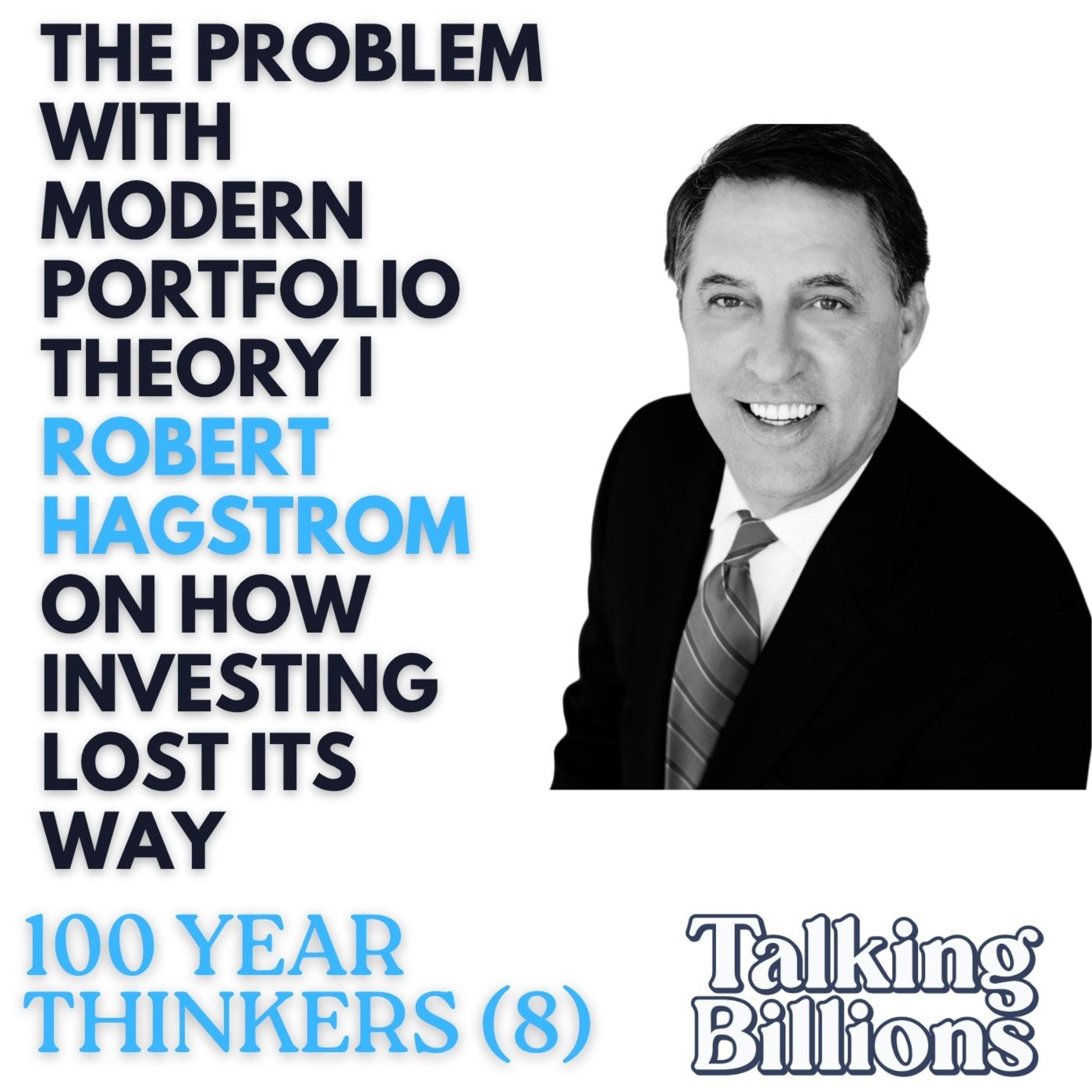 100 Year Thinkers, Ep. 8: The Problem with Modern Portfolio Theory | Robert Hagstrom on How Investing Lost Its Way | Robert G. Hagstrom | 6 June 2026 | 1:06 | In this episode of The 100 Year Thinkers, Robert Hagstrom explains why modern portfolio theory pulled investors away from business analysis and toward portfolio math. We discuss Markowitz, beta, efficient markets, Warren Buffett, Charlie Munger, business-driven investing, owner earnings, benchmarks, and why thinking like a business owner changes how investors understand risk. The Warren Buffett Portfolio, 25th Anniversary Edition https://amzn.to/4uz8sZ3 Topics covered: Why Hagstrom thinks modern portfolio theory changed investing’s objective The difference between volatility, variance and real investment risk How Benjamin Graham and John Burr Williams framed risk around intrinsic value Why beta became the dominant shorthand for risk How the 1973-74 bear market helped institutionalize modern portfolio theory Why Berkshire preserved the business owner’s lens The “cathedral and casino” distinction between owning businesses and trading stocks Owner earnings, return on invested capital and cost of capital Why business owners often make better long-term equity investors Look-through earnings and building a “mini Berkshire” The difference between making money and beating a benchmark How benchmarks can distort investor behavior Why knowing yourself and your clients matters in portfolio construction Matt Zeigler and I had the privilege of hosting Robert Hagstrom for a special 100-Year Thinkers Edition of the Excess Returns Podcast. |
 We Asked Chris Bloomstran Why He Won’t Own the S&P 500 At These Levels — And What He Does Instead | Christopher Bloomstran | 24 April 2026 | 1:09 | I joined Justin Carbonneau for one more special episode of Excess Returns . We spoke with Chris Bloomstran soon after his famous annual letter release, and right before the Berkshire meeting in Omaha. Available now on Excess Returns Podcast and Talking Billions. 🎧 I’m excited to share this episode with you—it’s reposted here with permission and blessing from both Justin and Jack. Don’t miss it! And follow their work, links below. This episode features Chris Bloomstran of Semper Augustus discussing market concentration, AI capital spending, Berkshire Hathaway, and the risks facing today’s equity investors. The conversation explores whether we are at a secular valuation plateau, how AI investment may reshape returns, and why passive investors may face more risk than they realize. |
 Guy Spier: What Really Counts in Life — Beyond Wealth and Returns | Guy Spier | 20 February 2026 | 1:18 | Spend an hour this weekend with one of the kindest and most generous people — an accomplished investor and a truly remarkable mind (Original Release: Jan 30, 2023). Guy Spier is a good friend, an inspiration, and one of Talking Billions' earliest guests. He is the Zurich-based founder of the Aquamarine Fund, author of The Education of a Value Investor , and host of VALUEx — a wonderful gathering of like-minded investors. He is also the man who famously paid $650,000 alongside Mohnish Pabrai to have a charity lunch with Warren Buffett. 5 Biggest Ideas from the Episode 1. It's not the fastest skier who wins — it's the fastest who doesn't get injured. Drawing from Luca Dellanna's work on ergodicity, Guy makes a powerful case for survival over speed. If you're eliminated early, you miss all the remaining races. As he put it: "If you want to be really smart about it, you're going to race in a way that will ensure that you get down without injury." 2. Losing it all is the ultimate failure — and it's always avoidable. If you're in the business of preserving wealth, losing the capital base means being forced back to selling your time. Sophisticated people repeatedly make this mistake — from LTCM to FTX — and it never had to happen. 3. Your social environment shapes your investing more than your physical one. Who you spend time with changes how you think and behave — and investing is no exception. |
 Tobias Carlisle: Warren Buffett as Warrior: What Sun Tzu Teaches Us: 13 Laws of Strategic Advantage | Tobias E. Carlisle | 9 February 2026 | 1:21 | Find me on Substack! Tobias Carlisle is founder and portfolio manager of Acquirer’s Funds managing two deep value ETFs, acclaimed author of five investment books including his newest Soldier of Fortune blending Warren Buffett and Sun Tzu’s strategic wisdom, and host of the popular Value After Hours podcast. Episode Sponsor: Fiscal AI is a modern data terminal that gives investors instant access to twenty years of financials, earnings transcripts, and extensive segment and KPI data—use my link for a two-week free trial plus 15% off: https://fiscal.ai/talkingbillions/ 3:00 - Tobias shares his unique upbringing in Australian outback where school ended in grade 10 and included animal husbandry—learning to shear sheep and work cattle in what he calls a formative contrast to his later academic life at boarding school. 6:00 - Transition to law career: Started at a national law firm in April 2000, peak of dot-com bubble. “I missed out on all of the fun parties on the way up and I just saw the carnage on the way down,” which opened his eyes to the importance of cash flow over hype. 9:00 - Early exposure to activist investing: Witnessed corporate raiders targeting dot-coms with cash on balance sheets, killing the business and liquidating or using as platform for acquisitions. This low-downside, high-complexity approach fascinated him. |
| Tobias Carlisle on Warren Buffett, Sun Tzu, and the Ancient Art of Risk Taking | Excess Returns Pod | Tobias E. Carlisle | 24 October 2025 | 1:05 | I had the pleasure of co-hosting another episode of Excess Returns with Matt Zeigler. We sat down with the one and only Tobias Carlisle — investor, author, podcast host, and all-around fascinating mind whose writing and ideas have influenced my thinking at various times. He discusses his new book, which made me see Buffett’s investment approach in an entirely new light — and you’re about to discover why. I highly recommend both this episode and Toby’s book. In this episode of Excess Returns , we sit down with Tobias Carlisle , founder and portfolio manager at the Acquirers Fund and author of the new book “Soldier of Fortune: Warren Buffett’s Sun Tzu and the Ancient Art of Risk Taking.” Tobias joins Matt Zeigler and Bogumil Baranowski to explore how timeless strategic principles from The Art of War apply to investing and how Warren Buffett embodies many of those ideas—from invincibility and victory without conflict to the disciplined avoidance of ruin. The conversation connects Buffett’s real-world decisions—from Apple to General Re to Japan’s trading houses—to broader lessons on temperament, risk, and wisdom in markets. Available now on Excess Returns Podcast and Talking Billions. 🎧 I’m excited to share this episode with you—it’s reposted here with permission and blessing from both Matt and Jack. Don’t miss it! And follow their work, links below. |
| Robert Hagstrom & Chris Mayer -- With the Concentrated Momentum Driven Almost Unbeatable Major Indices, What Does It Really Take These Days to Outperform the Market | Excess Returns Pod | Robert G. Hagstrom | 17 October 2025 | 59 min | Matt Zeigler and I had the privilege of hosting Robert Hagstrom (The Warren Buffett Way) and Chris Mayer (100 Baggers) for a special 100-Year Thinkers Edition of the Excess Returns Podcast. Two legendary investors and authors. One hour packed with timeless wisdom on long-term thinking and wealth creation. This is the conversation we’ve been wanting to have—and we think you’ll find it as valuable as we did. I’m excited to share this episode with you—it’s reposted here with permission and blessing from both Matt and Jack. Don’t miss it! And follow their work, links below. https://excessreturnspod.com/ https://cultishcreative.com/ — everyting Matt Zeigler. In a world that moves tick by tick and quarter by quarter, The 100-Year Thinkers zooms out to explore what it really means to invest with patience, discipline, and perspective. In this premiere episode, join Matt Zeigler, Bogumil Baranowski, Chris Mayer, and Robert Hagstrom as they discuss market concentration, the dominance of mega-cap stocks, and how investors can think in decades—not days. Together, they explore the evolution of active management, the role of the S&P 500, the challenge of private equity, and how to build portfolios that last. Topics covered Concentration and the rise of mega-cap dominance Equal-weight vs. |
| Buffett Does It. Most Value Investors Don’t | Robert Hagstrom on the Real Key to Compounding [Excess Returns Podcast] | Robert G. Hagstrom | 28 June 2025 | 1:17 | Matt Zeigler and Bogumil Baranowski join Robert Hagstrom for a very special hour-long discussion. The episode originally appeared on Excess Returns Podcast, and it is reposted here with permission from the podcast hosts. Enjoy! Legendary investor and author Robert Hagstrom joins Excess Returns to explore timeless investing principles—and how they’ve evolved in today’s market. In this wide-ranging conversation, Robert shares stories from working with Bill Miller, insights on Warren Buffett’s approach, and the philosophical foundations of long-term investing. He also issues a stark warning about the rising popularity of private equity for retail investors. Whether you’re a Buffett disciple, a fan of focused investing, or just curious about how great investors think, this is a conversation packed with insight. 🔍 Topics Covered: • How Robert accidentally became a money manager • What Buffett’s 1983 letter taught him about investing • Lessons from 14 years working with Bill Miller • Why absolutes in investing can be dangerous • How Robert learned to truly read later in life • Buffett vs. |
 Finding Value in Chaos: Chris Bloomstran on Patience, Bubbles & Berkshire's Secret Sauce | Christopher Bloomstran | 23 December 2024 | 1:49 | [SPECIAL ANNOUNCEMENT: If you are interested in meeting me, the host of Talking Billions, please fill out the form here, both in-person and virtual meetings are available until my calendar fills up: FORM available HERE ] NONE OF THE STOCKS MENTIONED ARE RECOMMENDATIONS, NO INVESTMENT ADVICE; DO YOUR OWN RESEARCH. My guest today is Christopher P. Bloomstran, CFA. He is the President and Chief Investment Officer of Semper Augustus Investments Group LLC. Chris has three decades of professional investment experience with a disciplined, value-driven approach to fundamental equity and industry research. Semper Augustus manages concentrated equity portfolios of well-run, well-capitalized businesses with share prices trading below conservative appraisals of intrinsic value. Summary In this conversation, Christopher Bloomstran shares insights from his extensive investment career, discussing his childhood influences, his relationship with money, and the impact of mentors. He reflects on his early investment experiences, the significance of learning from Warren Buffett and Charlie Munger, and the philosophy behind his investment firm. Bloomstran also shares thoughts about market trends and emphasizes the importance of value investing and ethical management in business. He emphasizes the importance of understanding the price of investments, the need for patience in navigating market inefficiencies, and the challenges of holding cash reserves while seeking investment opportunities. |
 Christopher Mayer: 100 Baggers, and General Semantics Revisited & Expanded | Christopher Mayer | 2 December 2024 | 1:16 | It's Chris' third time on the show -- check out the earlier episodes, both are among the top ten all-time downloads. My guest today is Chris Mayer, he is a professional investor, best-selling author, expert on general semantics and more. He is a portfolio manager and co-founder of Woodlock House Family Capital, and the author of 100 bagger, How do you know, Dear Fellow Time Binder, World Right Side Up, and Invest Like a Dealmaker. It’s his third time on the show — consider listening to the previous two episodes before or along with this. It’s always such a joy to speak with Chris, and this episode is no different. Enjoy! Summary In this conversation, Chris Mayer discusses the nuances of investing, emphasizing the importance of clear communication with investors, the long-term perspective of family wealth, and the evolution of investment research. He highlights the significance of patience in compounding, the role of catalysts in stock performance, and the need to embrace uncertainty. Chris also contrasts dynamic and static value investing, explores the impact of passive investing on market dynamics, and reflects on how general semantics has influenced his investment thinking. In this conversation, Chris and Bogumil explore the themes of lifelong learning, the importance of humility in understanding knowledge, and the principles of investing that should be passed down to future generations. |
 Christopher Begg: High-Quality Investing & Playing the Infinite Game | Christopher Begg | 18 September 2024 | 1:52 | My guest today is Christopher Begg. Chris is a successful long term patient value investor who seeks high quality, he is also a professor and teaches the Ben Graham’s Security Analysis Course at Columbia University in New York. He also loves the ocean and water sports, especially surfing, which, from what I can tell, makes him an even better investor. Christopher Begg is President/Chief Investment Officer/Co-Founder at East Coast Asset Management, Inc. & Adjunct Professor at Columbia Business School in New York City. https://www.linkedin.com/in/christopherbegg/ We talked about: The Evolution of Investing Philosophy Patience in Investing Understanding Value 3.0 Teaching Ben Graham's Principles The Infinite Game in Investing The Role of Freedom in Success The Importance of Questions Quality in Investing The Influence of Nature on Investment Philosophy The Search for Truth in History The Art of Learning and Memory Podcast Program – Disclosure Statement Blue Infinitas Capital, LLC is a registered investment adviser and the opinions expressed by the Firm’s employees and podcast guests on this show are their own and do not reflect the opinions of Blue Infinitas Capital, LLC . All statements and opinions expressed are based upon information considered reliable although it should not be relied upon as such. Any statements or opinions are subject to change without notice. |
 Christopher Mayer: How Do You Know? & Dear Fellow Time-Binder: Letters on General Semantics | Christopher Mayer | 17 July 2023 | 1:12 | Christopher Mayer (Author of 100-Baggers) - How Do You Know? A Guide to Clear Thinking About Wall Street, Investing and Life & Dear Fellow Time-Binder: Letters on General Semantics. I’m always excited to have Chris on the show, it’s his second appearance, and we had as much fun, if not more, as last time. Christopher Mayer is the founder of Woodlock House Family Capital and author of several books, including 100 Baggers. Before starting Woodlock House (which went live in January 2019), Mayer worked with Bonner & Partners and the Bonner family office. He was the editor of Capital & Crisis, published by Agora Financial from 2004-2015. He was a corporate banker from 1994-2004 and graduated magna cum laude with a degree in finance from the University of Maryland. He also has an MBA from the same institution. He is the author of Invest Like A Dealmaker: Secrets of a Former Banking Insider (2008), World Right Side Up: Investing Across Six Continents (2012), 100 Baggers: Stocks that Return 100-to-1 and How to Find Them (2015) and How Do You Know? A Guide to Thinking Clearly About Wall Street, Investing and Life (2018). Dear Fellow Time-Binder: Letters on General Semantics. Today we focus on the last two books. Today: • We discussed Alfred Korzybski's concept of time-binding and its implications for human learning. • Chris emphasized understanding the limits of our knowledge as a form of wisdom. • We explored tools for effective transmission and retention of knowledge. |
 Guy Spier | The Education of a Value Investor & More | Guy Spier | 30 January 2023 | 1:13 | Guy Spier | The Education of a Value Investor & More My guest today is Guy Spier . Guy Spier is a Zurich-based author and investor. He completed his MBA at the Harvard Business School, and holds a First Class degree in PPE (Politics, Philosophy and Economics) from Oxford University where he studied at Brasenose College with the British Prime minister David Cameron. After completing his MBA, Spier started the Aquamarine Fund which is an investment vehicle inspired by the original 1950's Buffett partnerships. In 2008 Spier made news by bidding $650,000 with his friend, Mohnish Pabrai, to have a charity lunch with Warren Buffett. His book, “The Education of a Value Investor” has sold more than 50,000 copies. Mr. Spier served as the chair and founder of the Weizmann Science and Business Club, and as a member of the Harvard Business School Alumni Board. He currently serves on the advisory boards of Value Conferences, and of Zurich Minds. He is the founder of VALUEx Zurich, and has co-founded TEDxZürich and TEDxZüriberg. From 2007 to 2009, Mr. Spier served on the Advisory Board of the Dakshana Foundation. In 2017 Spier joined the newly formed board of the Swiss Friends of Oxford University and is on the board of the UN Watch. He is a member of Entrepreneurs' Organization and of the Young Presidents Organization. Guy lives in Zurich with his wife, and their three children. Today, you’ll hear about: 1) Guy’s family history, and how it shaped him, and his investment philosophy. |
T100 Year Thinkers: Chris Davis and Robert Hagstrom on Holding Great Companies, Index Risk and Who Really Wins From AIRobert G. Hagstrom · 16 October 2026T100 Year Thinkers: Warren Buffett Published His Whole Playbook | Robert Hagstrom on Why Only One Tenth of 1% Uses ItRobert G. Hagstrom · 7 August 2026TJack Schwager & George Coyle: The Edge Moves. So Must You. Zero Evidence, Total Belief.Jack D. Schwager · 8 June 2026T100 Year Thinkers, Ep. 8: The Problem with Modern Portfolio Theory | Robert Hagstrom on How Investing Lost Its WayRobert G. Hagstrom · 6 June 2026TWe Asked Chris Bloomstran Why He Won’t Own the S&P 500 At These Levels — And What He Does InsteadChristopher Bloomstran · 24 April 2026TGuy Spier: What Really Counts in Life — Beyond Wealth and ReturnsGuy Spier · 20 February 2026TTobias Carlisle: Warren Buffett as Warrior: What Sun Tzu Teaches Us: 13 Laws of Strategic AdvantageTobias E. Carlisle · 9 February 2026TTobias Carlisle on Warren Buffett, Sun Tzu, and the Ancient Art of Risk Taking | Excess Returns PodTobias E. Carlisle · 24 October 2025TRobert Hagstrom & Chris Mayer -- With the Concentrated Momentum Driven Almost Unbeatable Major Indices, What Does It Really Take These Days to Outperform the Market | Excess Returns PodRobert G. Hagstrom · 17 October 2025TBuffett Does It. Most Value Investors Don’t | Robert Hagstrom on the Real Key to Compounding [Excess Returns Podcast]Robert G. Hagstrom · 28 June 2025TFinding Value in Chaos: Chris Bloomstran on Patience, Bubbles & Berkshire's Secret SauceChristopher Bloomstran · 23 December 2024TChristopher Mayer: 100 Baggers, and General Semantics Revisited & ExpandedChristopher Mayer · 2 December 2024TChristopher Begg: High-Quality Investing & Playing the Infinite GameChristopher Begg · 18 September 2024TChristopher Mayer: How Do You Know? & Dear Fellow Time-Binder: Letters on General SemanticsChristopher Mayer · 17 July 2023TGuy Spier | The Education of a Value Investor & MoreGuy Spier · 30 January 2023