Updates

  1. 137 new fund letters and reports, each with its own page: Kayne Anderson Rudnick (48 market briefings, KayneCast episodes and TV commentaries), Shelton Capital Management (48 shareholder reports and a commentary), Lakehouse Capital (10 Small Companies Fund letters), Smead (5 newsletters), RIT Capital Partners (5 monthly commentaries), Kovitz, Legal & General, Generation, Hosking, Marram, Munro, Oldfield and others.
  2. 200 new fund letters and reports, each with its own page: Spheria (41 monthly reports), Peapack Private (41 weekly recaps and planning newsletters), Fort Washington (23), Polen Capital (15), Aristotle Pacific (14), Riverwater (13), Chou (10), Apollo Asia Fund (8, back to 1998), Personal Asset Trust, Rockwood Strategic, J Capital Research, I/O Fund, Penn Davis McFarland, Pomona and others.
  3. Investor pages have one Investments tab with shares, changes, % owned, class, market cap and Market cap and Status filters, a Funds tab listing each fund the firm runs, and assets under management from Form ADV. The Investors table shows AUM and current investments, and its search finds investors by what they hold.
  4. Filters, search and sort stay as you left them when you come back to a section. Person cards look like book cards. Company pages name their Investors tab Ownership. Kind and Sector filters use four kinds and GICS sectors with industries. Dead links left the Links tabs.
  5. 190 more investors from fiscal.ai's list, with their sites, letters, partners and 13F holdings; 556 more partner descriptions. Experts now lists only people.
  6. Fund letters lists 144 new documents from 23 firms, each with its own page: a summary, key insights and quotes. Among them: 37 BlackRock articles, 21 Value Partners monthly notes, eight Baron Capital letters, six Stone Sentinel letters to partners, seven Value Line portfolio manager Q&As, BNY's 2026 earnings releases and Starboard Value's 2026 conference presentations.
  7. 584 more investors, with their websites, 6,776 letters from their own sites, 1,385 partners with pages and the 13F holdings of 213 firms. New letters arrive daily from 290 more archives.
  8. Media and Companies filter by GICS sector and industry group, taken from the companies an episode or page names. 1,860 more company pages show a logo, the SEC's list included.
  9. The home page counts what the platform holds and lists features such as the document reader, the player and saved marks. Settings sits at the foot of the rail. Book cards are a quarter wider, so rows hold fewer. Companies drops the Named in filter, and the Role list in your account runs A to Z.
  10. Investor pages of 13 firms show their newsroom's latest posts. New 13F filings are read as the SEC publishes them.
  11. Investor pages have an Investments tab: 13,975 holdings for 105 investors, from their 13F filings with the SEC and their own portfolio pages, with status and sector. 7,338 more companies have a page of their own.
  12. A podcast or YouTube episode keeps playing while you move around the site, in a bar with skip, speed and volume. Media tables show each episode's length and description.
  13. Press releases come from each company's own newsroom (167 companies); SEC filings sit on the Filings tab. Tickers name their exchange, and a company's Experts tab includes guests whose episode description names it.
  14. Letter types now include Market commentary, Fact sheet, Interim report, Annual report, Proxy circular and Governance document. The reader opens over the whole window.
  15. Partners of investment firms have 2,836 appearances and 580 pieces of writing on their pages; Derek Sivers's page lists every book he rates, with his rating.
  16. Fund letters lists three Akre Focus shareholder reports: the ETF's annual report for the year to July 2026, its semi-annual report to January 2026 and the fund's semi-annual report to January 2025, each with its own page: a summary, key insights and quotes.
  17. 837 partners of 73 investment firms now have their own pages, with title, description, photograph and social accounts; Andreessen Horowitz partners' pages also list their writing on a16z.com.
  18. Company pages have a Press releases tab: 8,229 releases for 203 companies, from SEC filings and company newsrooms. Companies filter by For-profit or Non-profit. Own media is a table with filters. Media filters by sector and industry. Publication pages link their publisher in the description.
  19. The Unilever page's Letters tab shows what each fund letter says about Unilever, word for word with its page, and whether the letter is bullish, bearish, mixed or neutral. Filter by sentiment, and see 10 letters at a time.
  20. 492 more fund letters and 3,183 more articles show the day they were published, read from each letter's first page or each article's own page.
  21. The PDF reader has a search box: type words to see every match in the document and step through them. About 540 letters that were web pages, among them Oakmark's commentaries, Bill Miller's letters and Howard Marks's memos, now open in the reader.
  22. Person pages: recommendations open with tier 1 books; one button per organisation; transcripts sit on their episodes; the books on 129 reading lists joined the Recommends tabs.
  23. Companies lists every company with a ticker on the SEC's list, with a Source filter. A quote on a company page opens the letter at that page with the words marked. A company's Media tab lists only episodes that name it, and a new Own media tab lists its podcasts, publications and YouTube channel. Show pages link their publisher. A page opened from a table no longer shows that table's filters beside it.
  24. Company, investor and person pages show more of their social accounts: Facebook, TikTok, Bluesky, Medium, GitHub, Discord and podcast shows. Investor pages list every partner the firm's own team page names: 965 people across 73 investors, 98 for Andreessen Horowitz.
  25. About 170 more letters and papers open in the reader: Mohnish Pabrai's letters and transcripts from his site's new folder, and free copies of papers by Asness, Harvey, Altman, Lo and others from their own or their schools' sites.
  26. Every company a fund letter names has a page, with the letters and quotes that name it: 47 new pages, among them Atom Computing, Hugging Face, Rolls-Royce Holdings and Westinghouse Electric. Company pages have a Quotes tab.
  27. A person's Writing tab has a Type column and filter (Article, Essay, Transcript, Speech, Foreword, Interview and the rest), and Publication names only the publication that published each piece.
  28. Fund letters opens on the newest published letter, and a letter or paper found by search opens its own page here instead of the publisher's site.
  29. A letter or paper with a copy on the site opens its PDF over its page, with a button to open it in a new tab. Select text to highlight or underline it; signed-in readers keep their marks in their account. Each quote opens the PDF at its page with its words marked, and a Source link leads to the publisher's original.
  30. Fund letters lists 61 more documents, each with its own page: Fairfax's 2025 and 2026 interim reports, proxy circulars and 2025 annual report (with their French editions), 26 Charlie Munger meeting transcripts, talks and essays, Third Point's 2026 monthly reports and Malibu Life's interim results, and a Seth Klarman interview. Papers adds Richard Thaler's two 2020 editorials on nudges.
  31. Fund letters lists Lux Capital's letters for Q2 and Q3 2026, by Josh Wolfe, each with its own page: a summary, key insights and quotes.
  32. Fund letters lists Brookfield's letter to shareholders for Q3 2026, by Bruce Flatt, with its own page: a summary, key insights and quotes.
  33. Fund letters lists Howard Marks's memo of 11 November 2026, A Layman Thinks About AI, with its own page: a summary, key insights and quotes.
  34. Fund letters lists 118 more letters, each with its own page: 44 weekly commentaries by Jeremy Siegel from 2026, 31 issues of Van Tharp's newsletter from 2018, 23 Pabrai Investment Funds letters from 2021 to Q3 2026, 13 Efficient Frontier essays by William Bernstein, Oakmark's three 3Q 2026 commentaries, two Lindsell Train reports, a John Hussman comment and Third Point's Q3 2026 letter.
  35. 2,027 more books carry a one-line description in the Books table and on their pages; 7,067 of 7,715 have one, every tier 1, 2 and 3 book among them.
  36. Fund letters lists 187 more letters from 19 firms, among them Permanent Equity, Social Capital, Lux Capital, Square Peg, Bestinver, Cobas, Sequoia Fund, Marketfield and EquityCompass; each shows on its investor's page and has a page of its own.
  37. 2,928 more books carry a one-line description in the Books table and on their pages, so every tier 1, 2 and 3 book has one; 5,040 in all.
  38. Every publication on Newsletters has its own page: its writing, its writers, its staff and who recommends it. Investor pages have a Management tab; a company's Experts tab now leaves out its own people, who list under Management. Tabs on a phone move sideways only.
  39. Every fund letter and research paper has its own page: the thesis, the PDF, the companies and books it names, and for 176 letters and 24 papers so far a summary, key insights and quotes with their page.
  40. 99 books that no page listed now sit under their topics in Books, among them Caste, American Prometheus and Pale Blue Dot.
  41. Newsletters lists every newspaper, magazine, investment newsletter, journal and blog the reference holds, 442 in all, with the people who write there. The search box keeps your last 20 searches. You can create an account.
  42. 283 books that fund managers recommend in their letters are on the shelf, each with the letter's own words and page; investor pages have a Recommends tab.
  43. Person, company, investor and show pages link their own accounts on X, Threads, Instagram, LinkedIn, YouTube and Substack: 275 people, 552 companies and organisations, 88 investors and 478 shows.
  44. 716 more book recommendations name their source: the person's own reading list, letter, blog post, speech or interview, or an article that reports it. 232 of them quote the person's own words about the book, on the book card and on the book's page.
  45. Every US-listed company has a page with its SEC filings. Company pages list their experts and their management, past and present. Fund managers sit under Investors. Each show has a page of its episodes, and an episode page names its guests and hosts. Biographies lists groups, then people. Breadcrumbs show where a page sits.
  46. Media lists every podcast episode, video, interview and talk, over 10,000, by person, company, publisher and event; each filter searches its own choices. Books opens on its table, then Browse, then Authors and Recommenders. A filter's count no longer covers its arrow.
  47. A book that no company, country or subject page lists shows its topics under Where it sits in the reference. On a phone, a page's tabs scroll sideways only. Descriptions read the same on every page. See them in the Experts tab lists every expert the page names.
  48. Every podcast episode, video and interview has its own page with a video or audio player and a link to the source. Investor pages show each company's sector and market cap; firms such as Berkshire Hathaway have one page that holds their letters and their company tabs. Letters tabs filter by company and search the theses. Companies filter by Public, Private and Defunct and link each company's website.
  49. Every tab, view and search has its own address, such as /books/table/asset or /letters/companies, so Back works and a link opens the same place. Page addresses no longer end in .html. Fund letters, Investors, Companies and Papers load about a fifth of the data they did.
  50. Fund letters has a Companies tab: every company the letters name, with its market cap, sector, country, and how many letters and investors name it. Investor pages link each investor's website. Lists in table cells end with “… and N more” at every width.
  51. 1,120 more book summaries; descriptions for 373 papers; pages for 137 more companies, each with the fund letters that discuss it; 215 official photographs; search has its own page.
  52. 411 more books have a summary; person pages list 930 more of the books they wrote; 147 people show their official photograph.
  53. Every investor has a page with its letters and the companies they discuss; company pages list the investors whose letters name them.
  54. A Companies section at the top of the rail lists every company the books, experts and fund letters name.
  55. Person pages list letters, writing, profiles and links as sortable tables with filters, and show each person's companies as links; Fund letters show each letter's description in its own column.
  56. Experts show a checked job title and a short description of each person; 30 more people have photographs.
  57. Every company, fund, university and publication the experts work for has a page listing the people there.
  58. Fund letters show each letter's thesis and filter by it; 225 person pages list the essays, columns and newsletter issues the person wrote.
  59. Person pages list every essay and newsletter issue a person wrote, and their own books as a table in List view.
  60. Recommends shows the five largest kinds of book and the rest under More; browse pictures load sooner.
  61. Podcasts and talks link the original episode, filter by Audio and video or Press, and list each publisher once.
  62. Pages are wider, Recommends has List and Grid, and a filter clicked again turns off.
  63. Book cards sit in a ruled grid with Open Library and Goodreads links and each book's one-line note.
  64. Funds is now Investors; each investor's styles are buttons that filter the table.
  65. Podcasts and talks on a person's page filter by year and publisher and show as a list or a grid of pictures.
  66. Quotes show only people's own words: 472 summaries written by list sites are gone.
  67. Country pages open from Browse again, and every link on the shelf lands on a page.
  68. Subject and person pages show their sections as tabs, and each book appears once on a person's page.
  69. Book cards show the quote, who said it and the source; grids show five cards to a row.
  70. On a phone, a menu holds the sections, search, Updates, Feedback and dark mode.
  71. Feedback takes a screenshot of the page with no browser prompt, opens a screenshot full size when you click it, and clears itself once sent.
  72. Book cards are centred, search names the topic each book sits in, and any text cut short shows whole on hover.
  73. Search groups its results by kind: people, companies, geographies, subjects, topics, books, funds, fund letters and papers.
  74. The Books table lists who recommended each book by name, and the browser tab names the section you are in.
  75. Feedback can take a screenshot of the page, or one you paste or choose, and opens in the corner beside Updates.
  76. Each rail button reopens its section where you left it, and Browse, Table and People show on every book and subject page.
  77. Filters grey out choices that hold nothing instead of hiding them, and Books › People filters by authors or recommenders.
  78. Feedback takes a subject line and up to three screenshots.
  79. Biographies are grouped by the person they are about: 41 new pages, from Abraham Lincoln to Lee Kuan Yew.
  80. Sport splits into 23 sports, and Religion into one topic per faith.
  81. Book lists show as cards: the cover, one recommendation quote and every recommender by name.
  82. Seventeen subjects that had two or three pages under different names now have one page each.
  83. Every page lists its Experts as authors and recommenders, with a link to them on the Experts tab.
  84. Economics, Financial history, Financial panics and Accounting are subjects of their own, with one page per financial crisis.
  85. Book, person and subject pages open inside the app, so the tabs stay in view.
  86. 996 more book covers, and photographs or logos for 227 more people and companies.
  87. Books › Browse shows every subject as cards, and the rail holds Fund letters, Papers, Experts, Books and Funds.
  88. Every topic over 150 books splits into narrower topics, each with a page of its own.

Send feedback

What is it?
Screenshots, up to 3 (optional)
or paste one with Ctrl+V

We use your email only to reply to you.

T

Podcast · 9 episodes in the reference, 2016 to 2022

The Chase Jarvis LIVE Show

Published by Chase Jarvis

Host
Chase JarvisChase JarvisCo-founder and former CEOPhotographer, director and artist who co-founded the online education platform CreativeLive in 2010 and ran it from 2014 to 2022.

Episodes

Can Video Games Improve ADHD? How New Digital Medicine is Helping | Adam GazzaleyAdam Gazzaley19 October 20221:17I've had Adam Gazzaley on the show before. He's an incredibly blended human who is a neuroscientist, speaker, entrepreneur, photographer, author, he's even an inventor. He's revolutionizing how we use technology for brain optimization. His work is paving the way forward when it comes to using technology to improve and retrain how we use our brains. This includes treating ADHD and other mental health and cognitive impairments. Adam has a creative industrious side that works with his academic side. He's an MD PhD., and a full-time professor at the University of California, San Francisco ( UCSF ). His research lab at the university is the Neuroscape center. This is where his groundbreaking work takes place. The center engages in technology creation and scientific research to better assess and optimize the brain function of healthy and impaired people. The work they do is at the intersection of technology and neuroscience. This is how it goes beyond the lab into people's lives. Adam is an entrepreneur and moves with his pursuits. He's co-founder, board member, and science advisor for a company called Akili. In this episode, we'll hear more about what the company is doing but think of prescribed video games as medicine! Akili is using technology to help people with cognitive impairment and to change the way medicine is designed and delivered.
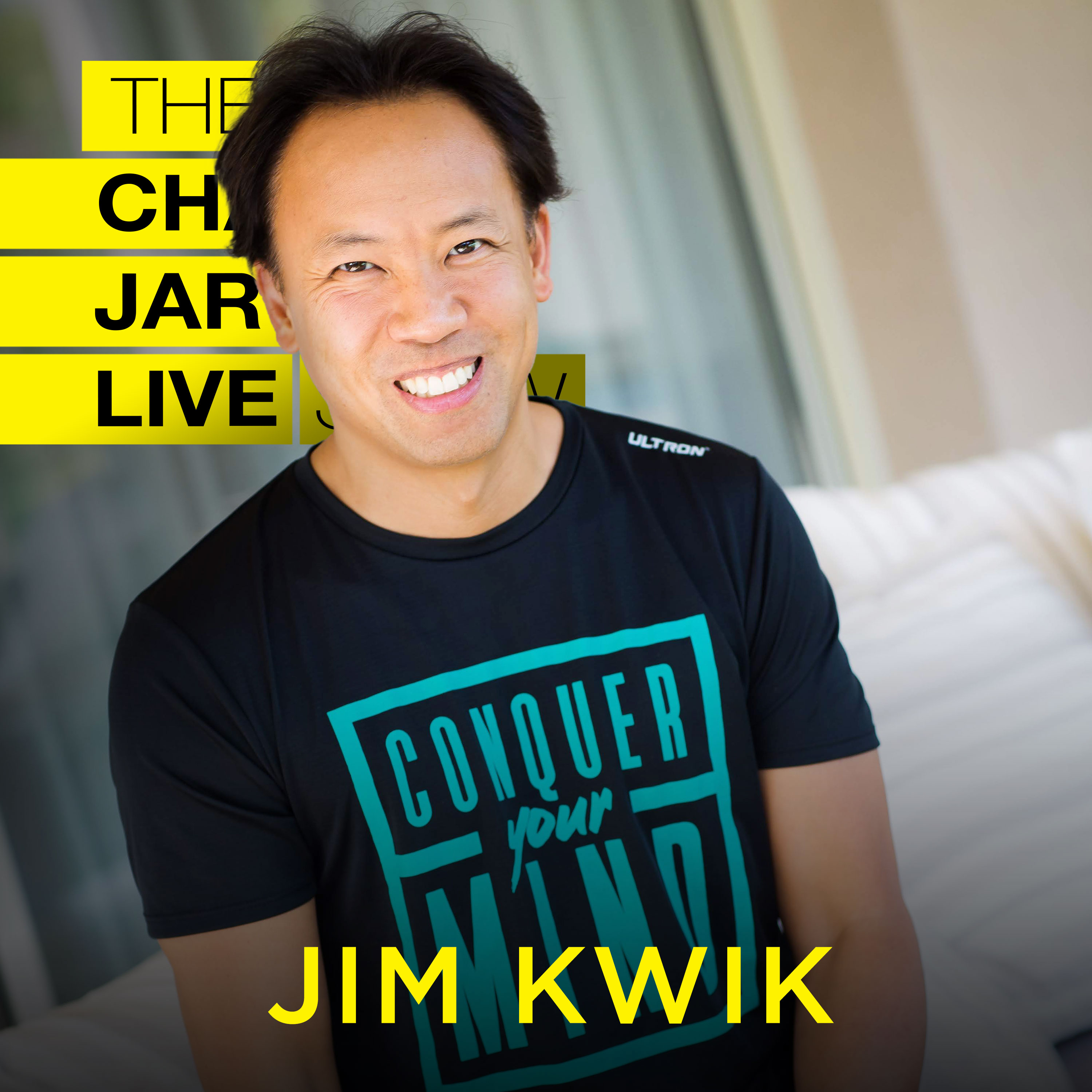
Upgrade Your Brain & Learn Anything with Jim KwikJim Kwik7 April 20211:25I've always found the brain fascinating and a major key to unlock so much in our lives. That's why I'm super excited to welcome Jim Kwik on the show. Jim is a brain + memory coach, international speaker, memory and speed-reading expert, and bestselling author. As a young child, Jim experienced a traumatic brain injury which greatly affected his ability to learn. He struggled in school and life. How then did he upgrade his memory to become the world's #1 brain coach and learning master? Jim not only shares his story, but helps us upgrade our brain too. In this episode, Jim teaches the 10 keys for a limitless brain, diving deep into the science behind his techniques. When we learn how to learn, anything is possible. Some topics we get into: Life is the C between B and D. Between Birth and Death lies Choice -- Jim shares his learnings from a French philosopher who taught that choices create the life you're in. In just 60 days, Jim could flip his mindset to create the remarkable life he's now a part of. Learn how he mastered the art of reading and what it was that happened in the 60-day window that helped him unlock his superpower The essence of limitless learning is the 3 M's -- Mindset, Motivation, and Methods. That your head, heart, and hands need to all come together to take you down the path of success is a bonus talking point of the conversation.
The Art of Reinvention with Sophia AmorusoSophia Amoruso30 September 20201:07Sophia Amoruso is an online educator, serial entrepreneur and New York Times Bestselling Author. She has been featured on the cover of Forbes magazine and featured in the Fortune 40 under 40, Forbes 30 under 30, Inc. 30 under 30, Fast Company's Most Creative People in Business lists, and featured on the June 2016 cover of Forbes' Richest Self-Made Women issue. Sophia founded women's network Girlboss as well as fashion startup Nasty Gal, which she built to over $100 million in revenue. In 2014, Sophia wrote a NYT Bestselling book, #GIRLBOSS, which Charlize Theron later turned into a Netflix series. She also hosted Girlboss Radio, a podcast with over 20 million downloads. Sophia recently stepped away from Girlboss to launch something new, and is now focused on providing inspiration and advice to her community on lifestyle, entrepreneurship, wellness, and beauty. Enjoy! Today's episode is brought to you by CreativeLive. CreativeLive is the world's largest hub for online creative education in photo/video, art/design, music/audio, craft/maker and the ability to make a living in any of those disciplines. They are high quality, highly curated classes taught by the world's top experts -- Pulitzer, Oscar, Grammy Award winners, New York Times best selling authors and the best entrepreneurs of our times.
Go Against the Grain /w David Heinemeier Hansson | Chase Jarvis LIVEDavid Heinemeier Hansson7 March 20181:22David Heinemeier Hansson is a programmer, writer, and entrepreneur. He changed the future of technology with Ruby on Rails, has influenced the way businesses are being built and run with his books; Getting Real, Rework, and Remote; Office Not Required, and has helped many businesses (including my own photo studio) stay organized and productive with the integrated project management solution, Basecamp. David is passionate about finding alternative ways to do things. He loves looking at the status quo, ripping it apart and putting back together only the elements that make the most sense. In our conversation, David helps budding entrepreneurs cross the bridge from wantrepreneur to taking first steps as well as offers some animated anecdotes and mind shifts for how to make your existing businesses and teams ultra productive, passionate, and value driven. In today's episode, * If you want to build a successful business, try integrating existing ideas and tools rather than creating a new standalone tool. * You don't have to be a genius, nor do you have to outwork everyone to be an entrepreneur. You can build a profitable business starting with 10 hours a week and existing business models. * Take control of the things that you decide are important and make sense to you. Whether you're on your own or a manager of a team, it's critical to assess how you're most productive and happiest when creating the structure of your work-life. Enjoy!
Tame Your Distracted Mind with Neuroscientist Adam GazzaleyAdam Gazzaley17 January 20181:19Adam Gazzaley is a neuroscientist, speaker, entrepreneur, photographer, author… He's a hyphen through and through. But what he's obsessed with these days is using technology to retrain and improve the use of our human brains, using it even to treat ADHD and other mental conditions. Now more than ever before the world is moving at a pace faster than our 2 million year old brains can catch up. Adam says that as a species our brains aren't evolving quickly enough so we're experiencing a cognition crisis and the fallout of this crisis are attention deficit disorders. Through the application of treatments involving video games and mindfulness practices, we can not only be more productive in our life, but also feel more fulfilled in our lives. We talk about how to build our minds to increase our attention, expand our perception, improve our decision making, and better regulate our emotions. In today's episode: The brain is a muscle - it's trainable. We may soon be entering a time where doctors prescribe digital medicine - video games as medication for ADHD. Even if you don't have ADHD or another attention deficit disorder, you can still benefit from training your brain. You can use monotasking and mindfulness to fight anxiety and be more productive. The world needs wisdom. Part of the wisdom is the development of our intuition and internal awareness. It's the foundation of how we approach all things and each other. Enjoy! Today's episode is brought to you by CreativeLive.
Habits For Ultra-Productivity w/ Jessica Hische | Chase Jarvis LIVEJessica Hische4 October 20171:02Jessica is a lettering artist, entrepreneur, designer, speaker and author who's worked with clients like Penguin Books and Wes Anderson and recently published a book called "In Progress" which is an incredibly detailed look at her process from sketch to final deliverables - definitely a must-read for any of you lettering fanatics out there. She's also got this amazing library of side projects like Daily Drop Cap (exactly what it sounds like), a site called Don't Fear The Internet which teaches HTML and CSS to designers, ShouldIWorkForFree.com - a flow chart which answers that exact question - and literally 10 more. Insanely prolific. Today on the podcast, * Some rarely-discussed characteristics and strengths of creatives * Why constraints are a creative's best friend. *The habits that make her as ultra-productive as she is - my favorite is her concept of "admin Mondays" Enjoy! Show notes and links for this episode can be found at www.chasejarvis.com/podcast . It's also brought to you by CreativeLive. CreativeLive is the world's largest hub for online creative education in photo/video, art/design, music/audio, craft/maker and the ability to make a living in any of those disciplines. They are high quality, highly curated classes taught by the world's top experts -- Pulitzer, Oscar, Grammy Award winners, New York Times best selling authors and the best entrepreneurs of our times.
How Design Can Supercharge Your Business with Yves Béhar | Chase Jarvis LIVEYves Béhar3 May 201741 minYves is the founder of Fuseproject and one of the most influential industrial designers of our generation, having also lead teams at the iconic firms frog design and Lunar Design. His clients include Herman Miller, GE, Puma, Kodak, Samsung, Prada and a host of others, and pioneered the paradigm of designer/entrepreneur as the co-founder and Chief Creative Officer of smart lock company August and CCO at Jawbone. He's also a passionate advocate for sustainability and social good, contributing to a variety of projects like One Laptop Per Child, Ver Bien para Aprender Mejor and the SPRING Accelerator program. Today on the podcast, * He talks about how - contrary to what many think - the best way for designers to get a chance to have a seat at the table is to double down on their craft and become world-class at one thing * We talk about how to turn off your brain when needed, quieting that relentless critical voice that all creators have * And we also get into more detail on the evolution of design culture in the US- how companies like Apple and Target helped make designers more visible and more valued as core members of the team at the center of the business Enjoy! Show notes and links for this episode can be found at www.chasejarvis.com/podcast. This podcast is brought to you by CreativeLive. CreativeLive is the world's largest hub for online creative education in photo/video, art/design, music/audio, craft/maker and the ability to make a living in any of those disciplines.
Caterina Fake: Teach YourselfCaterina Fake9 February 20171:13Caterina Fake is best known for being the co-founder of Flickr, which pioneered a ton of the things that we now take for granted on the internet: social networking, tagging, and content surfacing algorithms to name just a few. But like many of us, her career path has been - to say the least - unpredictable. On the way to becoming the co-founder of Flickr, Caterina Fake explored everything from banking to graphic design to writing novels, and she's now the Chairman of the Board for Etsy, a board member at Creative Commons, and on the board of advisors for the Berkeley School of Information. And while there's a narrative in our culture that this sort of winding path indicates that something went wrong, I believe the opposite - I believe that it creates the sort of eclectic, versatile people who will (like Caterina) thrive in the new "skill economy." Today on the podcast, * How Caterina ended up co-founding Flickr and ultimately selling it to Yahoo even though she grew up as a self-described "artsy girl" - a far cry from what many would expect of a tech founder * Some great advice for writers, specifically around how to create the kind of habits that will get you into the groove of relentless daily productivity, and keep you there * Why she calls herself a "reclusive extrovert" and why online communities are an ideal fit for reclusive extroverts This episode first appeared on CreativeLive as part of the 30 Days of Genius series.
Seth Godin: What It Means To MatterSeth Godin30 June 20161:07Seth Godin is an incredible human. He's an author of 18, yes that's right, 18 best-selling books. He is an entrepreneur, a guru in marketing, and writes a post every day on his blog which has been noted as one of the top marketing blogs on the internet. Seth's most current focus is his course called the altMBA focused on developing high-powered thinkers and leaders. One of the things I like best about Seth is when he says something, it's like lasers - it's so clear and just makes sense. In this episode, you'll hear why Seth refuses to give tips and tactics and instead would rather teach us how to see. We dig into failure and rejection, and understanding our impact by viewing it through the lens of "would they miss you if you're gone". Enjoy! This episode first appeared on CreativeLive as part of the 30 Days of Genius series. Show notes and links for this episode can be found at www.chasejarvis.com/podcast . This podcast is brought to you by CreativeLive . CreativeLive is the world's largest hub for online creative education in photo/video, art/design, music/audio, craft/maker and the ability to make a living in any of those disciplines. They are high quality, highly curated classes taught by the world's top experts -- Pulitzer, Oscar, Grammy Award winners, New York Times best selling authors and the best entrepreneurs of our times.