 T
Podcast · 18 episodes in the reference, 2022 to 2025
The Logan Bartlett Show
Published by by Redpoint Ventures
Episodes
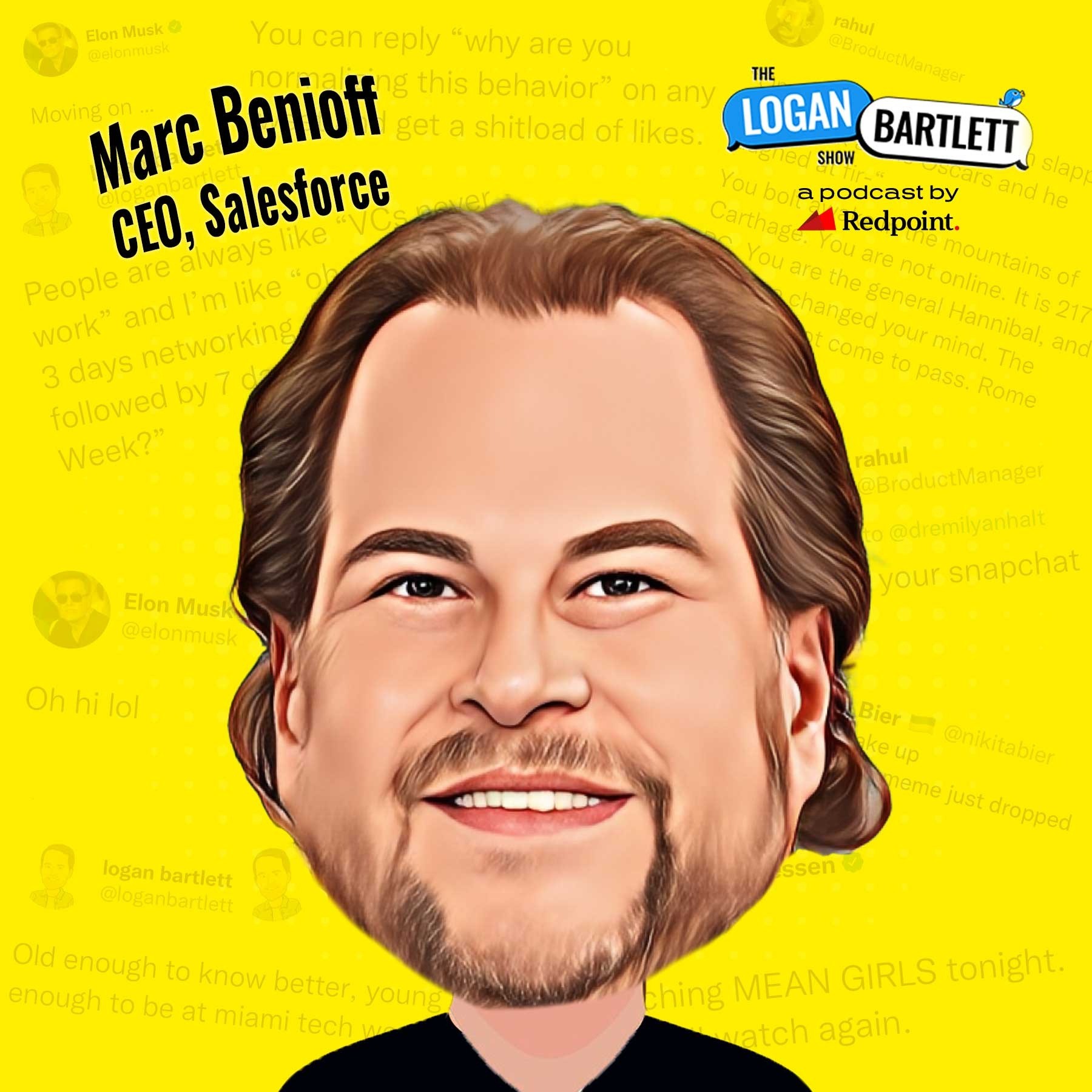 Marc Benioff Predicts Half of Conversations Will be With AI Agents Next Year | Marc Benioff | 29 August 2025 | 42 min | Logan is joined by Marc Benioff, the legendary co-founder and CEO of Salesforce, for a wide-ranging conversation on the rise of AI in enterprises. Marc explains how Salesforce has become the testing ground for its own “agentic” technology, using AI agents to handle customer support, boost sales, and transform marketing. He also shares his perspective on what’s hype vs. reality in the AI race, the opportunities for startups, and why the future is about humans and agents working together. (00:00) Introduction and Salesforce's Lead Management (00:35) Reflecting on the Last Eight Months (01:14) The Impact of AI on Salesforce Operations (02:15) AI's Role in Customer Support and Sales (03:45) Salesforce's Vision for an Agentic Enterprise (05:00) Public Market Sentiment and AI Adoption (06:15) Salesforce's Data and Application Foundations (08:13) The Future of CRM and ITSM Markets (12:57) Managing Agents and Human Workers (17:45) Salesforce's Growth and AI Product Line (19:38) Pricing Models and Customer Success Stories (23:26) The Role of AI in Different Market Segments (28:51) Salesforce Ventures and Startup Investments (36:05) Advice for Young Professionals and Future Trends (41:04) Dreamforce Executive Producer: Rashad Assir Producer: Leah Clapper Mixing and editing: Justin Hrabovsky Check out Unsupervised Learning, Redpoint's AI Podcast: https://www.youtube.com/@UCUl-s_Vp-Kkk_XVyDylNwLA 🎙 Listen to the show Apple Podcasts… |
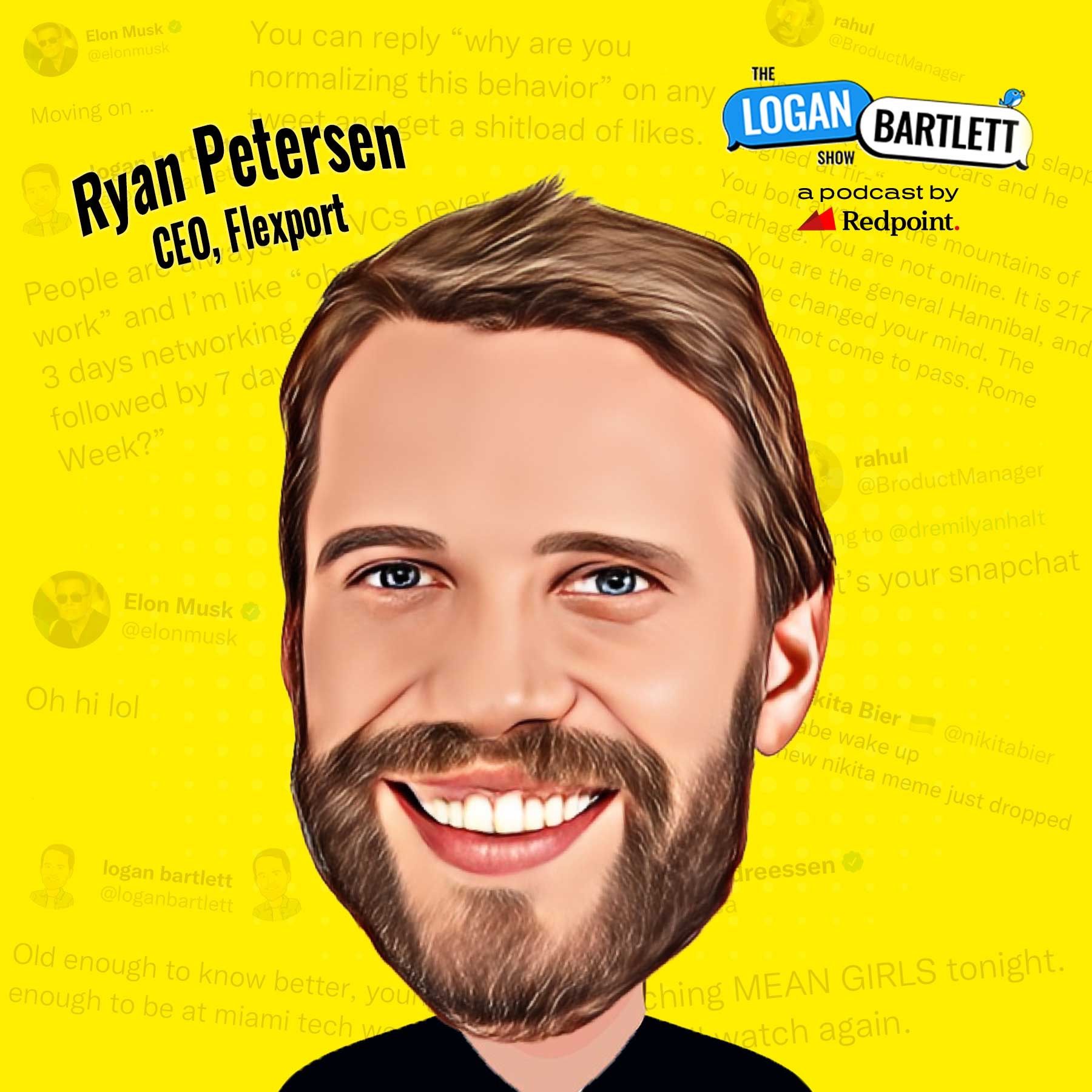 Ep 133: Flexport CEO Ryan Petersen Breaks Down the Global Impact of Trump’s New Tariffs | Ryan Petersen | 13 March 2025 | 1:19 | As tariff drama continues to heat up, Ryan Petersen, CEO of Flexport (one of the hottest freight forwarders in the world) came on the show to unpack the impact. Ryan also dives deep into the hidden world of US shipping, opportunities for AI automation in logistics, reflections on building Flexport, and some supply chain conspiracy theories. (00:00) Intro (01:16) Flexport's Mission and Operations (02:28) Impact of Tariffs on Businesses (05:15) Navigating New Duties and Regulations (09:19) Flexport's Strategic Response (14:39) Challenges in U.S. |
 EP 130: Matt Mullenweg (Co-Founder WordPress): WordPress Controversy, Future of Open Source AI, and Navigating Backlash | Matt Mullenweg | 7 February 2025 | 1:05 | The recent controversy between WordPress and WP Engine put Matt Mullenweg (Co-Founder of WordPress, CEO of Automattic) under intense online scrutiny. In our conversation, he shared lessons from the controversy and managing through crisis, as well as this thoughts on the future of open source AI and more. (00:00) Intro (01:17) Controversy with WP Engine (03:36) Understanding Open Source and Trademarks (04:36) Automattic's Role and Contributions (08:26) Navigating Legal Battles and Community Relations (18:27) Leadership and Personal Resilience (21:49) The Impact of Social Media on CEOs (31:22) Future Outlook and Reflections (32:42) Exploring the Quinn Model and Open Source Innovations (33:17) The Evolution of AI Interfaces and User Interactions (35:36) AI as a Writing and Coding Partner (38:07) The Power of Open Source in AI Development (40:00) Commoditizing Complements: A Business Strategy (41:39) The Battle with Shopify and Open Source Models (42:33) The Impact of Open Source on Market Dynamics (43:55) USB-C Transition and Gadget Recommendations (47:53) The Benefits of Sabbaticals (53:34) The Future of WordPress and Automattic (59:12) Employee Ownership and Liquidity Programs (01:04:33) Conclusion and Final Thoughts Executive Producer: Rashad Assir Producer: Leah Clapper Mixing and editing: Justin Hrabovsky Check out Unsupervised Learning, Redpoint's AI Podcast: https://www.youtube.com/@UCUl-s_Vp-Kkk_XVyDylNwLA 🎙 Listen to the show Apple Podcasts… |
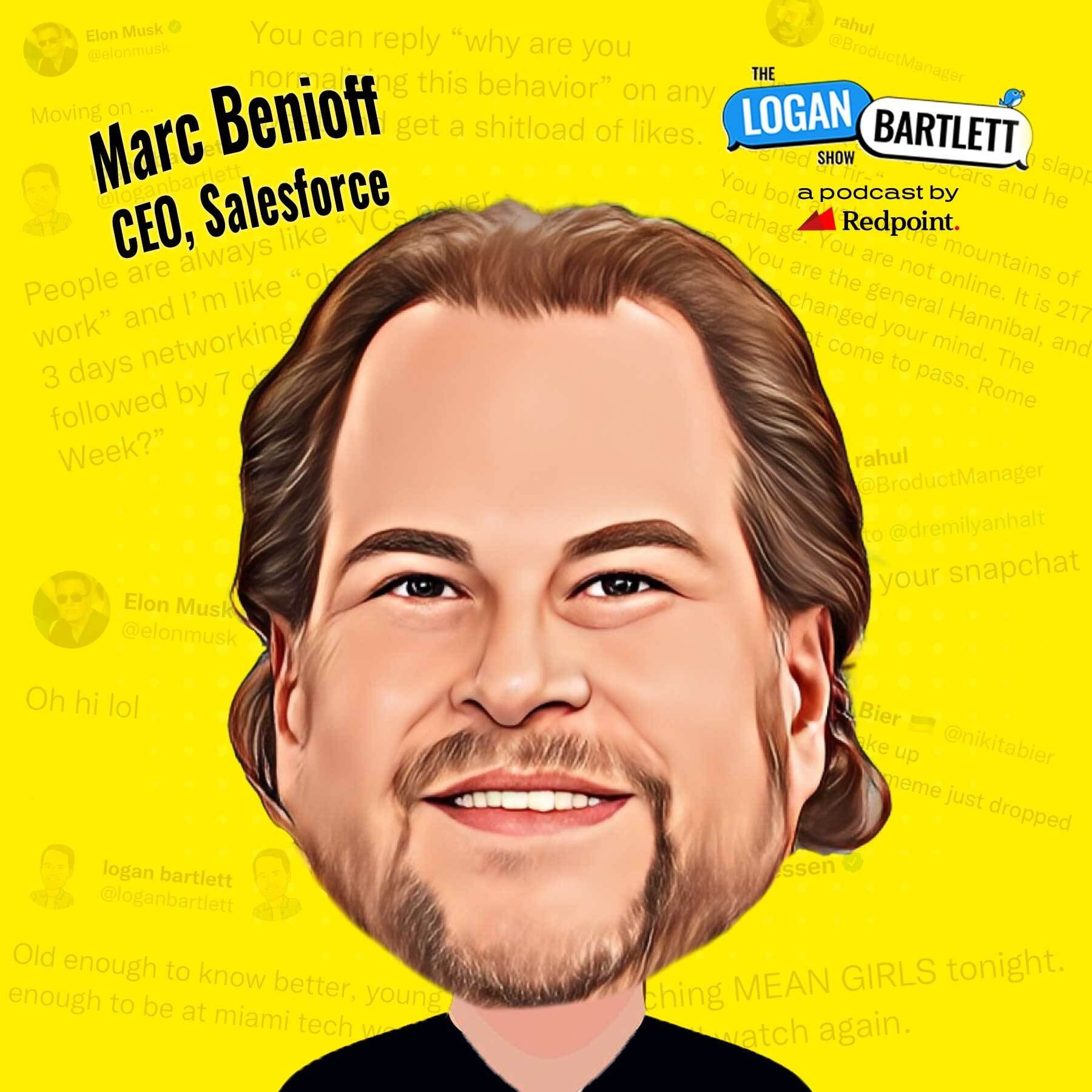 Marc Benioff Strikes Back at Satya: “AGI is Not Here” | Marc Benioff | 10 January 2025 | 41 min | In this episode, Marc Benioff (CEO, Salesforce) responds to Satya Nadella’s recent predictions and shares his thoughts on the current reality of Agi. He dives into the rise of digital labor, the multi-trillion-dollar potential of agentic technology, and what the future split between software and agentic revenue might look like. Marc also discusses why CEOs need to stay grounded in delivering actionable solutions, and he emphasizes the moral obligation businesses have to retrain employees and invest in communities as AI continues to evolve. |
 Drew Houston: Achieving Viral Growth and Battling Big Tech | Drew Houston | 18 October 2024 | 1:35 | Drew Houston has now been CEO of Dropbox for over 17 years. In my latest conversation, he opens up about the pivotal leadership lessons he's learned, the mistakes that shaped the company, and the true challenges of going head-to-head with big tech. We also dive into the highs and lows of fundraising, how valuations can make or break a company trajectory, and discuss the opportunities AI presents for the future of work. [0:00] Intro [0:44] AI Opportunities for Dropbox [5:57] Dropbox's AI Principles [7:52] Introducing Dropbox Dash [9:18] AI Enhancements in Search [12:33] Personal Productivity with AI [17:10] Memo-First Culture at Dropbox [22:15] Reflections on Leadership and Growth [31:21] Early Challenges and Viral Growth [48:22] Facing Fierce Competition [51:51] Strategic Shift to Collaboration [53:20] Navigating Internal Challenges [55:18] Reevaluating Productivity [1:03:07] The Birth of Dash [1:16:32] You Don't Want to Feel Like a Victim [1:30:29] Closing Thoughts and Lessons Learned Executive Producer: Rashad Assir Producer: Leah Clapper Mixing and editing: Justin Hrabovsky Check out Unsupervised Learning, Redpoint's AI Podcast: https://www.youtube.com/@UCUl-s_Vp-Kkk_XVyDylNwLA 🎥 Subscribe on YouTube: https://www.youtube.com/channel/UCugS0jD5IAdoqzjaNYzns7w?sub_confirmation=1 Follow on Socials 📸 Instagram - https://www.instagram.com/theloganbartlettshow 📱 X - https://twitter.com/loganbartshow 🎬 Clips on TikTok - https://www.tiktok.com/@theloganbartlettshow About the Show… |
 Josh Wolfe (Lux Capital): Predictions on Emerging Technologies, AI, and the Future of VC | Josh Wolfe | 23 August 2024 | 1:54 | Josh Wolfe , co-founder and managing partner at Lux Capital , is a master at quickly understanding complex, emerging technologies. In our conversation, Josh shared how he identifies the next big thing, his contrarian views on nuclear energy, biotech, and robotics, as well as his thoughts on the state of the venture capital market today. (00:00) Intro (01:02) Daily News Routine (05:28) Geopolitical Insights (07:03) Competitiveness and Curiosity (11:01) Investment Strategies and Risks (26:07) The Control Labs Story (33:48) The Founder’s Dilemma: Financial vs. |
 EP 105: Vlad Tenev (CEO, Robinhood): The Meme Stock Crisis, The Future of Crypto, and AI Opportunities in Finance | Vlad Tenev | 24 May 2024 | 1:47 | In the midst of meme stock craziness, Robinhood CEO Vlad Tenev shared his most eye-opening insights from running the company that transformed the game for retail investors. He talks about Robinhood’s new Gold Card, his views on crypto, the media side, how artificial intelligence could change finance, and more. (00:00) Intro (03:27) The Origin of the Name 'Robinhood' (08:43) Navigating the GameStop and Meme Stock Saga (10:52) Rebuilding Trust and Brand Impact (19:10) Crisis Communication and Leadership Lessons (23:54) Industry Insights and Future of Trading (31:00) AI and Financial Services (33:34) Crypto and Regulatory Challenges (40:14) The Viral Launch of Robinhood (47:01) The Gold Card Launch and Customer Strategy (50:08) The Vision Behind Robinhood's Credit Card (53:50) Building vs. |
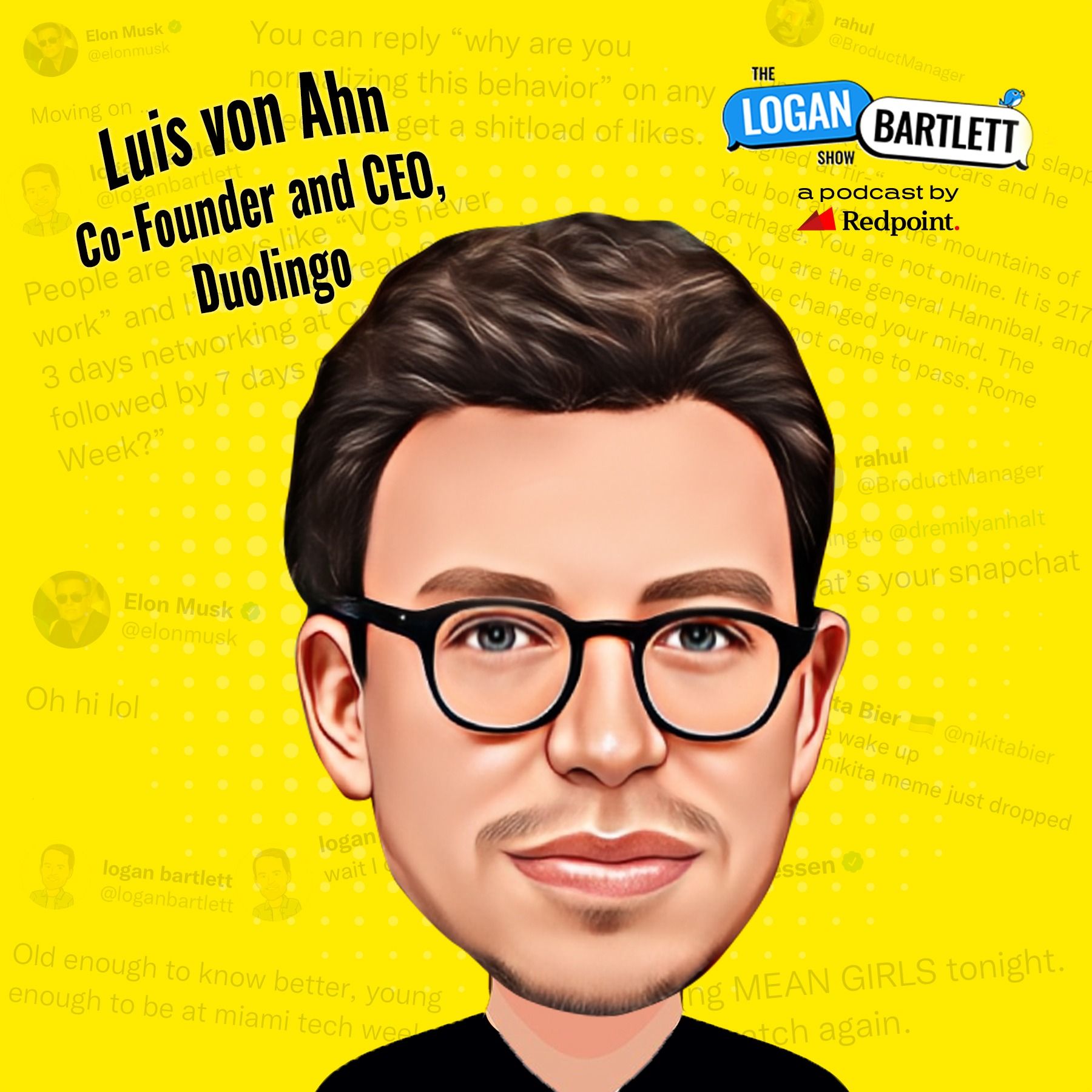 EP 87: Luis von Ahn (CEO, Duolingo) on The Marketing Formula that Propelled Duolingo to 500M Users | Luis von Ahn | 1 December 2023 | 1:40 | Luis von Ahn is the CEO and Co-Founder of Duolingo, the world’s #1 language learning application. In the episode, Luis shares the marketing formula they use to drive rapid user growth, including the backstory of Duolingo’s famous owl mascot that has become a viral internet sensation. Luis also dives into the A/B testing and product gamification experiments that have helped make Duolingo a $9B public company, as well as a handful of valuable lessons from his entrepreneurial journey. (0:00) Intro (0:54) Building a Culture of Iteration and Continuous Improvement (2:29) The Importance of User Retention in Duolingo's Growth (3:24) The Power of A/B Testing in Product Development (7:57) Balancing User Feedback and Data in Product Design (10:24) The Role of Marketing in Duolingo's Growth (15:54) The Importance of Setting Constraints in Product Development (18:35) The Role of Metrics in Decision Making (24:02) The Power of Viral Marketing and Memes in Brand Building (30:44) The Impact of Social Media Marketing on User Acquisition (35:41) The Impact of Passive Aggressive Notifications (37:42) Dealing with Controversial Content and Backlash (42:40) The Importance of Being Scrappy in Marketing (45:13) The Challenges of Teaching Languages (49:25) The Importance of User Retention in Duolingo (51:14) The Journey to Monetizing Duolingo (56:40) The Challenges of Introducing Monetization in Duolingo (1:04:16) The Expansion of Duolingo Beyond Languages (1:09:13) Growing User Base and Utilizing… |
 Finding Gratitude Amidst Business Chaos with Vlad Magdalin | Vlad Magdalin | 8 September 2023 | 2:20 | Vlad Madgalin is the co-founder and CEO of Webflow, a platform with 3.5 million users that helps people develop websites and web applications. He shares Webflow’s journey as an integral player in the no-code movement, as well as why he's grateful for the opportunity to start this company in the United States. Vlad tells many sincere stories including immigrating from Russia at age 9, starting Webflow four times before succeeding, going through a rollercoaster experience with YCombinator, and much more. |
 Emmett Shear on the Future of AI and YC Days with Sam Altman | Emmett Shear | 16 June 2023 | 2:23 | Emmett Shear is the co-founder of Twitch, one of the most influential platforms in recent history. From its humble beginnings as a gaming streaming platform to becoming a cultural phenomenon, Twitch has redefined the way we connect, entertain, and build communities online. The episode is packed with stories from Emmett’s 16-year tenure as CEO and his journey to founding the company. Emmett shares product frameworks he used to grow and retain streamers, how he learned to not suck at management, and why he thinks remote is bad for most tech start-ups. Emmett also shares insights from being part of the very first batch of YC-founded startups in 2005 alongside Sam Altman and Paul Graham. Finally, Emmett shares what he’s most scared about when it comes to AI. |
 EP 67: Daniel Ek (CEO, Spotify) on the Creation of Wrapped, How Apple Blocks Innovation & Growing Up in the Projects | Daniel Ek | 2 June 2023 | 1:10 | Daniel Ek is the CEO and Co-Founder of Spotify and an overall legendary entrepreneur. Daniel grew up in Sweden and after selling a few businesses went on to found Spotify and disrupt the music industry against all odds. On this episode Daniel shares his entrepreneurial journey, stories from the earliest days of founding Spotify, his beef with Apple's app store policies, his views on enabling free speech, and more. (0:00) Intro (0:50) Welcome Daniel Ek (4:05) The Entrepreneurial Journey to Spotify (10:05) Making millions but feeling aimless (19:12) The roots of Spotify (21:17) Constraints as a benefit (25:34) Defining your market narrowly (27:33) Sleeping outside record label offices (35:39) Being Vilified in the music industry (45:16) Taking elements from iconic CEOs to mode (50:59) Natural Biases (55:35) Reevaluating what you need for your mission (1:02:14) Being outspoken against Apple (1:07:10) Responsibility as a platform in free speech and censorship Mixed and edited: Justin Hrabovsky Produced: Rashad Assir Executive Producer: Josh Machiz Music: Griff Lawson 🎙 Listen to the show Apple Podcasts: https://podcasts.apple.com/us/podcast/three-cartoon-avatars/id1606770839 Spotify: https://open.spotify.com/show/5WqBqDb4br3LlyVrdqOYYb?si=3076e6c1b5c94d63&nd=1 Google Podcasts: https://podcasts.google.com/feed/aHR0cHM6Ly9mZWVkcy5zaW1wbGVjYXN0LmNvbS9zb0hJZkhWbg 🎥 Subscribe on YouTube: https://www.youtube.com/channel/UCugS0jD5IAdoqzjaNYzns7w?sub_confirmation=1 Follow on Socials 📸… |
| EP 51: Matt Mochary (Founder, The Mochary Method) - The Coach Behind Sam Altman, Naval, Brian Armstrong Shares the Mistakes That All CEOs Make | Pat Grady | 10 February 2023 | In episode 51 of the Logan Bartlett Show, CEO coach Matt Mochary who coached a number of the most prominent investors and CEOs in Silicon Valley including: Sam Altman from OpenAI Brian Armstrong from Coinbase Vlad from Robinhood Naval from AngelList Ivan from Notion Peter Fenton from Benchmark Alfred Lin and Pat Grady from Sequoia Parker Conrad from Rippling Steve Huffman from Reddit Max Rohdes from Faire Mamoon Hamid from Kleiner Matt and Logan discuss what led to him becoming a CEO coach, his philosophies and tactics for running a company, and what makes him resonate with such a diverse set of CEO personalities. Matt is also the author of the book, The Great CEO Within written with Alex Macaw. | |
 EP 27: Convo with Lux’s Josh Wolfe and Our Best/Worst Crypto Debate with Slow Venture’s Sam Lessin | Josh Wolfe | 29 July 2022 | 2:24 | Lux Capital’s Josh Wolfe joins to discuss startups in the current market, and the long-awaited release of the crypto debate between Zach Weinberg and Slow Venture’s Sam Lessin that got so heated we weren’t sure we could publish it. (0:00) - Intro (1:27) – Welcome Josh Wolfe (3:10) – Market updates (13:21) – Anti-bubble (16:28) – Consolidation (19:57) – Everything times pi (22:35) – Welcome Sam Lessin (25:43) – NY tech founders in ‘07 (30:44) – Slow Ventures (33:12) – The crypto debate begins (41:57) – On chain real estate (49:19) – Legal protections (1:03:10) – Does it hold up in court? (1:09:52) – Final walk through (1:14:42) – Bearer bonds (1:19:58) – Zach’s reasons against crypto (1:31:37) – Zach’s point (1:33:51) – Carta for your DAU (1:37:11) – Back to liquidity (1:41:24) – Why is it not awesome? (1:45:17) – Users (1:52:40) – Unsettled case law (2:00:29) – Final arguments (2:04:10) – The boiling point (2:06:59) – Maybe we can publish this part (2:12:15) – Zach ending (2:22:08) - Outro Mixed and edited: Justin Hrabovsky Produced: Andrew Nadeau and Rashad Assir Executive Producer: Josh Machiz Music: Griff Lawson 🎙 Listen to the show Apple Podcasts: https://podcasts.apple.com/us/podcast ... Spotify: https://open.spotify.com/show/5WqBqDb ... Google Podcasts: https://podcasts.google.com/feed/aHR0 ... |
 EP 26: Chaos Monkeys author Antonio García Martínez talks book, FB conspiracy theories, & Web3 | Antonio García Martínez | 22 July 2022 | 1:37 | In the 26th episode author of Chaos Monkeys and former Facebook PM Antonio García Martínez joins to discuss his experiences visiting Ukraine during the current crisis, debunking the biggest Facebook conspiracy theories, announces his new Web3 company, and then debates Zach about it! (0:00) - Intro (1:27) – Welcoming Antonio García Martínez (AGM) (4:04) – AGM’s greatest hits (7:45) – Ad tech (10:04) – Why AGM wrote Chaos Monkey (14:50) – His character in Chaos Monkey (17:19) – Bringing your whole self to work (19:14) – Politics in social media (26:17) – Converting to Judaism (30:58) – Visiting Ukraine (35:19) – Current thing theory (43:25) – Chamath example (46:45) – What’s something everyone incorrectly believes is true? (51:16) – Facebook isn’t listening to your phone (56:09) – IG vs Twitter ad targeting (57:56) – AGM announces his Web3 company (1:04:28) – Zach agrees in a Web3 debate (1:06:41) – Fundamental business models in Web3 (1:11:44) – Web3 skepticism (1:15:44) – Acquisitions in Web2 vs Web3 (1:22:53) – Web3 macro analysis (1:25:00) – Farcaster (1:31:54) – Will Zach invest? (1:36:02) – Outro Mixed and edited: Justin Hrabovsky Produced: Andrew Nadeau and Rashad Assir Executive Producer: Josh Machiz Music: Griff Lawson 🎙 Listen to the show Apple Podcasts: https://podcasts.apple.com/us/podcast ... Spotify: https://open.spotify.com/show/5WqBqDb ... Google Podcasts: https://podcasts.google.com/feed/aHR0 ... |
 EP 16: Aaron Levie gives founder advice, Zach Weinberg returns, and Eric Golden discusses UST-Luna! | Aaron Levie | 14 May 2022 | 2:06 | (00:00:00) Intro with Zach Weinberg (00:02:22) Public Market Bloodbath (00:07:10) Distribution of Risk (00:12:56) Update on SoftBank and Tiger (00:28:30) Eric Golden joins the pod to talk Luna (00:30:04) What happened in the market this week? (00:40:55) What is Luna? (00:53:21) Why is this pulling down Bitcoin as well? (01:02:04) Do Kwon sucks (01:13:43) Interview with Aaron Levie (01:36:08) The state of Web3 (01:38:37) Interesting use cases for Web3 (01:41:01) The rhetoric of crypto skepticism (01:48:02) Companies and politics Follow the show: https://twitter.com/3cartoonavatars https://www.instagram.com/3cartoonavatars/ https://www.tiktok.com/@3cartoonavatars Follow the hosts: https://twitter.com/loganbartlett Mixed and edited: Justin Hrabovsky Produced: Andrew Nadeau and Rashad Assir Executive Producer: Josh Machiz Music: Griff Lawson Links: Coinbase Article: https://decrypt.co/100089/coinbase-share-price UST-Luna Article: https://www.coindesk.com/business/2022/05/09/ust-stablecoin-falls-below-dollar-peg-for-second-time-in-48-hours/ UST-Luna Article: https://www.cnbc.com/2022/05/11/terra-ust-stablecoin-dives-below-1-peg-luna-cryptocurrency-down-80percent.html Gavin Baker Thread: https://twitter.com/GavinSBaker/status/1524389193551687680 SoftBank: https://www.nytimes.com/2022/05/12/business/softbank-earnings-report-loss.html Tobi Lutke Tweet: https://thedeepdive.ca/shopify-ceo-tobi-lutke-wants-financial-analysts-to-be-held-accountable/ Do Kwon Tweets… |
 Interview with Keith Rabois (From Cartoon Avatars EP 13) | Keith Rabois | 23 April 2022 | 1:24 | (04:35) Miami Tech Week is just dangerous being so close to Coachella (08:18) Netflix somehow losing subscribers even though they raised prices and have 98 competitors (24:14) Elon Musk just buying stuff out of spite (29:57) A16Z’s new Accelerator (36:08) Keith Rabois interview and his hottest of takes Follow the show: https://twitter.com/cartoonavatars https://www.instagram.com/cartoonavatars/ https://www.tiktok.com/@cartoonavatars Follow the hosts: https://twitter.com/zck https://twitter.com/nikitabier https://twitter.com/loganbartlett Mixed and edited: Justin Hrabovsky Produced: Andrew Nadeau and Rashad Assir Executive Producer: Josh Machiz Music: Griff Lawson Reference Links: Netflix stock loss: https://www.cnbc.com/2022/04/19/netflix-nflx-earnings-q1-2022.html Elon Musk twitter funding: https://www.theverge.com/2022/4/21/23033445/elon-musk-twitter-bank-debt-commitment-letter A16Z Accelerator program: https://techcrunch.com/2022/04/18/andreessen-horowitz-a16z-start-seed/ Executive Producer: Rashad Assir Producer: Leah Clapper Mixing and editing: Justin Hrabovsky Check out Unsupervised Learning, Redpoint's AI Podcast: https://www.youtube.com/@UCUl-s_Vp-Kkk_XVyDylNwLA 🎥 Subscribe on YouTube: https://www.youtube.com/channel/UCugS0jD5IAdoqzjaNYzns7w?sub_confirmation=1 Follow on Socials 📸 Instagram - https://www.instagram.com/theloganbartlettshow 📱 X - https://twitter.com/loganbartshow 🎬 Clips on TikTok - https://www.tiktok.com/@theloganbartlettshow About the Show Logan… |
 The Legendary Mike Maples: What Makes Startups Win & The Future of Venture Capital | Mike Maples, Jr. | |||
| Would you invest in Crypto? | Shaun Maguire (Sequoia Capital) shares his favorite use-cases | Shaun Maguire |
TMarc Benioff Predicts Half of Conversations Will be With AI Agents Next YearMarc Benioff · 29 August 2025TEp 133: Flexport CEO Ryan Petersen Breaks Down the Global Impact of Trump’s New TariffsRyan Petersen · 13 March 2025TEP 130: Matt Mullenweg (Co-Founder WordPress): WordPress Controversy, Future of Open Source AI, and Navigating BacklashMatt Mullenweg · 7 February 2025TMarc Benioff Strikes Back at Satya: “AGI is Not Here”Marc Benioff · 10 January 2025TDrew Houston: Achieving Viral Growth and Battling Big TechDrew Houston · 18 October 2024TJosh Wolfe (Lux Capital): Predictions on Emerging Technologies, AI, and the Future of VCJosh Wolfe · 23 August 2024TEP 105: Vlad Tenev (CEO, Robinhood): The Meme Stock Crisis, The Future of Crypto, and AI Opportunities in FinanceVlad Tenev · 24 May 2024TEP 87: Luis von Ahn (CEO, Duolingo) on The Marketing Formula that Propelled Duolingo to 500M UsersLuis von Ahn · 1 December 2023TFinding Gratitude Amidst Business Chaos with Vlad MagdalinVlad Magdalin · 8 September 2023TEmmett Shear on the Future of AI and YC Days with Sam AltmanEmmett Shear · 16 June 2023TEP 67: Daniel Ek (CEO, Spotify) on the Creation of Wrapped, How Apple Blocks Innovation & Growing Up in the ProjectsDaniel Ek · 2 June 2023TEP 51: Matt Mochary (Founder, The Mochary Method) - The Coach Behind Sam Altman, Naval, Brian Armstrong Shares the Mistakes That All CEOs MakePat Grady · 10 February 2023TEP 27: Convo with Lux’s Josh Wolfe and Our Best/Worst Crypto Debate with Slow Venture’s Sam LessinJosh Wolfe · 29 July 2022TEP 26: Chaos Monkeys author Antonio García Martínez talks book, FB conspiracy theories, & Web3Antonio García Martínez · 22 July 2022TEP 16: Aaron Levie gives founder advice, Zach Weinberg returns, and Eric Golden discusses UST-Luna!Aaron Levie · 14 May 2022TInterview with Keith Rabois (From Cartoon Avatars EP 13)Keith Rabois · 23 April 2022TThe Legendary Mike Maples: What Makes Startups Win & The Future of Venture CapitalMike Maples, Jr.TWould you invest in Crypto? | Shaun Maguire (Sequoia Capital) shares his favorite use-casesShaun Maguire