 T
Podcast · 17 episodes in the reference, 2015 to 2026
The Rich Roll Podcast
Published by Rich Roll
Host
RRRich Roll
Episodes
 Bryan Johnson & Kate Tolo On Curing Their Incurable Diseases, Addressing The Disparity In Women's Health & The Don't Die Mission | Bryan Johnson | 21 September 2026 | 1:57 | Bryan Johnson and Kate Tolo are entrepreneurs, partners, and the subjects of the Netflix documentary "Don't Die." This conversation explores the couple's challenge to a presupposition around our mortality. We discuss AI, consciousness, Kate's endometriosis diagnosis, and our culture's relationship with death. I appreciated their openness. Enjoy! Show notes + MORE Watch on YouTube Newsletter Sign-Up Today’s Sponsors: Go Brewing: Get 50% OFF your first subscription order to Go Brewing's Beer Club👉🏼 https://www.gobrewing.com/richroll50 LMNT: Get a free 8-count Sample Pack with any purchase👉🏼 https://www.drinkLMNT.com/RICHROLL Birch: Get 27% Off Sitewide👉🏼 https://www.BirchLiving.com/richroll Rivian: Electric vehicles that keep the world adventurous forever👉🏼 https://stories.rivian.com/richroll Squarespace: Use code RichRoll to save 50% off your first order of a website or domain👉🏼 https://www.squarespace.com/RichRoll Check out all of the amazing discounts from our Sponsors👉🏼 https://www.richroll.com/sponsors Find out more about Voicing Change Media at https://www.voicingchange.media and follow us @voicingchange Learn more about your ad choices. Visit podcastchoices.com/adchoices |
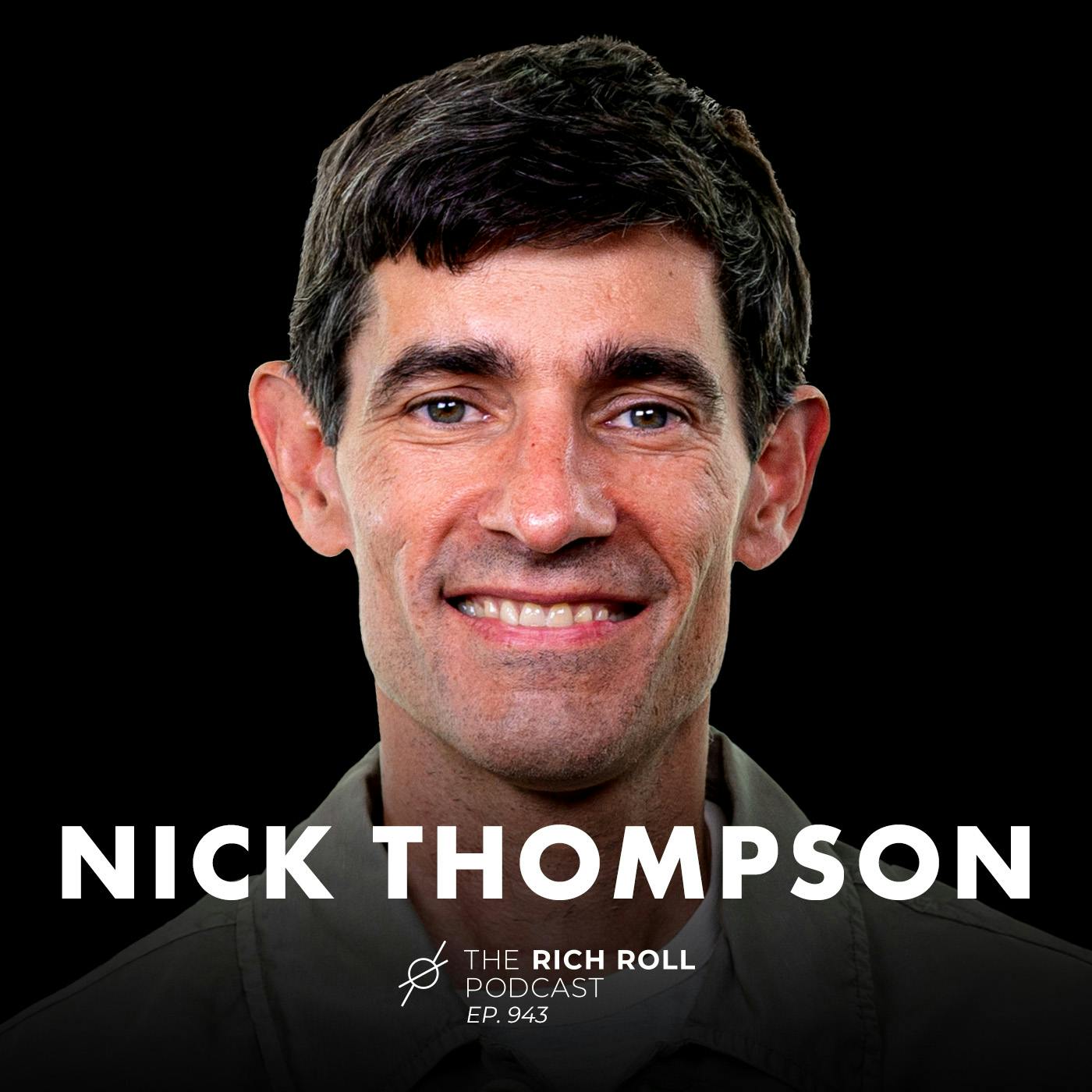 The Atlantic’s Nick Thompson Is The Fastest Runner In Publishing: On Setting Age-Group Records, Beating Cancer, & Why Media Must Survive AI | Nick Thompson | 20 October 2025 | 2:16 | Nick Thompson is CEO of The Atlantic , an elite marathoner, and author of the memoir The Running Ground . This conversation explores how running reveals our deepest inherited patterns. We discuss Nick's journey from getting fired from CBS in under an hour to running The Atlantic , reconciling with his brilliant father's tragic collapse, setting age-group records at 50, and why AI threatens the very nature of reality. We also discuss why the simple act of running becomes a portal for understanding your deepest patterns. Nick offers profound lessons in post-traumatic growth. And he shares them generously. Enjoy! Show notes + MORE Watch on YouTube Newsletter Sign-Up Today’s Sponsors: Go Brewing: Use the code Rich Roll for 15% OFF👉🏼 https://www.gobrewing.com On: High-performance shoes & apparel crafted for comfort and style👉🏼 https://www.on.com/richroll AG1: Get their best offer ever – Welcome Kit, D3+K2, Flavor Sampler, plus a FREE bonus gift ($126 in value!) |
 A TRANSFORMATIVE Guide To Designing Your Dream Life | Sahil Bloom x Rich Roll | Sahil Bloom | 27 January 2025 | 2:02 | Sahil Bloom is a Stanford athlete turned finance executive whose life took an unexpected turn when a friend's observation catalyzed a complete reevaluation of success. This conversation explores his perspective on wealth, which transcends traditional metrics to embrace a more expansive definition of abundance. We discuss his framework of the Five Types of Wealth, the power of tiny actions to reshape destiny, and how to deploy your attention toward what truly matters. He shares profound insights on nourishing relationships, differentiating between urgent and essential, and finding purpose through service. Sahil is wise beyond his years. Enjoy! Note : In celebration of Sahil's appearance on the podcast, we're giving away three signed copies of his transformative book. Subscribe to the newsletter at richroll.com/subscribe for a chance to win. Show notes + MORE Watch on YouTube Newsletter Sign-Up Today’s Sponsors: Momentous: 20% OFF all of my favorite products 👉 livemomentous.com/richroll On: High-performance shoes & apparel crafted for comfort and style 👉 on.com/richroll Roka: Unlock 20% OFF your order with code RICHROLL 👉 ROKA.com/RICHROLL Calm: Get get 40% off a Calm Premium subscription 👉 calm.com/richroll Check out all of the amazing discounts from our Sponsors 👉 richroll.com/sponsors Find out more about Voicing Change Media at voicingchange.media and follow us @voicingchange Learn more about your ad choices. Visit podcastchoices.com/adchoices |
 Longevity Protocols, Lifestyle Medicine, & Optimizing Health-span | Peter Diamandis X Rich Roll | Peter Diamandis | 13 January 2025 | 1:57 | Peter Diamandis is a renowned physician, futurist, and the founder of XPRIZE, whose paradigm-shifting work transforms our understanding of aging and human potential. This conversation delves into the duality of our longevity revolution: the simple, actionable tools accessible to anyone today, and the bold technologies that could reshape our future. From innovative diagnostics to organ regeneration, Peter details why this decade might fundamentally alter our relationship with aging. Along the way, we examine practical health strategies and the philosophical implications of extending human healthspan. Peter is the ultimate optimist. Enjoy! Show notes + MORE Watch on YouTube Newsletter Sign-Up Today’s Sponsors: Momentous: 20% OFF all of my favorite products 👉 livemomentous.com/richroll Go Brewing: Use code Rich Roll for 15% OFF 👉gobrewing.com LMNT: Get a FREE Sample Pack with any drink mix purchase👉 drinkLMNT.com/RICHROLL OneSkin: Get 15% off with the code RICHROLL 👉 oneskin.co Check out all of the amazing discounts from our Sponsors 👉 richroll.com/sponsors Find out more about Voicing Change Media at voicingchange.media and follow us @voicingchange Learn more about your ad choices. Visit podcastchoices.com/adchoices |
 NEVER PLAY IT SAFE: 7 Practical Tools To Build The Life You Want | Chase Jarvis X Rich Roll Podcast | Chase Jarvis | 7 October 2024 | 2:14 | Chase Jarvis is a renowned photographer, creative entrepreneur, and author of the new book “Never Play It Safe.” This conversation surveys Chase’s perspective on creativity and personal growth, emphasizing risk over safety. We discuss his journey from traditional career paths to creative pioneer and CreativeLive founder, reframing failure, embracing uncertainty, finding play in everyday life, and more. He incisively understands the creative process, offering practical tools for freeing one’s potential. Chase is a wellspring of wisdom and inspiration. This conversation is ideal for anyone seeking to live boldly and creatively. Enjoy! Show notes + MORE Watch on YouTube Newsletter Sign-Up Today’s Sponsors: Peak: Get 20% OFF thoughtfully crafted carry solutions 👉 PeakDesign.com/RICHROLL. On: High-performance shoes & apparel crafted for comfort and style 👉 on.com/richroll AG1: Get a FREE 1-year supply of Vitamin D3+K2 AND 5 free AG1 Travel Packs 👉 drinkAG1.com/richroll Squarespace: Use the offer code RichRoll to save 10% off your first purchase 👉 Squarespace.com/RichRoll This episode is brought to you by Better Help: Listeners get 10% off their first month 👉 BetterHelp.com/RICHROLL Check out all of the amazing discounts from our Sponsors 👉 richroll.com/sponsors Find out more about Voicing Change Media at voicingchange.media and follow us @voicingchange Learn more about your ad choices. Visit podcastchoices.com/adchoices |
 Curiosity Is A Superpower: Legendary Film Producer Brian Grazer on Beginner’s Mind, Getting It Done, & Why Conversation Matters | Brian Grazer | 4 December 2023 | 1:11 | There is nothing more powerful than a story well told. Woven into the very fabric of what makes us human, story fuels connection. It fosters empathy. And it holds the power to impact not just the individual but humanity at large. Few understand this better than Brian Grazer—a man devoted to the idea that when curiosity and conversation combine, great art is made. One of Hollywood’s most prolific film producers, Brian and his Imagine Entertainment partner Ron Howard are responsible for a litany of critically acclaimed, box-office hit films and television shows including Apollo 13, 8 Mile, Splash, Arrested Development, The Beatles: Eight Days a Week, and many more. His productions have been honored with numerous awards including an astounding 10 Oscar wins, 50 Emmys, and 11 Golden Globes. Today we explore Brian's unique approach to storytelling, why he believes questions are more important than answers, and why curiosity has been the “superpower” that fueled his rise as one of Hollywood’s leading producers and visionaries. Curiosity is so central to Brian’s success in fact that he wrote a book about it entitled, A Curious Mind, which he has recently expanded upon in a newly released version. It was a thrill to sit down with a man that I deeply respect and admire. This conversation left me with a newfound appreciation of curiosity not only as an art form, but as a powerful driver of human happiness. |
 Excellent ADVICE To OPTIMIZE YOUR LIFE | Kevin Kelly x Rich Roll Podcast | Kevin Kelly | 1 May 2023 | 2:26 | Here to give us necessary life essentials is skilled navigator of uncertain times, Kevin Kelly. For those unfamiliar, Kevin is the co-founder of Wired magazine—widely recognized as the bible of the digital age. He is a renowned futurist, author, and public speaker whose insights into the world of technology and its impact on society have been widely sought after and deeply influential. Over the course of his career, Kevin has authored several seminal books, including Out of Control: The New Biology of Machines, Social Systems, and the Economic World and What Technology Wants. He has also been a prolific writer and commentator on a wide range of subjects related to technology, culture, and society, and has been a regular contributor to publications such as The New York Times, The Economist, and Scientific American. Kevin shares a hopeful vision of the future of technology, and how it will continue to transform our lives and our world for the better. We delve into the latest trends in artificial intelligence, virtual reality, and other emerging technologies, exploring their potential to shape the world in ways that we can scarcely imagine. But the center of today’s exchange is Kevin’ latest book, Excellent Advice for Living: Wisdom I Wish I’d Known Earlier. From setting ambitious goals, optimizing generosity, and cultivating compassion, this is a must-read gold mine for wisdom on careers, relationships, parenting, finances, and more. |
 How To GET STARTED, GET UNSTUCK & SHARE Your Best Work | Seth Godin x Rich Roll Podcast | Seth Godin | 9 January 2023 | 1:55 | Today’s guest wants to give you the tools to get started, overcome creative blocks, and get your work into the hands of the people you most want to help . His name is Seth Godin . He's the author of more than 19 international bestsellers, an entrepreneur, a speaker, and a climate activist. Through his work, Seth seeks to turn people’s lights on, inspire them to action, and teach them how to level up. And in today’s conversation we discuss creativity, writing, understanding the distinction between marketing and advertising, the pitfalls of modern education, and his most recent book, The Carbon Almanac, a one-stop-shop on everything we know about global climate change. Show notes + MORE Watch on YouTube Newsletter Sign-Up Peace + Plants, Rich Learn more about your ad choices. Visit podcastchoices.com/adchoices |
 The Great Ache That Binds Us: Susan Cain On The Power of Bittersweetness | Rich Roll Podcast | Susan Cain | 22 August 2022 | 2:03 | Are you one of those people that finds solace and comfort in rainy days or melancholy music? It’s not quite sadness. It's more like longing. A beautiful ache that makes you feel more connected to the human experience. What is that specifically? And why does it compel us so? Former corporate lawyer turned author Susan Cain wondered the same—a query that launched a 7-year journey to better understand the complex and nuanced nature of all things melancholic. The result of Susan’s adventure is Bittersweet, her #1 New York Times bestselling book that ponders this quiet state of being and why embracing it paves a true path to creativity, connection, and transcendence. Bluntly put, quiet states of being are Susan Cain’s jam. Today we go delightfully deep on Susan’s transition from attorney to writer and how she came to write about introversion. We discuss the irony of being a public introvert, the power of honoring your inner introvert, and how to support introverted kids and co-workers. We also go deep on bittersweetness—and the how and whys behind cultivating it as a means of giving our lives more resonance and meaning and appreciation. If you protect your quiet like I do, this one's for you. Watch: YouTube . Read: Show notes . |
 Next-Gen LONGEVITY SCIENCE With XPRIZE Founder Peter Diamandis, MD | Rich Roll Podcast | Peter Diamandis | 14 March 2022 | 1:51 | In this episode, Rich sits down with Peter Diamandis for a conversation about the science and philosophy of lifespan extension, education, AI, space exploration, and the importance of mindset. Named by Fortune as one of the “World’s 50 Greatest Leaders,” Peter is the founder and executive chairman of the XPRIZE Foundation and executive founder of Singularity University . He has degrees in molecular genetics and aerospace engineering from MIT and an M.D. from Harvard Medical School, and over the course of his career, has started over 20 companies in the areas of longevity, space travel, venture capitalism, and education. A multiple NYT bestseller, Peter’s latest book, which he co-authored with Tony Robbins, is entitled “Life Force”. To read more about Peter and to peruse the show notes, click here . You can also watch it all go down on YouTube . And as always, the podcast streams wild and free on Apple Podcasts and Spotify. Enjoy! Peace + Plants, Rich Learn more about your ad choices. Visit podcastchoices.com/adchoices |
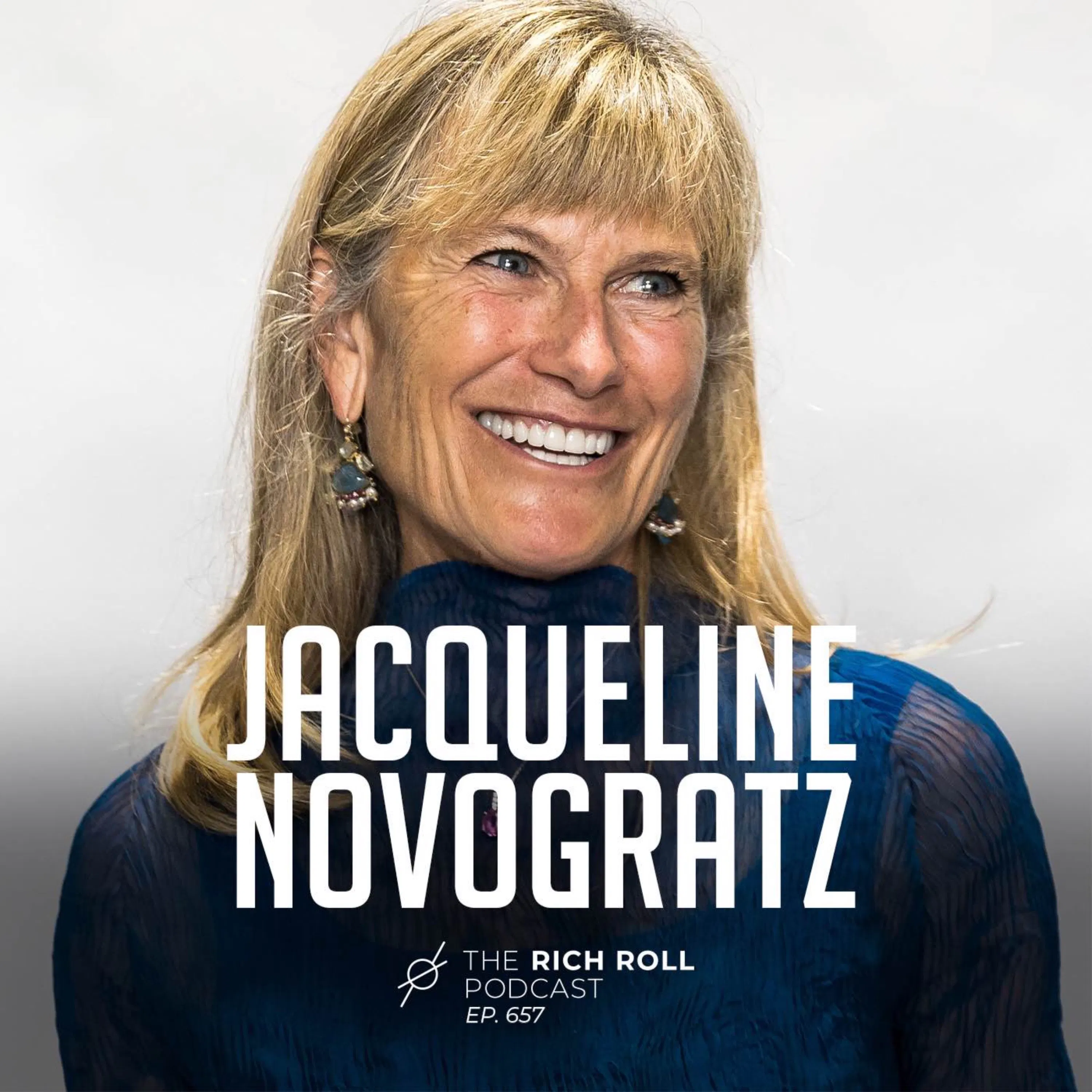 Jacqueline Novogratz On Cultivating Moral Imagination, Practicing Courage & Pursuing Work With No End | Jacqueline Novogratz | 24 January 2022 | 2:12 | We all want to positively change the world. But where do you start? Today’s guest—a woman who has made an extraordinary impact on improving the lives of millions of people across the developing world—has dedicated the better part of her life to answering this question with actionable, sustainable solutions. Meet Jacqueline Novogratz . A former investment banker, Jacqueline walked away from Wall Street back in 1986 to co-found Rwanda’s first microfinance institution. Today she is the founder and CEO of Acumen,a novel, non-profit financial organization she conceived in 2001 that blends philanthropy with venture capital to invest in people, companies, and ideas solving the toughest issues of poverty. As a pioneer of impact investing, Acumen and its investments have brought critical services like healthcare, education, and clean energy to literally hundreds of millions of low-income people throughout the world. In addition to having four TED Talks under her belt, Jacqueline is also the New York Times bestselling author of The Blue Sweater: Bridging the Gap between Rich and Poor in an Interconnected World and her most recent book, Manifesto for a Moral Revolution, which delves into our pressing need to reimagine and rebuild new systems, and where to begin. Today she shares her powerful story. This is a deeply thoughtful conversation about what is actually required to change the world. It’s about the importance of cultivating moral imagination. Something called patient capital. |
 TOMS Founder on Being a Lifelong Seeker: Blake Mycoskie | Rich Roll Podcast | Blake Mycoskie | 23 November 2020 | 1:55 | This is the story of a lifelong seeker. It’s about organizing your life around spiritual principles. Breaking the addiction to external validation. And always having the courage to fail. Meet Blake Mycoskie. Quite the change maker, Blake is most famously known as the founder of the wildly successful shoe company TOMS. He also pioneered the ‘One for One’ business model, donating a pair of shoes to a child in need for each pair sold. In turn, he sparked a generation of conscious consumers — and rebranded corporate responsibility as not only cool, but de rigueur. But Blake’s story neither begins nor ends with TOMS. A natural-born entrepreneur, Blake started 5 other businesses before TOMS. And he’s since moved on from his shoe empire to launch Madefor — a ten-month program that applies key principles of modern neuroscience, psychology, and physiology to make your brain and body better. This is more than the story of an incredible entrepreneur. It’s about navigating the world through a spiritual lens. And the power of commitment to persistent personal growth. It’s less about TOMS and more about the kind of person that imagines TOMS. It’s about intuition. The stewardship required to scale an idea into a global phenomenon — and the ongoing commitment to service that led to Madefor. Blake is a very special human. It was an honor to finally spend some time with him. And a delight to share the experience with you. The visually inclined can watch our exchange on YouTube. |
 Brian Koppelman | Rich Roll Podcast (AUDIO ONLY) | Brian Koppelman | 8 March 2019 | Today's guest was always creative, but never thought of himself of an artist. Then Brian Koppelman shifted his mindset. He adopted consistent daily practices to nurture his voice. He finally gave that voice the respect it deserved. And his life was forever changed. As direct result, this former music industry executive turned screenwriter, director, producer and showrunner has spent the last two decades churning out an avalanche of consistently great creative output as the co-writer (alongside lifelong friend David Levien) of iconic films like Rounders and Ocean's 13 and co-creator a little hit show you might have heard of called Billions on Showtime. Today we convene for a fun and highly instructive conversation about the interior life of a master storyteller and modern day artist — and the lessons that can be gleaned from investing our own creative instincts. We discuss how he discovered Tracy Chapman while still in college, facilitated her first record deal, and the hows and whys behind walking away from the music business to pursue his dream of being a writer. We mine why devotion to process over results, mastery over success, and love of craft is the path to a meaningful life. We examine how to overcome negative self-talk and how Tony Robbins and Julia Cameron changed his life. And we dive deep into how his daily habits — journaling and meditation paramount among them — have paved his road to long-sustained success. | |
 Biz Stone on Conscious Capitalism & The Power Of Technology To Cultivate Global Cooperation | Biz Stone | 7 November 2016 | 2:05 | Imagine co-creating a tool so powerful, it literally changes the world. Biz Stone is one such man. Most people know Biz as one of the co-founders of Twitter. Together @biz@jack and @ev created the social media behemoth that seismically impacted how we connect with the world, share information, exchange opinions, consume news, and participate in the daily global conversation. Ironically, Biz never aspired to become successful in business. A most unlikely entrepreneur, he spent his early years as an artist, crafting book covers for a Boston publishing house. Biz’s initial interest in Silicon Valley was sparked not by the potential for riches but rather by idealism – technology as potential energy to greater unite the human experience. Bring people closer. And cultivate global cooperation. An early evangelist of blogging as a vehicle to serve his romantic vision, Biz jumped when Ev Williams invited him to join Blogger, the networked blogging platform Ev had built and sold to Google. Ultimately, Biz walked away from Google. Leaving millions on the table, he leaped into the treacherous unknown of start ups, following Ev to podcast precursor Odeo. In one of the greatest pivots in Silicon Valley lore, Odeo would morph into Twitter. Twitter would permanently change culture. And along with Ev, Biz would later advance to co-found Medium, the über-popular, user-friendly blogging platform of the moment. |
 Don’t Listen to Anyone: Casey Neistat on Trusting Your Instincts & The Principles That Guide A Creative Life | Casey Neistat | 7 September 2015 | 59 min | Today marks my third conversation with the singular Casey Neistat. Does a guy who has amassed over 100 million total views on his YouTube Channel — not to mention 1 million views daily — really need a formal introduction? Unlikely. But if for some reason this exciting filmmaker has eclipsed your radar, you can read my in depth thoughts on his extraordinary life and listen to our prior conversations HERE (RRP #73) and HERE (RRP #144). If you're well on board the Casey train, you’ve witnessed quite an evolution in his recent trajectory. Since Casey began daily vlogging — posting a new movie on his YouTube Channel every single day since March 27, 2015 — his already incredibly popular YouTube Channel has exploded, growing from around 500,000 subscribers to well over 1.1 million in less than five months. On average, each vlog amasses around 500,000 views. This one tops out at 1.5 million (which incidentally has absolutely nothing to do with what occurs at the 4-minute mark): A major network television show would kill for these numbers. But Casey has no interest in such matters. He's not making videos to capture the interest of the system he consciously placed in his rear view. For Casey, YouTube is the finish line — a juggernaut channel he built all by himself. DIY on the most democratic video platform in the world. And that is far more powerful and compelling than anything HBO, NBC, Disney or any other traditional mainstream outlet could ever offer him. Ever. |
 Tucker Max Grows Up: How To Own Your Emotional Truth, Redefine Your Story & Find Happiness | Tucker Max | 29 June 2015 | 2:29 | This week I'm going out on a limb. When the opportunity arose to sit down with Tucker Max, I admit to a little discomfort and trepidation. On the one, hand, I was genuinely honored he was interested in doing the show. On the other hand, I wasn't convinced he was the right fit for what I do. To be sure, Tucker Max is a high performing super-achiever. He is incredibly bright. He is insanely accomplished. And he has millions of fans the world over. Nominated to TIME magazine's “100 Most Influential List” of 2009, Tucker's first book I Hope They Serve Beer in Hell* was a #1 New York Times Bestseller, spent 5 years on the list and ultimately sold over 2 million copies. He followed it up with two more books, both of which were also New York Times Bestsellers. Perhaps most impressive? Tucker is one of only three writers — along with Malcolm Gladwell and Michael Lewis — to ever have three books on the New York Times Non-Fiction Bestseller List at the same time. Tucker Max is a publishing juggernaut. Irrespective of whatever opinion you may hold about the content of those books, you cannot deny that is a towering achievement. However, it's these very books, the fratire genre he singlehandedly birthed, and Tucker’s very public persona as America’s foremost bro — well known for his healthy ego, brash opinions and candid chronicling of his outlandish partying exploits – that gave me considered pause. |
 DO YOUR BEST WORK: Lessons from Pixar on Creativity, Leadership & Why Story Is King | Ed Catmull | Ed Catmull |
TBryan Johnson & Kate Tolo On Curing Their Incurable Diseases, Addressing The Disparity In Women's Health & The Don't Die MissionBryan Johnson · 21 September 2026TThe Atlantic’s Nick Thompson Is The Fastest Runner In Publishing: On Setting Age-Group Records, Beating Cancer, & Why Media Must Survive AINick Thompson · 20 October 2025TA TRANSFORMATIVE Guide To Designing Your Dream Life | Sahil Bloom x Rich RollSahil Bloom · 27 January 2025TLongevity Protocols, Lifestyle Medicine, & Optimizing Health-span | Peter Diamandis X Rich RollPeter Diamandis · 13 January 2025TNEVER PLAY IT SAFE: 7 Practical Tools To Build The Life You Want | Chase Jarvis X Rich Roll PodcastChase Jarvis · 7 October 2024TCuriosity Is A Superpower: Legendary Film Producer Brian Grazer on Beginner’s Mind, Getting It Done, & Why Conversation MattersBrian Grazer · 4 December 2023TExcellent ADVICE To OPTIMIZE YOUR LIFE | Kevin Kelly x Rich Roll PodcastKevin Kelly · 1 May 2023THow To GET STARTED, GET UNSTUCK & SHARE Your Best Work | Seth Godin x Rich Roll PodcastSeth Godin · 9 January 2023TThe Great Ache That Binds Us: Susan Cain On The Power of Bittersweetness | Rich Roll PodcastSusan Cain · 22 August 2022TNext-Gen LONGEVITY SCIENCE With XPRIZE Founder Peter Diamandis, MD | Rich Roll PodcastPeter Diamandis · 14 March 2022TJacqueline Novogratz On Cultivating Moral Imagination, Practicing Courage & Pursuing Work With No EndJacqueline Novogratz · 24 January 2022TTOMS Founder on Being a Lifelong Seeker: Blake Mycoskie | Rich Roll PodcastBlake Mycoskie · 23 November 2020TBrian Koppelman | Rich Roll Podcast (AUDIO ONLY)Brian Koppelman · 8 March 2019TBiz Stone on Conscious Capitalism & The Power Of Technology To Cultivate Global CooperationBiz Stone · 7 November 2016TDon’t Listen to Anyone: Casey Neistat on Trusting Your Instincts & The Principles That Guide A Creative LifeCasey Neistat · 7 September 2015TTucker Max Grows Up: How To Own Your Emotional Truth, Redefine Your Story & Find HappinessTucker Max · 29 June 2015TDO YOUR BEST WORK: Lessons from Pixar on Creativity, Leadership & Why Story Is King | Ed CatmullEd Catmull