 U
Video · 8 episodes in the reference, 2022 to 2026
unSILOed with Greg LaBlanc
Published by Greg La Blanc
Host
GLGreg La Blanc
Episodes
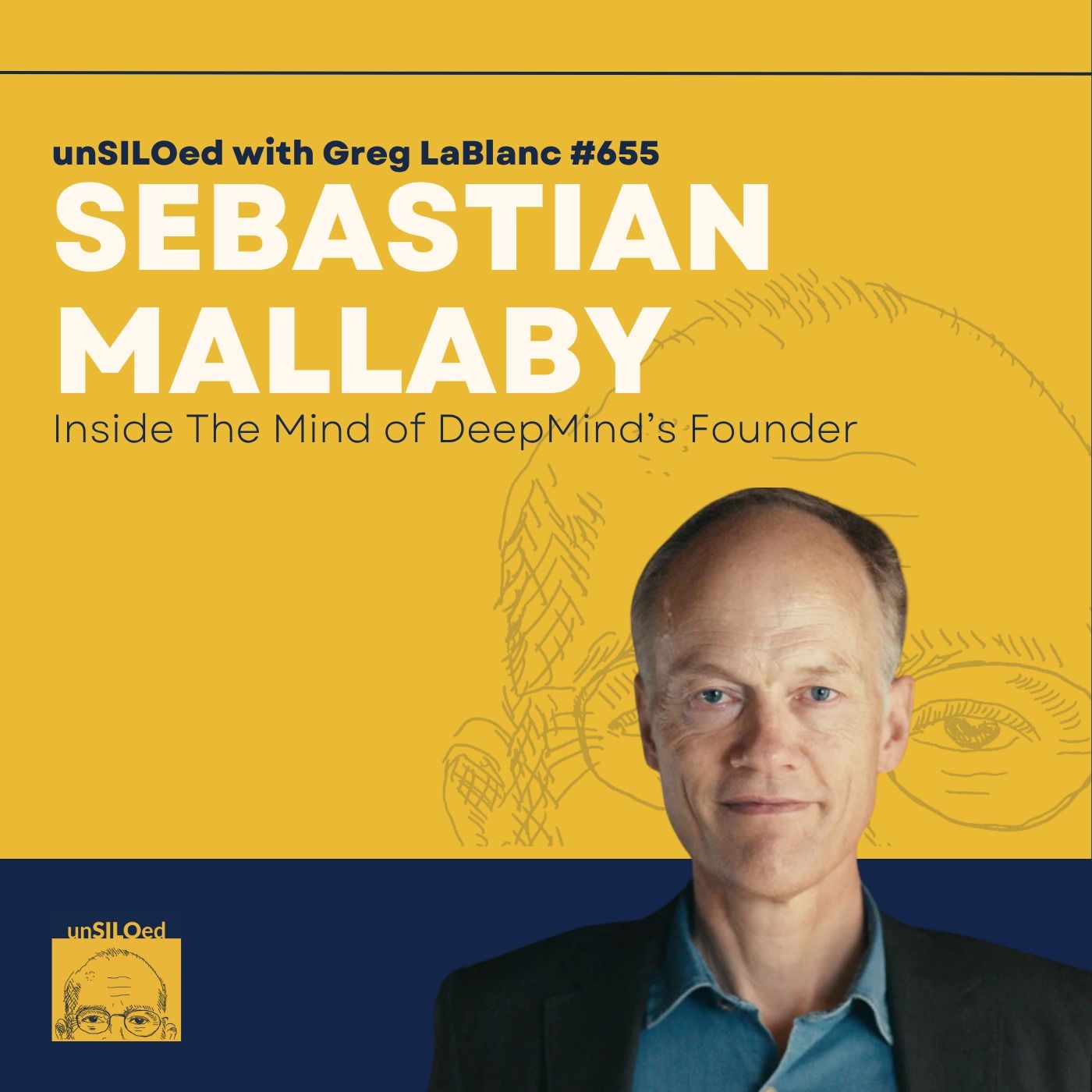 655. Inside The Mind of DeepMind’s Founder with Sebastian Mallaby | Sebastian Mallaby | 28 May 2026 | 50 min | How did a teenage video game designer from London become a Nobel Prize-winning scientist behind one of the most consequential technology efforts in history? Sebastian Mallaby is a senior fellow at the Council on Foreign Relations and author of the new book, The Infinity Machine: Demis Hassabis, DeepMind, and the Quest for Superintelligence which provides an in-depth look into one of the greatest minds behind artificial general intelligence. In this episode, Sebastian and Greg discuss how Hassabis's early immersion in game design and neuroscience shaped his unique approach to artificial intelligence, why groundbreaking science is increasingly happening outside academia, and the tension between scientific discovery and corporate strategy. *unSILOed Podcast is produced by University FM.* Episode Quotes: Why AI is becoming an ‘infinity machine’ 03:01: It struck me that two breakthroughs in AI pointed to more to come. And these were AlphaGo and then AlphaFold. And what these two things had in common was—you had a sort of massive combinatorial space in both cases. So with Go, because it's a nineteen-by-nineteen board, the very first move, there's three hundred and sixty-one choices, then there's three-sixty for the second one. If you multiply that out, you pretty soon get to a search space which is sort of, you know, approaching infinity in terms of the number of possible permutations in the game. And with proteins, the way they can fold is even bigger. |
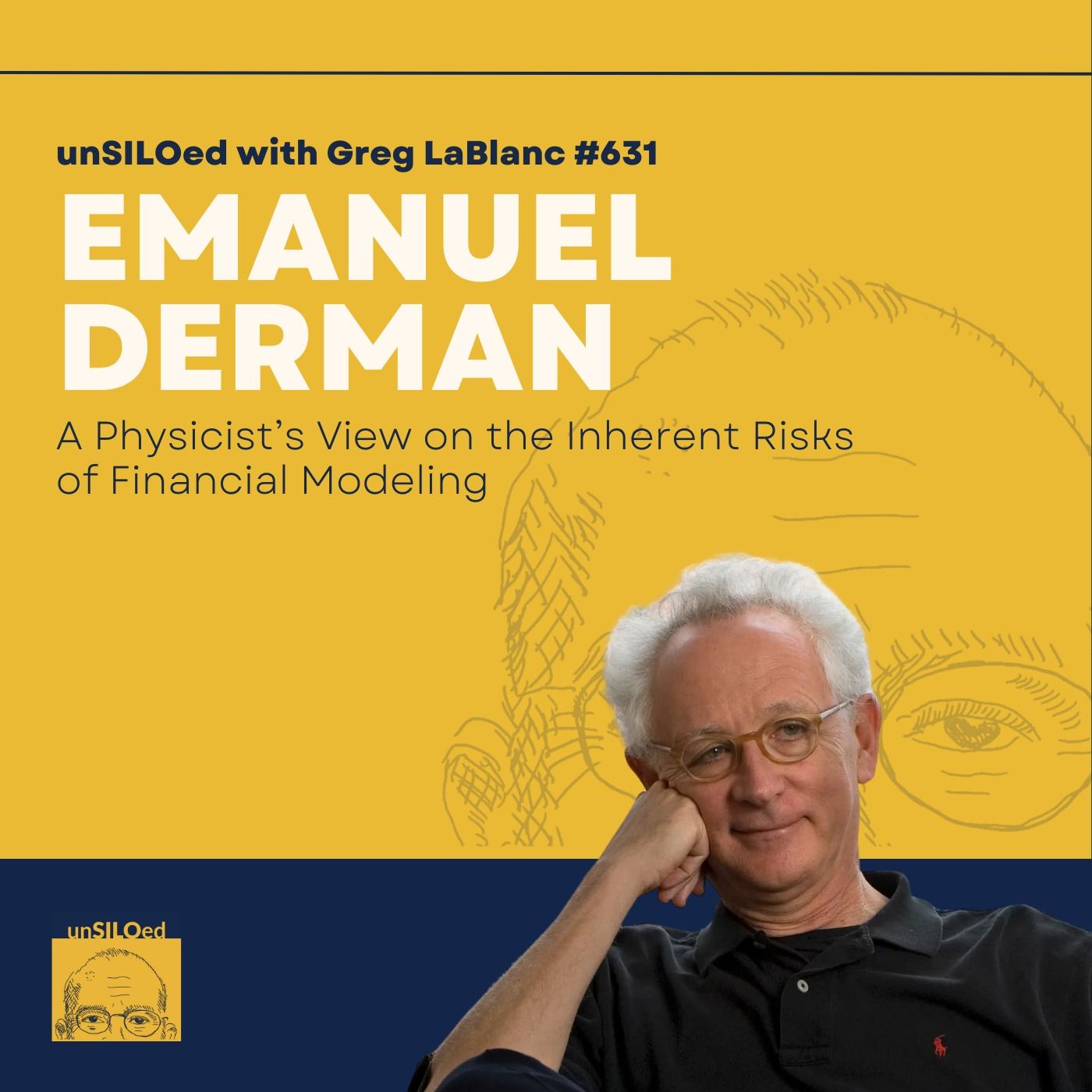 631. A Physicist’s View on the Inherent Risks of Financial Modeling with Emanuel Derman | Emanuel Derman | 18 March 2026 | 47 min | What do particle physicists and Wall Street traders have in common? How did finance become more like physics, and how is physics now becoming more like finance? Emanuel Derman is an emeritus professor at Columbia in financial engineering and the author of several books, including My Life as a Quant: Reflections on Physics and Finance and Models. Behaving. Badly.: Why Confusing Illusion with Reality Can Lead to Disaster, on Wall Street and in Life . His work examines the entanglement of physics and finance, using memoir to reveal hidden truths about the theories and models practitioners rely on. Greg and Emanuel discuss his transition from physics to Wall Street, revealing that he found finance to be more social and creative. They also explore how early quant work required both theory and hands-on programming, what distinguishes models from theories, and why, despite some superficial similarities, the fields of finance and physics couldn’t be more different. *unSILOed Podcast is produced by University FM.* Episode Quotes: Financial models require confidence without hubris 29:29: In my life as a quant, I think I said you had to be cocky when you were using models and push them as far as you possibly could, but stop short of hubris, and I think that's important. You ought to understand that your model isn't going to be correct. In the end, the world is going to violate it. |
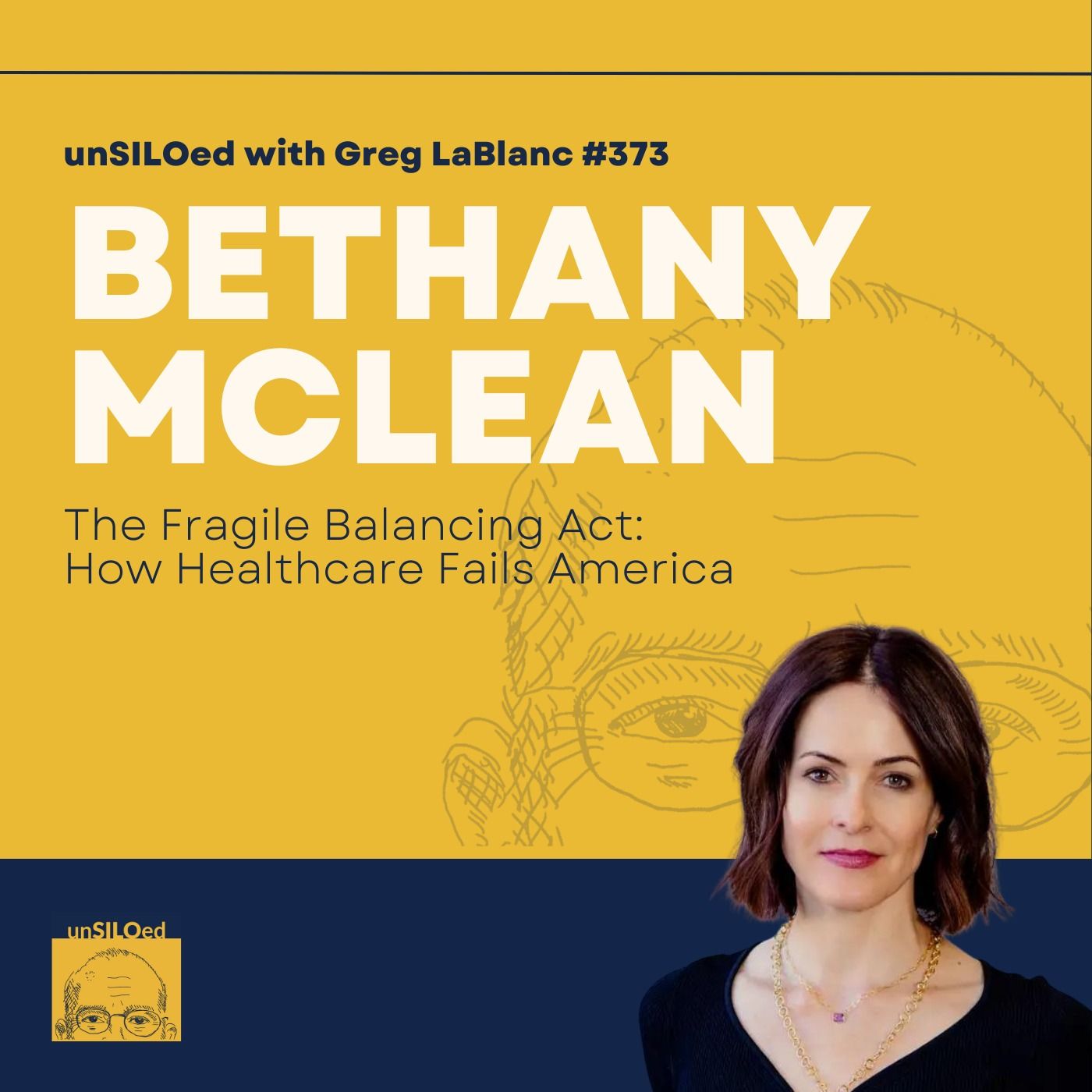 373. The Fragile Balancing Act: How Healthcare Fails America feat. Bethany McLean | Bethany McLean | 12 January 2024 | 54 min | What is the correct balance between short-term profit and long-term resilience as far as healthcare is concerned? How does the 'panic, neglect' cycle underpin our societal and managerial flaws? Bethany McLean is a journalist, editor, and author of several books. Her latest book, co-authored with Joe Nocera, is titled The Big Fail: What the Pandemic Revealed About Who America Protects and Who It Leaves Behind. Bethany and Greg discuss the paradox of America's healthcare system—immense spending that does not equate to superior care, a disparity made glaringly obvious during the global COVID crisis. They dissect the financial interventions of recent administrations and biases that tip the scales in favor of the affluent, leaving small enterprises and the vulnerable in the lurch. Bethany gives a critical examination of the swift mobilization that birthed vaccines under Operation Warp Speed, an emblem of successful government-industry collaboration amidst a turbulent political backdrop. *unSILOed Podcast is produced by University FM.* Episode Quotes: “I don’t know” isn't a weakness, it's a skill 48:42: The ability to say, "I don't know," in a way that isn't weak is a skill I hope our leaders can start to learn: "I don't know, but here's what we think. Here's what we're trying to do." I think, for all of us, not resorting to ideological divides as quickly as we do, and to really try and understand that where different people are coming from. |
 358. The Art of Venture Capital feat. Sebastian Mallaby | Sebastian Mallaby | 17 November 2023 | 56 min | How much does venture capital actually have to do with finance? It turns out, not that much. Rather, venture capital has more to do with psychology, network theory, and organizational dynamics. Sebastian Mallaby is the Paul A. Volcker senior fellow for international economics at the Council on Foreign Relations. He’s written numerous books, including The Power Law: Venture Capital and the Making of the New Future and More Money Than God: Hedge Funds and the Making of a New Elite . He and Greg discuss how venture capital can be a form of finance without much finance, why governance plays such an important role in successful venture capital, and why other places have found it difficult to replicate the Silicon Valley model. *unSILOed Podcast is produced by University FM.* Episode Quotes: Embeddedness is essential for startup success 45:09: Most of the good GPs I wrote about in my book either had an engineering degree or some other skill which would add value to the portfolio company, maybe be an expert in go-to-market strategies. Secondly, they know something about business and finance; perhaps they have a business degree. Thirdly, they may have started a startup or been an early employee in a startup. So that experience from the inside of being an entrepreneur, and you don't need maybe all three of those things, but you probably might need two. That's the obvious thing. The less obvious thing is that You need to be what I call embedded. |
 348. Simplifying in the Age of Complexity feat. John Maeda | John Maeda | 25 October 2023 | 46 min | Is it possible to simplify life without losing the comfort and complexity that enriches it? John Maeda, vice president of artificial intelligence and design at Microsoft, has been writing about the intersection of design, technology, business, and life for years. His book, The Laws of Simplicity, explores the question of needing less while still getting something more. He and Greg discuss some of the pivotal moments in John’s career, how his view of design changed over the course of writing The Laws of Simplicity , and the aspects of business education that could use some tweaking. *unSILOed Podcast is produced by University FM.* Episode Quotes: Traditional design is not the same as customer-centricity 26:42: Business is about design thinking. It's different. It's customer-centricity. It's all the C words, whatever. But the way design is taught, like your microphone, is so beautiful. It's super cool-looking, right? That was created not just to be easy to use. It was also created to be "beautiful, stand out, et cetera," whatever—all these other factors that are not user-centered. They're ego-centered, which you could argue is like user-centered design, but it's different…[27:32] Traditional design is good at messing with your mind, your ego, and your wallet or purse. And it's fascinating. But it's not the same as customer-centricity. And that's what's so interesting about it and useful about it at certain times in a product's evolution. |
 275. The Madness of Crowds feat. William Bernstein | William J. Bernstein | 28 April 2023 | 51 min | What do financial bubbles and religious millenarianism have in common? They both involve collective delusion. When Charles Mackey wrote a book on the Madness of Crowds in the 19th century, he could not have imagined that religious and financial bubbles will continue to reappear, but as Willam Bernstein points out, the world has not gotten any saner. William Bernstein is an investment manager and the author of a number of books including, The Delusions Of Crowds: Why People Go Mad in Groups and The Birth of Plenty: How the Prosperity of the Modern World was Created . And before his work in finance, he spent more than 30 years practicing medicine. William and Greg discuss the difference between intelligence and rationality, how human nature is rooted in imitation and mimicry, and the end of the world. *unSILOed Podcast is produced by University FM.* Episode Quotes: When it comes to pattern recognition, who are the right people to listen to? 47:23: When I'm listening to an analyst or a commentator, what I'm listening for is not how eloquent they are or how smart they sound, because it turns out that the most eloquent people tend to be people who can get away with a lot of analytical sloppiness. What I'm looking for is nuance. I'm looking for someone who can see both sides of an argument and argue something from both sides. Who are the people you want to make decisions for you? 06:37: Rationality and intelligence are entirely orthogonal. |
 212. Fostering Innovation Within Organizations feat. Safi Bahcall | Safi Bahcall | 16 November 2022 | 50 min | Innovation is a crucial part for organizations to stay ahead of their competitors, adapt to changing circumstances in the environment and create long-lasting businesses. Yet, many big corporations eventually stagnate and become obsolete while a lot of groundbreaking ideas come from small companies. Safi Bahcall is a second-generation physicist, a biotech entrepreneur, former public-company CEO and author of the highly acclaimed book “Loonshots: How to Nurture the Crazy Ideas That Win Wars, Cure Diseases, and Transform Industries”. Safi advises CEOs and leadership teams on strategy and innovation, and has delivered keynote presentations at industry conferences, investor events, leadership retreats, medical meetings, and leading academic institutions around the world. Greg and Safi discuss how organizations can borrow from science to implement systems and incentives that nurture innovation, risk-taking and experimenting which ultimately lead to radical breakthroughs. Episode Quotes: Having a chief incentive officer will help you grow your organizational scale 49:29: You have a chief revenue officer whose role is strategic, given a marketing budget. How many dollars can we make? You have a chief technology officer whose role is strategic, given a fixed technology budget. How do we ensure the optimum technology use across the organization? Why don't you have a chief incentive officer? You have a fixed compensation. You try to stick within a fixed budget of cash and options. |
 #89 Entrepreneurship and Nietzsche feat. Brad Feld | Brad Feld | 17 January 2022 | 1:11 | Today we’re talking philosophy. And we know you may be thinking, somebody creating an app that entertains people or automates some routine office work can’t be compared to the great philosophers or great artists. But there’s more of an overlap than you may think. Brad Feld is a co-founder of the Foundry Group, Mobius VC, and Techstars, the famous accelerator. He is also known as the author of a bunch of books, including Venture Deals, Startup Communities, and the most recent, The Entrepreneur's Weekly Nietzsche: A Book For Disruptors. In this episode we’ll hear all about Brad’s early startup life, “authenticity and vulnerability,” his thoughts on certain entrepreneurship cliches, and mental health in the space. Episode Quotes: How Brad and his co-author got the idea for their latest book: There's so much depth in Nietzsche. And when you start to unwind pieces of it and think about them in whatever the context is, an awful lot of the things, the quotes, stimulate thinking about different aspects of entrepreneurship. And that was really what captured both of us. It's not that, you say, okay, well, Nietzsche's philosophy applies to entrepreneurship and therefore you should do these things. That's not it at all. It's almost the inverse of it. It's - here's a very provocative quote of his. Think about it, ponder it, play around with it. Apply it to your own experience. |
U655. Inside The Mind of DeepMind’s Founder with Sebastian MallabySebastian Mallaby · 28 May 2026U631. A Physicist’s View on the Inherent Risks of Financial Modeling with Emanuel DermanEmanuel Derman · 18 March 2026U373. The Fragile Balancing Act: How Healthcare Fails America feat. Bethany McLeanBethany McLean · 12 January 2024U358. The Art of Venture Capital feat. Sebastian MallabySebastian Mallaby · 17 November 2023U348. Simplifying in the Age of Complexity feat. John MaedaJohn Maeda · 25 October 2023U275. The Madness of Crowds feat. William BernsteinWilliam J. Bernstein · 28 April 2023U212. Fostering Innovation Within Organizations feat. Safi BahcallSafi Bahcall · 16 November 2022U#89 Entrepreneurship and Nietzsche feat. Brad FeldBrad Feld · 17 January 2022