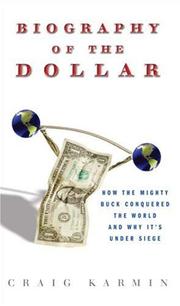
Biography of the Dollar
How long the dollar can remain the currency of international business.
Summary
Karmin asks how long the dollar can remain the currency of international business, used even when an Asian company trades with South America. He sets this against economists' fears that an American economy built on heavy borrowing and large deficits clouds the dollar's future, and asks whether the euro or China's renminbi could eclipse it.
The book traces the dollar's history and its role as a driver of globalisation. It covers the power of the Federal Reserve, the foreign central banks that stockpile dollars, and the foreign exchange traders who set a currency's value, and it follows the dollar's rise through events including a duck-hunting trip and the Bretton Woods Conference. It also covers the note's anti-counterfeiting features and the governments that tried to counterfeit it, and records that Saddam Hussein, who insisted on euros for oil, held $750,000 in hundred-dollar bills when captured. Karmin ends on the cost of the dollar's status: the United States pays hundreds of millions of dollars a day in interest on foreign debt. It was published in 2008.
Key takeaways 4
- The dollar's role as the world's trading currency lets the United States borrow on a scale no other country can.
- Foreign central banks and currency traders, not only the Federal Reserve, determine the dollar's value.
- Bretton Woods set the dollar at the centre of the post-war monetary system.
- Heavy American borrowing and deficits are the main threat to the dollar's position.
Who should read it
Investors and general readers who want a journalist's account of how the dollar became the world's currency and what could end that.
Who recommended it 1
Similar books 6
Chosen by shared topics, the entries that hold them, and the people who recommended both.
How American monetary policy changed from the 1950s through quantitative easing.
European finance from the Middle Ages on: money, banking, markets and public debt.
US money from colonial paper to the Fed, read as bank-and-state booms and busts.
The Fed from 1913 to 1951, told from its own minutes and internal memos.
The US money stock from 1867 to 1960, and how changes in it drove prices and income.
The history of money through technology, and why the financial system fails people.
Recommended by: Balaji S. Srinivasan