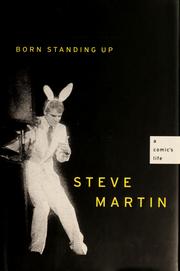
Born Standing Up
A comedian's eighteen years building a stand-up act, and why he quit it.
Summary
Martin covers his eighteen years developing a stand-up comedy act, from working at Disneyland's magic shop as a child through television writing to arena performances, and then his abrupt departure from stand-up in 1981. The book is short and unsentimental.
The substantive content is about the development of an original approach over a very long period. Martin decided that conventional stand-up depended on the punchline releasing tension, and set out to build an act that withheld the release entirely, so that the audience laughed from accumulated tension without any single moment justifying it. He describes the years during which this did not work, performing to small and hostile audiences, and the incremental refinement that eventually made it succeed.
His account of practice is precise. He documents recording performances and analysing them, timing individual moments, testing material across venues, and the discipline of continuing to perform badly while a new approach was being developed. The later chapters cover the period of enormous success, in which the act became a phenomenon and then, in Martin's account, ceased to be performable because arena audiences had come to hear specific catchphrases rather than to watch comedy. He walked away entirely and never returned.
The book is a memoir and offers no method beyond the account. Martin writes with distance about his own emotional life and about his father, which some readers find withholding. The description of a decade of failure while developing an original approach, and of abandoning something at its commercial peak, is what transfers.
Key takeaways 8
- Martin deliberately built an act that withheld the punchline, so that laughter came from accumulated tension without any single moment justifying it.
- The approach took roughly a decade of performing to small and hostile audiences before it worked.
- He recorded and analysed his own performances in detail, timing individual moments and testing material across venues.
- Developing an original approach requires performing badly in public for an extended period, which is why most people abandon the attempt.
- Success changed the audience, which came to hear specific catchphrases rather than to watch the act, and this destroyed what the act was for.
- He left stand-up entirely at its commercial peak because the thing he had built could no longer be performed.
- Persistence in the specific form of continuing to appear while the material does not work is the discipline the book describes.
- The account offers no method beyond the record of what he did over eighteen years.
Who should read it
Anyone developing an original approach that does not yet work, wanting an account of a decade of visible failure before it did.
Who recommended it 6 · 1 direct
“A simple autobiography of his early years. Interesting tale, though no usable lessons for me.”
Similar books 6
Chosen by shared topics, the entries that hold them, and the people who recommended both.
An actor, producer and musician's memoir of his insecurities, trauma and success.
“I loved this so much I couldn’t stop, and read in one sitting for 8 hours straight. I love autobiographies that distill lessons from their success. Similar to “Total Recall” by Schwarzenegger. I love reading the mindsets of the super-ambitious. Knowing Mark Manson’s writing so well, it’s fascinating to notice where it subtly changes voice from Will to Mark. Great insights. Really an ideal autobiography.” — Derek Sivers
Source: Derek Sivers book notes (primary, rated list) · Rating: 7/10
Recommended by: Derek Sivers, Jason Zweig, Alex Lieberman and 1 other
A comedian's memoir, from his childhood and street performing to world tours.
Recommended by: Bill Gates
A comedian's life, from Pennsylvania and improv in Chicago to sketch comedy.
Recommended by: Sheryl Sandberg, Aileen Lee and 1 other
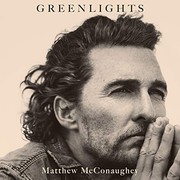
An actor's memoir told as stories, poems and life lessons, not a chronology.
Recommended by: Keith Wasserman, Ryan Holiday
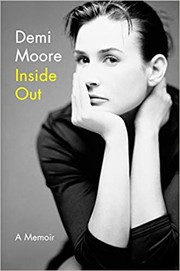
An actress's memoir of fame, film, relationships and her private struggles.
Recommended by: Arianna Huffington