Brazil: The Troubled Rise of a Global Power
Brazil's rise toward economic power and the many problems it still faces.
The clearest account of Brazil's political economy and its ceilings.
Summary
Reid, a journalist, argues that Brazil, the world's fifth largest country and seventh largest economy, has begun to live up to its potential, though it receives less attention than Russia, India and China, and that experts expect it to be one of the most important global powers by 2030. After decades of military rule, the fourth most populous democracy had reformist leaders who tamed inflation, opened the country to trade and addressed poverty and other social problems, which made Brazil a fuller participant in world affairs.
Reid wrote as Brazil prepared to host the 2014 World Cup and the 2016 Olympics and as mass protests shook the country. He sets its achievements against its continuing problems: an inefficient state, widespread corruption, dysfunctional politics and violent crime in the cities. He presents these as the challenges Brazil must overcome before it becomes a country of global weight.
Key takeaways 4
- Reformist governments after military rule tamed inflation and opened Brazil to trade.
- Social policy reduced poverty and widened Brazil's role in world affairs.
- An inefficient state, corruption and dysfunctional politics limit Brazil's rise.
- Mass protests before the 2014 World Cup showed the limits of Brazil's progress.
Who should read it
Investors in Brazil who want a clear account of the country's political economy and the limits on its growth.
Similar books 6
Chosen by shared topics, the entries that hold them, and the people who recommended both.
Brazil's commodity-boom decade and the institutions beneath it.
Latin America is neither doomed to fail nor saved by one reform; a balanced view.
Two Brazilian federal police officers on the Car Wash corruption investigation.
Brazil from Portuguese colony through its crises to a regional leader.
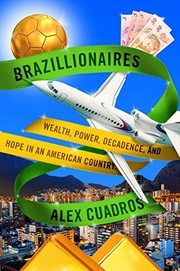
Brazil's billionaires during the boom, and what their fortunes say about inequality.

Colombia's history through land, property rights and violence.