Updates

  1. Person pages list letters, writing, profiles and links as sortable tables with filters, and show each person's companies as links; Fund letters show each letter's description in its own column.
  2. Experts show a checked job title and a short description of each person; 30 more people have photographs.
  3. Every company, fund, university and publication the experts work for has a page listing the people there.
  4. Fund letters show each letter's thesis and filter by it; 225 person pages list the essays, columns and newsletter issues the person wrote.
  5. Person pages list every essay and newsletter issue a person wrote, and their own books as a table in List view.
  6. Recommends shows the five largest kinds of book and the rest under More; browse pictures load sooner.
  7. Podcasts and talks link the original episode, filter by Audio and video or Press, and list each publisher once.
  8. Pages are wider, Recommends has List and Grid, and a filter clicked again turns off.
  9. Book cards sit in a ruled grid with Open Library and Goodreads links and each book's one-line note.
  10. Funds is now Investors; each investor's styles are buttons that filter the table.
  11. Podcasts and talks on a person's page filter by year and publisher and show as a list or a grid of pictures.
  12. Quotes show only people's own words: 472 summaries written by list sites are gone.
  13. Country pages open from Browse again, and every link on the shelf lands on a page.
  14. Subject and person pages show their sections as tabs, and each book appears once on a person's page.
  15. Book cards show the quote, who said it and the source; grids show five cards to a row.
  16. On a phone, a menu holds the sections, search, Updates, Feedback and dark mode.
  17. Feedback takes a screenshot of the page with no browser prompt, opens a screenshot full size when you click it, and clears itself once sent.
  18. Book cards are centred, search names the topic each book sits in, and any text cut short shows whole on hover.
  19. Search groups its results by kind: people, companies, geographies, subjects, topics, books, funds, fund letters and papers.
  20. The Books table lists who recommended each book by name, and the browser tab names the section you are in.
  21. Feedback can take a screenshot of the page, or one you paste or choose, and opens in the corner beside Updates.
  22. Each rail button reopens its section where you left it, and Browse, Table and People show on every book and subject page.
  23. Filters grey out choices that hold nothing instead of hiding them, and Books › People filters by authors or recommenders.
  24. Feedback takes a subject line and up to three screenshots.
  25. Biographies are grouped by the person they are about: 41 new pages, from Abraham Lincoln to Lee Kuan Yew.
  26. Sport splits into 23 sports, and Religion into one topic per faith.
  27. Book lists show as cards: the cover, one recommendation quote and every recommender by name.
  28. Seventeen subjects that had two or three pages under different names now have one page each.
  29. Every page lists its Experts as authors and recommenders, with a link to them on the Experts tab.
  30. Economics, Financial history, Financial panics and Accounting are subjects of their own, with one page per financial crisis.
  31. Book, person and subject pages open inside the app, so the tabs stay in view.
  32. 996 more book covers, and photographs or logos for 227 more people and companies.
  33. Books › Browse shows every subject as cards, and the rail holds Fund letters, Papers, Experts, Books and Funds.
  34. Every topic over 150 books splits into narrower topics, each with a page of its own.

Send feedback

What is it?
Screenshots, up to 3 (optional)
or paste one with Ctrl+V

We use your email only to reply to you.

Corporate Payout Policy

Corporate Payout Policy

Harry DeAngelo, Linda DeAngelo, Douglas J. Skinner
2009
T3 204 pages · about 3h 24m to read Open Librarygoodreads

The academic survey of dividends against repurchases.

Summary

DeAngelo, DeAngelo and Skinner wrote this monograph as a survey and synthesis of the academic literature on how and why firms return cash to shareholders.

The starting point is the Miller and Modigliani irrelevance result, which shows that in a world without taxes, transaction costs or information asymmetries, payout policy does not affect firm value because investors can create any cash flow pattern they want by selling shares. The survey then works through what happens when each assumption is relaxed.

The authors' own central argument concerns the necessity of payout. They hold that firms cannot retain earnings indefinitely, because a mature firm generating cash beyond its investment opportunities will accumulate a balance that eventually swamps the operating business, and because agency problems mean managers holding large cash balances will misallocate them. Payout is therefore not optional in the long run, and the interesting questions are about timing and form rather than about whether.

The empirical material covers the documented patterns: the concentration of dividends among a small number of large mature profitable firms; the disappearance of dividends among newly listed firms; the growth of repurchases, which overtook dividends in aggregate; the stickiness of dividends, which managers are extremely reluctant to cut, established by Lintner's survey work and confirmed repeatedly; and the flexibility of repurchases, which are adjusted freely.

They also survey the signalling literature, the clientele explanations, the catering theory and the life-cycle explanation, which holds that a firm's payout follows from where it sits between growth and maturity and which they consider best supported.

The monograph is written for researchers and assumes familiarity with the literature. It is from 2009 and predates further growth in repurchases and the associated policy debate.

Key takeaways 7

  1. Payout policy is irrelevant to firm value only under assumptions that do not hold, and each relaxation produces a different conclusion.
  2. A mature firm cannot retain earnings indefinitely, because the accumulated cash eventually swamps the operating business.
  3. Agency problems mean managers holding large cash balances will misallocate them, which makes payout necessary rather than optional.
  4. Dividends are concentrated among a small number of large mature profitable firms and have disappeared among newer listings.
  5. Managers are extremely reluctant to cut dividends, which makes them a commitment rather than a discretionary distribution.
  6. Repurchases are adjusted freely, which makes them the flexible component of payout and dividends the committed one.
  7. The life-cycle explanation, in which payout follows from a firm's position between growth and maturity, is best supported by the evidence.

Who should read it

Researchers and practitioners who need the academic literature on dividends and repurchases surveyed and synthesised in one place.

Similar books 6

Chosen by shared topics, the entries that hold them, and the people who recommended both.

David R. Giroux · 2021

A large-fund manager's framework for ranking buybacks against alternatives.

William Lazonick, Jang-Sup Shin · 2020

The academic case that repurchases hollow out corporate investment.

Tim Koller, Richard Dobbs, Bill Huyett · 2010

Four principles of corporate value, from McKinsey's valuation work, for executives.

Jeff Gramm · 2016

Eight activist letters over a century, from Graham in 1927, and what lay behind them.

Recommended by: Mohnish Pabrai
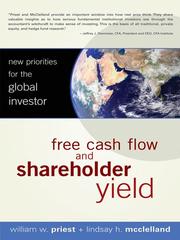
William W. Priest, Lindsay H. McClelland · 2007

Dividends, buybacks and debt paydown combined as one measure of shareholder return.

Where it sits in the reference 1

Investment philosophy

Topics

Finance and Markets