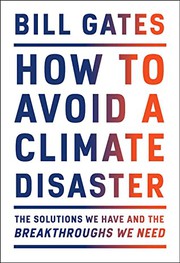
How to Avoid a Climate Disaster
What it would take to cut greenhouse gas emissions to zero, sector by sector.
Green premiums as a way of ranking where capital is actually needed.
Summary
Gates draws on more than a decade of studying climate change and investing in innovations that address it, and sets out how the world can build the tools it needs to reach zero greenhouse gas emissions. He argues that preventing the worst effects of climate change requires net-zero emissions, that the problem is urgent and the debate complex, and that the answer lies in inventing new carbon-free technologies and deploying existing ones.
Gates explains that his interest grew out of his foundation's work against poverty and disease, because climate change will hit hardest the people who did least to cause it. As a technologist, he has seen how innovation changes the world, and he argues that investing in research, inventing new technologies and deploying them quickly and at large scale can address climate change. He calls for action at local, national and global levels to build the technologies, businesses and industries needed, and explains why he is optimistic that the world can avoid the worst outcomes.
Key takeaways 4
- Avoiding the worst effects of climate change requires net-zero greenhouse gas emissions.
- New carbon-free technologies must be invented and existing ones deployed quickly at large scale.
- Climate change hurts most the people who did least to cause it.
- Businesses and industries, not only governments, must be built to reach zero emissions.
Who should read it
Investors in energy and industry who want Gates's framework for where innovation and capital are needed to reach net-zero emissions.
Who recommended it 1
Similar books 6
Chosen by shared topics, the entries that hold them, and the people who recommended both.
A data-driven look at emissions and what reduces them.
Recommended by: Bill Gates

Ice cores, old shorelines and fossil pollen show how fast the climate now changes.
Evidence that rich economies now grow while using fewer physical resources.
“on how modern technological economies can build more outputs with less inputs” — Marc Andreessen
Source: @pmarca, companion thread to 'It's Time to Build'
Recommended by: Marc Andreessen
A plan with measurable goals for reaching net-zero emissions.
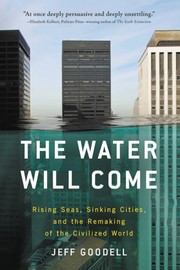
Rising seas as a present property and insurance crisis, from Miami to Lagos.
How weather forecasts are made, and how fragile the global monitoring behind them is.