Updates

  1. Person pages list letters, writing, profiles and links as sortable tables with filters, and show each person's companies as links; Fund letters show each letter's description in its own column.
  2. Experts show a checked job title and a short description of each person; 30 more people have photographs.
  3. Every company, fund, university and publication the experts work for has a page listing the people there.
  4. Fund letters show each letter's thesis and filter by it; 225 person pages list the essays, columns and newsletter issues the person wrote.
  5. Person pages list every essay and newsletter issue a person wrote, and their own books as a table in List view.
  6. Recommends shows the five largest kinds of book and the rest under More; browse pictures load sooner.
  7. Podcasts and talks link the original episode, filter by Audio and video or Press, and list each publisher once.
  8. Pages are wider, Recommends has List and Grid, and a filter clicked again turns off.
  9. Book cards sit in a ruled grid with Open Library and Goodreads links and each book's one-line note.
  10. Funds is now Investors; each investor's styles are buttons that filter the table.
  11. Podcasts and talks on a person's page filter by year and publisher and show as a list or a grid of pictures.
  12. Quotes show only people's own words: 472 summaries written by list sites are gone.
  13. Country pages open from Browse again, and every link on the shelf lands on a page.
  14. Subject and person pages show their sections as tabs, and each book appears once on a person's page.
  15. Book cards show the quote, who said it and the source; grids show five cards to a row.
  16. On a phone, a menu holds the sections, search, Updates, Feedback and dark mode.
  17. Feedback takes a screenshot of the page with no browser prompt, opens a screenshot full size when you click it, and clears itself once sent.
  18. Book cards are centred, search names the topic each book sits in, and any text cut short shows whole on hover.
  19. Search groups its results by kind: people, companies, geographies, subjects, topics, books, funds, fund letters and papers.
  20. The Books table lists who recommended each book by name, and the browser tab names the section you are in.
  21. Feedback can take a screenshot of the page, or one you paste or choose, and opens in the corner beside Updates.
  22. Each rail button reopens its section where you left it, and Browse, Table and People show on every book and subject page.
  23. Filters grey out choices that hold nothing instead of hiding them, and Books › People filters by authors or recommenders.
  24. Feedback takes a subject line and up to three screenshots.
  25. Biographies are grouped by the person they are about: 41 new pages, from Abraham Lincoln to Lee Kuan Yew.
  26. Sport splits into 23 sports, and Religion into one topic per faith.
  27. Book lists show as cards: the cover, one recommendation quote and every recommender by name.
  28. Seventeen subjects that had two or three pages under different names now have one page each.
  29. Every page lists its Experts as authors and recommenders, with a link to them on the Experts tab.
  30. Economics, Financial history, Financial panics and Accounting are subjects of their own, with one page per financial crisis.
  31. Book, person and subject pages open inside the app, so the tabs stay in view.
  32. 996 more book covers, and photographs or logos for 227 more people and companies.
  33. Books › Browse shows every subject as cards, and the rail holds Fund letters, Papers, Experts, Books and Funds.
  34. Every topic over 150 books splits into narrower topics, each with a page of its own.

Send feedback

What is it?
Screenshots, up to 3 (optional)
or paste one with Ctrl+V

We use your email only to reply to you.

It's Not TV: The Spectacular Rise, Revolutio

It's Not TV: The Spectacular Rise, Revolution, and Future of HBO

Felix Gillette, John Koblin
2022
T3 Open Librarygoodreads

HBO, the asset that carried the group through three owners.

Summary

Felix Gillette and John Koblin, both media reporters, trace HBO from its start as a small cable channel showing films and boxing in 1972 through its dominance of prestige television and into its absorption into WarnerMedia and then Warner Bros. Discovery. The reporting draws on interviews with executives, producers and writers across the whole period.

The business argument runs through the narrative. HBO's subscription model meant it answered to subscribers rather than advertisers, which let it commission work that could not have been sold to an advertiser-supported network. The authors show how that economic fact produced the creative decisions behind Oz, The Sopranos, The Wire and their successors, and how the channel's small original programming budget relative to a broadcast network forced selectivity. They also cover the failures and the internal politics, including the succession fights, the Jeff Bewkes and Richard Plepler periods, and the corporate transitions through Time Warner, the AT&T acquisition and the Discovery merger.

The later chapters are the sharpest for a business reader. The authors document how AT&T's ownership imposed subscriber growth targets that changed the commissioning logic from curation to volume, and how HBO Max was built to compete with Netflix on breadth rather than on the selectivity that had defined the brand. The book was published before the full consequences of the Discovery merger, so its ending is provisional. It is journalism rather than analysis, and readers wanting a rigorous treatment of streaming economics will need to supplement it.

Key takeaways 7

  1. Subscription funding freed HBO from advertiser approval, and that single structural fact enabled its programming strategy.
  2. Scarcity of original programming slots forced selectivity, which built the brand more effectively than volume would have.
  3. HBO's brand was an assertion about quality that let it charge a premium price, and diluting the output diluted the pricing power.
  4. AT&T's ownership replaced curation with subscriber growth targets, which changed what the channel commissioned.
  5. Competing with Netflix on library breadth required abandoning the economics that had made HBO profitable.
  6. The channel's early distribution advantage came from cable operators needing a product that justified premium tiers.
  7. Executives who defended selectivity were removed during each corporate transition, which the authors treat as the recurring pattern of the story.

Who should read it

Operators and investors in subscription media who want a long history of how one brand's pricing power was built and then traded for scale.

Similar books 6

Chosen by shared topics, the entries that hold them, and the people who recommended both.

Robert Goldberg, Gerald Jay Goldberg · 1995

Turner Broadcasting, absorbed by Time Warner in 1996.

Recommended by: Mohnish Pabrai
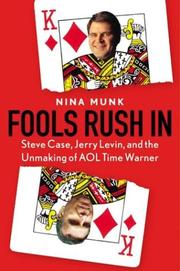
Connie Bruck · 1994

Steve Ross's path from funeral homes and parking lots to the Time Warner merger.

Cass Warner Sperling, Cork Millner · 1994

Family insider history of the studio's founding generation.

Kara Swisher · 2003

The AOL side of the AOL Time Warner merger, reported as it collapsed.

Where it sits in the reference 2

Companies
Companies

Topics

Company Histories