Updates

  1. Person pages list letters, writing, profiles and links as sortable tables with filters, and show each person's companies as links; Fund letters show each letter's description in its own column.
  2. Experts show a checked job title and a short description of each person; 30 more people have photographs.
  3. Every company, fund, university and publication the experts work for has a page listing the people there.
  4. Fund letters show each letter's thesis and filter by it; 225 person pages list the essays, columns and newsletter issues the person wrote.
  5. Person pages list every essay and newsletter issue a person wrote, and their own books as a table in List view.
  6. Recommends shows the five largest kinds of book and the rest under More; browse pictures load sooner.
  7. Podcasts and talks link the original episode, filter by Audio and video or Press, and list each publisher once.
  8. Pages are wider, Recommends has List and Grid, and a filter clicked again turns off.
  9. Book cards sit in a ruled grid with Open Library and Goodreads links and each book's one-line note.
  10. Funds is now Investors; each investor's styles are buttons that filter the table.
  11. Podcasts and talks on a person's page filter by year and publisher and show as a list or a grid of pictures.
  12. Quotes show only people's own words: 472 summaries written by list sites are gone.
  13. Country pages open from Browse again, and every link on the shelf lands on a page.
  14. Subject and person pages show their sections as tabs, and each book appears once on a person's page.
  15. Book cards show the quote, who said it and the source; grids show five cards to a row.
  16. On a phone, a menu holds the sections, search, Updates, Feedback and dark mode.
  17. Feedback takes a screenshot of the page with no browser prompt, opens a screenshot full size when you click it, and clears itself once sent.
  18. Book cards are centred, search names the topic each book sits in, and any text cut short shows whole on hover.
  19. Search groups its results by kind: people, companies, geographies, subjects, topics, books, funds, fund letters and papers.
  20. The Books table lists who recommended each book by name, and the browser tab names the section you are in.
  21. Feedback can take a screenshot of the page, or one you paste or choose, and opens in the corner beside Updates.
  22. Each rail button reopens its section where you left it, and Browse, Table and People show on every book and subject page.
  23. Filters grey out choices that hold nothing instead of hiding them, and Books › People filters by authors or recommenders.
  24. Feedback takes a subject line and up to three screenshots.
  25. Biographies are grouped by the person they are about: 41 new pages, from Abraham Lincoln to Lee Kuan Yew.
  26. Sport splits into 23 sports, and Religion into one topic per faith.
  27. Book lists show as cards: the cover, one recommendation quote and every recommender by name.
  28. Seventeen subjects that had two or three pages under different names now have one page each.
  29. Every page lists its Experts as authors and recommenders, with a link to them on the Experts tab.
  30. Economics, Financial history, Financial panics and Accounting are subjects of their own, with one page per financial crisis.
  31. Book, person and subject pages open inside the app, so the tabs stay in view.
  32. 996 more book covers, and photographs or logos for 227 more people and companies.
  33. Books › Browse shows every subject as cards, and the rail holds Fund letters, Papers, Experts, Books and Funds.
  34. Every topic over 150 books splits into narrower topics, each with a page of its own.

Send feedback

What is it?
Screenshots, up to 3 (optional)
or paste one with Ctrl+V

We use your email only to reply to you.

Open

Open

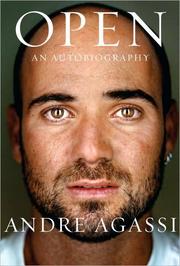
Andre Agassi
2009
502 pages · about 8h 22m to read Open Librarygoodreads

Summary

Agassi's autobiography, written with J. R. Moehringer, opens with the statement that he hated tennis, and the book is organised around that claim. It covers his father's regime, which had him hitting thousands of balls a day from early childhood against a machine his father modified to fire harder; the Bollettieri academy, which he describes as a prison; the early professional years and the image-driven marketing; the collapse in 1997 to a ranking of one hundred and forty-one; the methamphetamine use and the false explanation he gave to the tour, which he discloses in the book; and the return to the top ranking at the end of his career.

The material relevant beyond sport concerns performing at the highest level in something you did not choose and do not enjoy. Agassi describes the difference between the periods when he played for external reasons and the period after 1997, when he rebuilt the career deliberately with trainer Gil Reyes and coach Brad Gilbert and connected it to the school he founded in Las Vegas.

The account of Brad Gilbert's coaching is the most practically instructive section. Gilbert's argument was that Agassi was trying to hit perfect shots when he should be making the opponent uncomfortable, and that winning ugly against a better player was the objective rather than playing well.

Moehringer's involvement produces prose better than any athlete would write alone, and readers should note that this shapes the material. The book is a self-account with obvious interests, particularly regarding the drug disclosure and his first marriage. It remains one of the most honest accounts of elite performance and of the cost of a life directed by someone else.

Key takeaways 8

  1. Agassi states that he hated tennis throughout a career at the top of it, which separates elite performance from motivation entirely.
  2. A life directed by a parent's ambition produces capability without any accompanying sense of ownership over the result.
  3. Rebuilding after a collapse required connecting the work to a purpose he chose himself, which in his case was the school he founded.
  4. Brad Gilbert's coaching changed his results by shifting the objective from hitting perfect shots to making the opponent uncomfortable.
  5. Winning against a better player requires accepting an unattractive style of play, which most competitors refuse on grounds of pride.
  6. Physical conditioning designed for one person's specific body, which Gil Reyes provided, extended a career that technique alone would not have.
  7. Agassi disclosed his own methamphetamine use and the false explanation he gave the tour, which he had concealed for over a decade.
  8. External image and marketing consumed years of his career and had no relationship to the performance that eventually produced his best results.

Who should read it

Readers interested in sustained elite performance without intrinsic motivation, and in what it takes to rebuild after a public collapse.

Who recommended it 7 · 2 direct

Bill Gatesreported
Joe Gebbiareported
Tim Ferrissreported

Similar books 6

Chosen by shared topics, the entries that hold them, and the people who recommended both.

Arthur Ashe, Arnold Rampersad · 1993

Recommended by: Mohnish Pabrai

Gerald Marzorati · 2016

Recommended by: Bill Gates

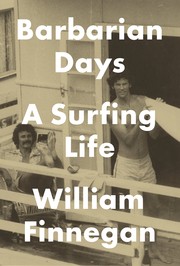
William Finnegan · 2015

“I'd been gifted this book like three times but had zero interest in reading it. I don't care about surfing. God was I wrong. Beautiful stuff.” — Andrew Wilkinson

Source: Newsletter

Recommended by: Andrew Wilkinson, Paul Graham, Sahil Bloom

Michael Lewis · 2005

Recommended by: Mohnish Pabrai

Where it sits in the reference 0

No entry holds this book yet. It reached the reference because someone recommended it.

Topics

SportBiography and MemoirSporting LivesTennis