Updates

  1. Person pages list letters, writing, profiles and links as sortable tables with filters, and show each person's companies as links; Fund letters show each letter's description in its own column.
  2. Experts show a checked job title and a short description of each person; 30 more people have photographs.
  3. Every company, fund, university and publication the experts work for has a page listing the people there.
  4. Fund letters show each letter's thesis and filter by it; 225 person pages list the essays, columns and newsletter issues the person wrote.
  5. Person pages list every essay and newsletter issue a person wrote, and their own books as a table in List view.
  6. Recommends shows the five largest kinds of book and the rest under More; browse pictures load sooner.
  7. Podcasts and talks link the original episode, filter by Audio and video or Press, and list each publisher once.
  8. Pages are wider, Recommends has List and Grid, and a filter clicked again turns off.
  9. Book cards sit in a ruled grid with Open Library and Goodreads links and each book's one-line note.
  10. Funds is now Investors; each investor's styles are buttons that filter the table.
  11. Podcasts and talks on a person's page filter by year and publisher and show as a list or a grid of pictures.
  12. Quotes show only people's own words: 472 summaries written by list sites are gone.
  13. Country pages open from Browse again, and every link on the shelf lands on a page.
  14. Subject and person pages show their sections as tabs, and each book appears once on a person's page.
  15. Book cards show the quote, who said it and the source; grids show five cards to a row.
  16. On a phone, a menu holds the sections, search, Updates, Feedback and dark mode.
  17. Feedback takes a screenshot of the page with no browser prompt, opens a screenshot full size when you click it, and clears itself once sent.
  18. Book cards are centred, search names the topic each book sits in, and any text cut short shows whole on hover.
  19. Search groups its results by kind: people, companies, geographies, subjects, topics, books, funds, fund letters and papers.
  20. The Books table lists who recommended each book by name, and the browser tab names the section you are in.
  21. Feedback can take a screenshot of the page, or one you paste or choose, and opens in the corner beside Updates.
  22. Each rail button reopens its section where you left it, and Browse, Table and People show on every book and subject page.
  23. Filters grey out choices that hold nothing instead of hiding them, and Books › People filters by authors or recommenders.
  24. Feedback takes a subject line and up to three screenshots.
  25. Biographies are grouped by the person they are about: 41 new pages, from Abraham Lincoln to Lee Kuan Yew.
  26. Sport splits into 23 sports, and Religion into one topic per faith.
  27. Book lists show as cards: the cover, one recommendation quote and every recommender by name.
  28. Seventeen subjects that had two or three pages under different names now have one page each.
  29. Every page lists its Experts as authors and recommenders, with a link to them on the Experts tab.
  30. Economics, Financial history, Financial panics and Accounting are subjects of their own, with one page per financial crisis.
  31. Book, person and subject pages open inside the app, so the tabs stay in view.
  32. 996 more book covers, and photographs or logos for 227 more people and companies.
  33. Books › Browse shows every subject as cards, and the rail holds Fund letters, Papers, Experts, Books and Funds.
  34. Every topic over 150 books splits into narrower topics, each with a page of its own.

Send feedback

What is it?
Screenshots, up to 3 (optional)
or paste one with Ctrl+V

We use your email only to reply to you.

Outsmarting the Smart Money: Understand How

Outsmarting the Smart Money: Understand How Markets Really Work and Win the Wealth Game

Lawrence A. Cunningham
2002
T2 288 pages · about 4h 48m to read Open Librarygoodreads

Summary

Cunningham wrote this after the technology bubble's collapse as a guide for individual investors, arguing that professional investors and the institutions serving them operate under constraints and conflicts that create opportunities for individuals who understand them.

His argument about structural disadvantage is the useful part. Professional managers are measured against benchmarks over short periods, must explain each position, cannot hold cash while awaiting opportunities, face redemption pressure precisely when opportunities are best, and are penalised more for being wrong differently than for being wrong conventionally. An individual investor has none of these constraints and can therefore hold positions for years, concentrate, sit in cash and act during panics.

He covers the analytical content: accounting quality and the specific places where reported figures diverge from economics, on which Cunningham's background makes him strong; valuation approaches and their assumptions; the assessment of management and governance; and the interpretation of financial media, analyst research and the information environment generally, where he argues most of what reaches an individual investor is produced by people whose compensation depends on activity.

The reference has not verified the specific claims and examples in this book. It is written for a general audience and covers ground that Cunningham addresses more fully in his other work, particularly How to Think Like Benjamin Graham and Invest Like Warren Buffett. Its distinctive contribution is the systematic treatment of institutional constraints as a source of individual advantage.

Key takeaways 7

  1. Professional investors operate under constraints including short measurement periods, redemption pressure and career risk that an individual investor does not face.
  2. An individual can hold cash while awaiting opportunities, which is the single largest structural advantage available and which professionals cannot use.
  3. Managers are penalised more for being wrong differently than for being wrong conventionally, which produces herding independent of any analysis.
  4. Redemption pressure removes capital from professional managers precisely when opportunities are best, which is when individuals should be adding.
  5. Most information reaching an individual investor is produced by people whose compensation depends on the investor transacting.
  6. Reported financial figures diverge from economic reality at identifiable points, and knowing where is most of the analytical work.
  7. The reference has not verified the specific claims and examples in this book.

Who should read it

Individual investors who want the systematic case that institutional constraints create opportunities available to those without them.

About Lawrence A. Cunningham

Corporate-governance scholar and longtime George Washington University law professor; edits The Essays of Warren Buffett and writes on Berkshire and quality investing.

The Essays of Warren Buffett reorganises decades of Berkshire shareholder letters by subject - governance, accounting, mergers, valuation - turning scattered annual commentary into a usable manual. The later books extend the analysis to Berkshire's decentralised structure and to the traits that make a business durable enough to hold for decades.

University of Delaware, Quality Shareholders Group, George Washington University

Who recommended it 1 · 1 direct

Similar books 6

Chosen by shared topics, the entries that hold them, and the people who recommended both.

Lawrence J. Gitman, Michael D. Joehnk · 1981

Recommended by: Mohnish Pabrai

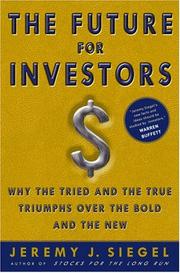
Jeremy Siegel · 2005

Dividend reinvestment as the bear market protector and return accelerator.

Recommended by: Mohnish Pabrai

Where it sits in the reference 2

Journalists
Assets

Topics

InvestingFinance and Markets