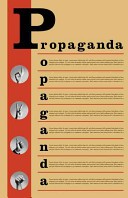
Propaganda
The techniques of public persuasion, drawn from social science and psychology.
Summary
Edward Bernays wrote Propaganda in 1928, drawing on social science and the psychology of persuasion to examine the techniques of public communication. It followed the success of his Crystallizing Public Opinion (1923) and A Public Relations Counsel (1927), and set out how symbols and propaganda can influence politics and bring about social change. Walter Lippmann, whose The Phantom Public appeared a year earlier, was Bernays's unacknowledged mentor.
Bernays had worked during the First World War for the US Committee on Public Information, which sold the war to Americans as one that would "make the world safe for democracy". He applied its methods, ideas from Lippmann and from his uncle Sigmund Freud, and argued openly for propaganda as a tool of democratic and corporate management of the public, which he called the "engineering of consent". "The conscious and intelligent manipulation of the organized habits and opinions of the masses is an important element in democratic society," he writes; those who manipulate it form "an invisible government which is the true ruling power of our country." He applies the idea to government, politics, art, science and education. The book made him known as the father of public relations.
Key takeaways 4
- Bernays argues that managing mass opinion is a normal part of democracy.
- Those who shape public opinion form what he calls an invisible government.
- Wartime propaganda methods can be applied to business and politics.
- Bernays drew on Freud's psychology and Lippmann's ideas about the public.
Who should read it
Readers of media, marketing and political history who want the founding text of public relations.
Who recommended it 2 · 1 direct
Similar books 6
Chosen by shared topics, the entries that hold them, and the people who recommended both.

How drug makers became marketing machines, from Risperdal to off-label promotion.
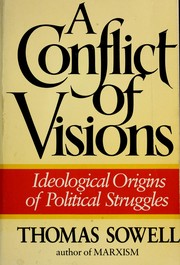
Why lasting political conflicts trace to two opposed visions of human nature.
“Two of Thomas Sowell's many brilliant books on how our current politics and culture came to be: A Conflict of Visions: Ideological Origins of Political Struggles by Thomas Sowell” — Marc Andreessen
Source: What I've Been Up To Lately — Marc Andreessen, a16z.com
Recommended by: Marc Andreessen
Essays from five decades on community, society and how they function.
A short method for producing creative ideas.
Recommended by: Patrick O'Shaughnessy

The principles of justice that free people would accept in a position of equality.
Recommended by: Ann Miura-Ko, Peter Thiel
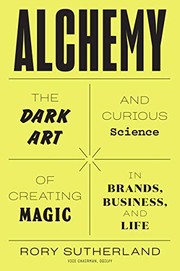
The psychology behind advertising and marketing ideas that defy logic but work.
“Insights into marketing, design, advertising, positioning, and business strategy. Argues for doing what seems illogical in theory, but works in practice because psychology isn't science. Often counter-intuitive, so worth a little extra verbosity.” — Derek Sivers
Source: Derek Sivers book notes (primary, rated list) · Rating: 7/10
Recommended by: Derek Sivers, Nassim Nicholas Taleb