Updates

  1. Person pages list letters, writing, profiles and links as sortable tables with filters, and show each person's companies as links; Fund letters show each letter's description in its own column.
  2. Experts show a checked job title and a short description of each person; 30 more people have photographs.
  3. Every company, fund, university and publication the experts work for has a page listing the people there.
  4. Fund letters show each letter's thesis and filter by it; 225 person pages list the essays, columns and newsletter issues the person wrote.
  5. Person pages list every essay and newsletter issue a person wrote, and their own books as a table in List view.
  6. Recommends shows the five largest kinds of book and the rest under More; browse pictures load sooner.
  7. Podcasts and talks link the original episode, filter by Audio and video or Press, and list each publisher once.
  8. Pages are wider, Recommends has List and Grid, and a filter clicked again turns off.
  9. Book cards sit in a ruled grid with Open Library and Goodreads links and each book's one-line note.
  10. Funds is now Investors; each investor's styles are buttons that filter the table.
  11. Podcasts and talks on a person's page filter by year and publisher and show as a list or a grid of pictures.
  12. Quotes show only people's own words: 472 summaries written by list sites are gone.
  13. Country pages open from Browse again, and every link on the shelf lands on a page.
  14. Subject and person pages show their sections as tabs, and each book appears once on a person's page.
  15. Book cards show the quote, who said it and the source; grids show five cards to a row.
  16. On a phone, a menu holds the sections, search, Updates, Feedback and dark mode.
  17. Feedback takes a screenshot of the page with no browser prompt, opens a screenshot full size when you click it, and clears itself once sent.
  18. Book cards are centred, search names the topic each book sits in, and any text cut short shows whole on hover.
  19. Search groups its results by kind: people, companies, geographies, subjects, topics, books, funds, fund letters and papers.
  20. The Books table lists who recommended each book by name, and the browser tab names the section you are in.
  21. Feedback can take a screenshot of the page, or one you paste or choose, and opens in the corner beside Updates.
  22. Each rail button reopens its section where you left it, and Browse, Table and People show on every book and subject page.
  23. Filters grey out choices that hold nothing instead of hiding them, and Books › People filters by authors or recommenders.
  24. Feedback takes a subject line and up to three screenshots.
  25. Biographies are grouped by the person they are about: 41 new pages, from Abraham Lincoln to Lee Kuan Yew.
  26. Sport splits into 23 sports, and Religion into one topic per faith.
  27. Book lists show as cards: the cover, one recommendation quote and every recommender by name.
  28. Seventeen subjects that had two or three pages under different names now have one page each.
  29. Every page lists its Experts as authors and recommenders, with a link to them on the Experts tab.
  30. Economics, Financial history, Financial panics and Accounting are subjects of their own, with one page per financial crisis.
  31. Book, person and subject pages open inside the app, so the tabs stay in view.
  32. 996 more book covers, and photographs or logos for 227 more people and companies.
  33. Books › Browse shows every subject as cards, and the rail holds Fund letters, Papers, Experts, Books and Funds.
  34. Every topic over 150 books splits into narrower topics, each with a page of its own.

Send feedback

What is it?
Screenshots, up to 3 (optional)
or paste one with Ctrl+V

We use your email only to reply to you.

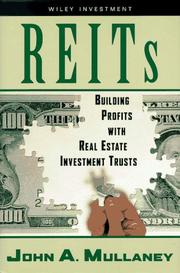
REITs

REITs

John A. Mullaney
1997
T4 304 pages · about 5h 4m to read Open Librarygoodreads

Early practitioner introduction to the vehicle.

Summary

The reference has not verified this book in detail; the summary states only what the title, author and subject establish.

John Mullaney wrote this as a practitioner introduction to real estate investment trusts for investors and advisers, covering what they are, how they are structured and how to analyse them.

The content covers the legal requirements for REIT status, principally the distribution of most taxable income and the restrictions on asset composition and income sources; the property sectors and their differing economics; the analytical measures used in the sector, particularly funds from operations and adjusted funds from operations, which adjust reported earnings for real estate depreciation; the assessment of management quality and of the property portfolio; leverage and its role; and valuation approaches including net asset value and multiples of funds from operations.

The reference has not verified this book in detail, and this entry describes the standard analytical content of the sector rather than the author's specific arguments. Readers should note that the book was published in 1997, before the sector's substantial growth, before the modern REIT era's consolidation, before REITs were added to the major equity indices in 2001, and before the leverage and refinancing stresses of 2008.

Key takeaways 6

  1. REIT status requires distributing most taxable income, which forces the company to raise external capital for any growth.
  2. Reported earnings understate REIT cash generation because real estate depreciation is an accounting charge rather than an economic one.
  3. Funds from operations adds depreciation back to earnings and is the sector's standard measure, though its definition varies between companies.
  4. Adjusted funds from operations subtracts recurring capital expenditure and is closer to distributable cash than funds from operations is.
  5. Property sectors differ enough in lease length and tenant credit that comparing REITs across sectors on the same multiples is uninformative.
  6. Leverage levels and debt maturity profiles determine which REITs survive a refinancing market closure.

Who should read it

Investors new to listed property who want the sector's analytical vocabulary, with the caveat that this entry is not verified in detail and the book is dated.

Similar books 6

Chosen by shared topics, the entries that hold them, and the people who recommended both.

Su Han Chan, John Erickson, Ko Wang · 2002

What academic research shows about how REITs are structured and how they perform.

Stephanie Krewson-Kelly, Glenn R. Mueller · 2020

How to value REITs and read the property cycles that move them.
Andrew Baum, David Hartzell · 2011

How property is priced across borders, and owning it directly versus listed.
Ralph L. Block · 1998

A guide to real estate investment trusts as an asset class for investors.
Stephanie Krewson-Kelly, R. Brad Thomas · 2016

Sector-by-sector guide to REIT metrics and FFO analysis.
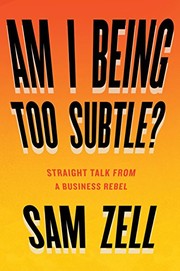
Sam Zell · 2017

From student apartments in Ann Arbor to selling Equity Office to Blackstone in 2007.

Recommended by: Codie Sanchez

Where it sits in the reference 1

Assets

Topics

InvestingFinance and Markets