Updates

  1. Person pages list letters, writing, profiles and links as sortable tables with filters, and show each person's companies as links; Fund letters show each letter's description in its own column.
  2. Experts show a checked job title and a short description of each person; 30 more people have photographs.
  3. Every company, fund, university and publication the experts work for has a page listing the people there.
  4. Fund letters show each letter's thesis and filter by it; 225 person pages list the essays, columns and newsletter issues the person wrote.
  5. Person pages list every essay and newsletter issue a person wrote, and their own books as a table in List view.
  6. Recommends shows the five largest kinds of book and the rest under More; browse pictures load sooner.
  7. Podcasts and talks link the original episode, filter by Audio and video or Press, and list each publisher once.
  8. Pages are wider, Recommends has List and Grid, and a filter clicked again turns off.
  9. Book cards sit in a ruled grid with Open Library and Goodreads links and each book's one-line note.
  10. Funds is now Investors; each investor's styles are buttons that filter the table.
  11. Podcasts and talks on a person's page filter by year and publisher and show as a list or a grid of pictures.
  12. Quotes show only people's own words: 472 summaries written by list sites are gone.
  13. Country pages open from Browse again, and every link on the shelf lands on a page.
  14. Subject and person pages show their sections as tabs, and each book appears once on a person's page.
  15. Book cards show the quote, who said it and the source; grids show five cards to a row.
  16. On a phone, a menu holds the sections, search, Updates, Feedback and dark mode.
  17. Feedback takes a screenshot of the page with no browser prompt, opens a screenshot full size when you click it, and clears itself once sent.
  18. Book cards are centred, search names the topic each book sits in, and any text cut short shows whole on hover.
  19. Search groups its results by kind: people, companies, geographies, subjects, topics, books, funds, fund letters and papers.
  20. The Books table lists who recommended each book by name, and the browser tab names the section you are in.
  21. Feedback can take a screenshot of the page, or one you paste or choose, and opens in the corner beside Updates.
  22. Each rail button reopens its section where you left it, and Browse, Table and People show on every book and subject page.
  23. Filters grey out choices that hold nothing instead of hiding them, and Books › People filters by authors or recommenders.
  24. Feedback takes a subject line and up to three screenshots.
  25. Biographies are grouped by the person they are about: 41 new pages, from Abraham Lincoln to Lee Kuan Yew.
  26. Sport splits into 23 sports, and Religion into one topic per faith.
  27. Book lists show as cards: the cover, one recommendation quote and every recommender by name.
  28. Seventeen subjects that had two or three pages under different names now have one page each.
  29. Every page lists its Experts as authors and recommenders, with a link to them on the Experts tab.
  30. Economics, Financial history, Financial panics and Accounting are subjects of their own, with one page per financial crisis.
  31. Book, person and subject pages open inside the app, so the tabs stay in view.
  32. 996 more book covers, and photographs or logos for 227 more people and companies.
  33. Books › Browse shows every subject as cards, and the rail holds Fund letters, Papers, Experts, Books and Funds.
  34. Every topic over 150 books splits into narrower topics, each with a page of its own.

Send feedback

What is it?
Screenshots, up to 3 (optional)
or paste one with Ctrl+V

We use your email only to reply to you.

Am I Being Too Subtle?

Am I Being Too Subtle?

Sam Zell
2017
T2 229 pages · about 3h 49m to read Open Librarygoodreads

Subtitled Straight Talk From a Business Rebel.

Summary

Zell built fortunes in real estate, in distressed corporate assets and in several operating businesses, and this memoir covers his career from managing student apartments in Ann Arbor through the Equity Office Properties sale to Blackstone in 2007 and the Tribune buyout that followed.

His stated approach is consistent across deals. He buys assets where supply is constrained and demand is not, which he applied first to apartments in university towns and then to office and industrial property. He concentrates on the downside, asking what he loses if the thesis is wrong rather than what he makes if it is right. He argues that liquidity equals value and that the willingness to sell at the top is what distinguishes returns, which he demonstrated by selling Equity Office for thirty-nine billion dollars months before the market turned. He describes his work in distressed assets in the 1970s, where he bought properties whose owners had over-borrowed and whose tax positions made them unable to sell.

The Tribune transaction, in which he acquired a newspaper company through an employee stock ownership plan structure that loaded it with debt and which entered bankruptcy within a year, is covered but not examined with the same rigour as his successes. He treats it as an industry that declined faster than anyone predicted rather than as a leveraged bet on a structurally impaired business.

The book is a memoir and Zell's voice is deliberately blunt. It offers a consistent framework rather than a method, and readers should note that his access to distressed opportunities depended on relationships and information positions that are not reproducible.

Key takeaways 7

  1. Buy assets where supply is constrained by something durable and demand is not, since that combination determines pricing power over time.
  2. Focus on what is lost if the thesis is wrong rather than on what is gained if it is right, because the downside is what determines survival.
  3. Liquidity is a component of value, and an asset that cannot be sold is worth materially less than one that can.
  4. Selling at the top requires acting when the reasoning still looks wrong to everyone else, and it is where most of the difference in long-run returns comes from.
  5. Distressed opportunities arise from the seller's constraints, including tax position, debt covenants and internal politics, rather than from the asset's quality.
  6. Being willing to be the only bidder in a transaction is worth more than any analytical advantage, because it removes the auction dynamic entirely.
  7. Understanding the actual supply and demand for an asset class matters more than forecasting the economy.

Who should read it

Investors in real assets and distressed situations who want a consistent framework on supply constraints, downside focus and the discipline of selling.

About Sam Zell

Founder and chairman, Equity Group Investments; chairman of Equity Residential, Equity LifeStyle, Equity Commonwealth and Tribune Company; 1941-2023, died May 2023

Effectively created the modern public REIT and left both a durable memoir and the 1970s Grave Dancer essay that still defines distressed real estate investing.

Equity Group Investments, Equity Residential, Equity LifeStyle, Equity Commonwealth, Tribune Company

Who recommended it 1

Similar books 6

Chosen by shared topics, the entries that hold them, and the people who recommended both.

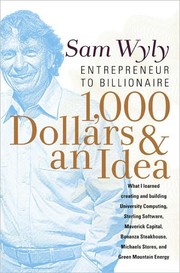
Sam Wyly · 2008

Entrepreneur's memoir of building and selling successive companies

Recommended by: Mohnish Pabrai
Derek Sivers · 2011

Lessons from building CD Baby from a side project to an $85 million business.

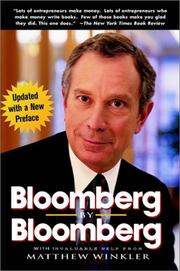
Michael Bloomberg, Matthew Winkler · 1997

Recommended by: Mohnish Pabrai

Where it sits in the reference 4

Investors
Assets
Industries
Biographies

Topics

Biography and MemoirEntrepreneurship and StartupsFounders and EntrepreneursFounder Memoirs