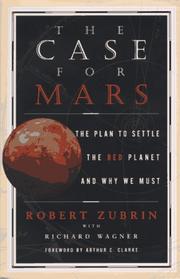
The Case for Mars
A plan for sending humans to Mars with current technology and making fuel there.
Summary
Robert Zubrin, an aerospace engineer and space-exploration advocate, sets out Mars Direct, the plan he first detailed with David Baker in 1990, for a human landing on Mars. First published in 1996 and revised in 2011, the book argues that Mars can be reached affordably with present-day technology, within ten years. The plan keeps costs down by using automated systems and Martian materials to manufacture fuel and oxygen for the return journey on the surface itself.
Zubrin argues that, unlike the dead Moon, Mars, with its ancient canyons, dry river beds, remains of frozen polar oceans and large ice caps, offers wide scope for discovery, and that serious exploration can only happen on its surface. He sees Mars Direct not as a single mission but as the start of regular missions leading to colonisation. Chapters seven to nine describe colony designs: pressurised habitats built as Roman-style atria from Martian brick and buried under regolith, then plastic geodesic domes for living and growing crops, and early industry using local resources. He also weighs a colony's chances of self-sufficiency and the prospect of terraforming the planet.
Key takeaways 4
- Making return fuel on Mars removes the largest cost of a crewed mission.
- Existing technology is enough to send people to Mars.
- Each mission can leave habitats that make the next one easier.
- Zubrin treats colonisation and terraforming as practical long-term goals.
Who should read it
Readers interested in space exploration and the engineering case for a crewed Mars mission.
Who recommended it 1 · 1 direct
Similar books 6
Chosen by shared topics, the entries that hold them, and the people who recommended both.
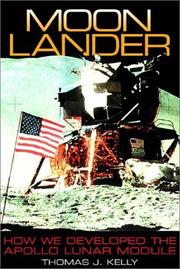
The chief engineer on designing, building, testing and flying the lunar module.
Recommended by: Patrick Collison
A feasible plan for settling the Moon, from robotic mining to power and transport.
Recommended by: Patrick Collison

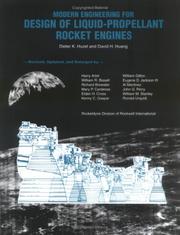
The engineering design of liquid-propellant rocket engines, with 470 illustrations.
Recommended by: Elon Musk
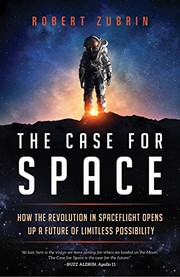
A new space race between entrepreneurs, where it leads and why humanity needs it.
Recommended by: Delian Asparouhov