Updates

  1. Person pages list letters, writing, profiles and links as sortable tables with filters, and show each person's companies as links; Fund letters show each letter's description in its own column.
  2. Experts show a checked job title and a short description of each person; 30 more people have photographs.
  3. Every company, fund, university and publication the experts work for has a page listing the people there.
  4. Fund letters show each letter's thesis and filter by it; 225 person pages list the essays, columns and newsletter issues the person wrote.
  5. Person pages list every essay and newsletter issue a person wrote, and their own books as a table in List view.
  6. Recommends shows the five largest kinds of book and the rest under More; browse pictures load sooner.
  7. Podcasts and talks link the original episode, filter by Audio and video or Press, and list each publisher once.
  8. Pages are wider, Recommends has List and Grid, and a filter clicked again turns off.
  9. Book cards sit in a ruled grid with Open Library and Goodreads links and each book's one-line note.
  10. Funds is now Investors; each investor's styles are buttons that filter the table.
  11. Podcasts and talks on a person's page filter by year and publisher and show as a list or a grid of pictures.
  12. Quotes show only people's own words: 472 summaries written by list sites are gone.
  13. Country pages open from Browse again, and every link on the shelf lands on a page.
  14. Subject and person pages show their sections as tabs, and each book appears once on a person's page.
  15. Book cards show the quote, who said it and the source; grids show five cards to a row.
  16. On a phone, a menu holds the sections, search, Updates, Feedback and dark mode.
  17. Feedback takes a screenshot of the page with no browser prompt, opens a screenshot full size when you click it, and clears itself once sent.
  18. Book cards are centred, search names the topic each book sits in, and any text cut short shows whole on hover.
  19. Search groups its results by kind: people, companies, geographies, subjects, topics, books, funds, fund letters and papers.
  20. The Books table lists who recommended each book by name, and the browser tab names the section you are in.
  21. Feedback can take a screenshot of the page, or one you paste or choose, and opens in the corner beside Updates.
  22. Each rail button reopens its section where you left it, and Browse, Table and People show on every book and subject page.
  23. Filters grey out choices that hold nothing instead of hiding them, and Books › People filters by authors or recommenders.
  24. Feedback takes a subject line and up to three screenshots.
  25. Biographies are grouped by the person they are about: 41 new pages, from Abraham Lincoln to Lee Kuan Yew.
  26. Sport splits into 23 sports, and Religion into one topic per faith.
  27. Book lists show as cards: the cover, one recommendation quote and every recommender by name.
  28. Seventeen subjects that had two or three pages under different names now have one page each.
  29. Every page lists its Experts as authors and recommenders, with a link to them on the Experts tab.
  30. Economics, Financial history, Financial panics and Accounting are subjects of their own, with one page per financial crisis.
  31. Book, person and subject pages open inside the app, so the tabs stay in view.
  32. 996 more book covers, and photographs or logos for 227 more people and companies.
  33. Books › Browse shows every subject as cards, and the rail holds Fund letters, Papers, Experts, Books and Funds.
  34. Every topic over 150 books splits into narrower topics, each with a page of its own.

Send feedback

What is it?
Screenshots, up to 3 (optional)
or paste one with Ctrl+V

We use your email only to reply to you.

The Decline and Fall of Nokia

The Decline and Fall of Nokia

David J. Cord
2014
T3 304 pages · about 5h 4m to read Open Librarygoodreads

Journalistic account of the Elop years and the Microsoft deal.

Summary

David Cord, a business journalist based in Finland, wrote this account of how Nokia went from holding roughly forty per cent of the global mobile phone market to selling its handset business to Microsoft in 2013.

The narrative covers the company's earlier transformation from a conglomerate with paper, rubber and cable businesses into a mobile phone maker; the period of dominance through the late 1990s and 2000s; the failure to respond effectively to the iPhone in 2007 and to Android afterward; the Symbian operating system and its accumulating technical problems; the internal organisational conflicts, particularly between the divisions responsible for hardware and software; the appointment of Stephen Elop in 2010, his memorandum describing the company as standing on a burning platform, and the decision to adopt Windows Phone rather than Android; and the sale to Microsoft.

Cord's reporting draws on interviews with Nokia employees and executives. His account emphasises that Nokia's engineers had built touchscreen and internet-capable prototypes years before the iPhone and that the organisation could not bring them to market, which locates the failure in structure and decision-making rather than in technology. The book is journalistic and Finnish-sourced, and readers should note that the Windows Phone decision remains contested. It stops before Nokia's later network equipment business, which is what the company now is.

Key takeaways 7

  1. Nokia's engineers built touchscreen and internet-capable prototypes years before the iPhone and the organisation did not bring them to market.
  2. Symbian's technical debt made each new feature slower to develop than the last, which compounded the response delay.
  3. Internal conflict between hardware and software organisations prevented the company from committing to a single direction.
  4. Market share dominance produced an organisational confidence that treated the iPhone as a niche product for years.
  5. The decision to adopt Windows Phone rather than Android eliminated the option of competing on the platform that won.
  6. Elop's burning platform memorandum destroyed demand for existing Symbian devices before the replacements existed.
  7. Cord argues that Nokia's failure was organisational rather than technological, since the technology existed inside the company.

Who should read it

Operators and investors studying incumbent failure in technology who want a detailed account of an organisation that had the technology and could not ship it.

Similar books 6

Chosen by shared topics, the entries that hold them, and the people who recommended both.
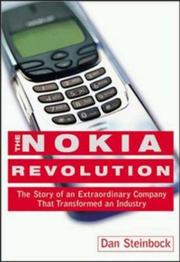
Dan Steinbock · 2001

Written at the peak, before the decline

Risto Siilasmaa · 2018

Nokia's chairman on selling the phone unit to Microsoft and buying Alcatel-Lucent.

Dan Steinbock · 2010

Nokia's emerging-market operating model at the turn
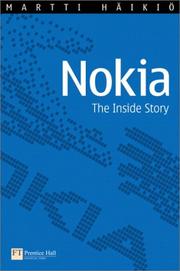
Martti Häikiö · 2002

Nokia's history, written with access to its boardroom records.
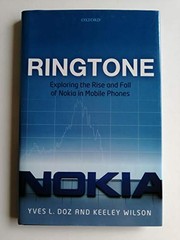
Yves Doz, Keeley Wilson · 2018

Subtitled Exploring the Rise and Fall of Nokia in Mobile Phones.

Where it sits in the reference 2

Companies
Geographies

Topics

Company Histories