Updates

  1. Person pages list letters, writing, profiles and links as sortable tables with filters, and show each person's companies as links; Fund letters show each letter's description in its own column.
  2. Experts show a checked job title and a short description of each person; 30 more people have photographs.
  3. Every company, fund, university and publication the experts work for has a page listing the people there.
  4. Fund letters show each letter's thesis and filter by it; 225 person pages list the essays, columns and newsletter issues the person wrote.
  5. Person pages list every essay and newsletter issue a person wrote, and their own books as a table in List view.
  6. Recommends shows the five largest kinds of book and the rest under More; browse pictures load sooner.
  7. Podcasts and talks link the original episode, filter by Audio and video or Press, and list each publisher once.
  8. Pages are wider, Recommends has List and Grid, and a filter clicked again turns off.
  9. Book cards sit in a ruled grid with Open Library and Goodreads links and each book's one-line note.
  10. Funds is now Investors; each investor's styles are buttons that filter the table.
  11. Podcasts and talks on a person's page filter by year and publisher and show as a list or a grid of pictures.
  12. Quotes show only people's own words: 472 summaries written by list sites are gone.
  13. Country pages open from Browse again, and every link on the shelf lands on a page.
  14. Subject and person pages show their sections as tabs, and each book appears once on a person's page.
  15. Book cards show the quote, who said it and the source; grids show five cards to a row.
  16. On a phone, a menu holds the sections, search, Updates, Feedback and dark mode.
  17. Feedback takes a screenshot of the page with no browser prompt, opens a screenshot full size when you click it, and clears itself once sent.
  18. Book cards are centred, search names the topic each book sits in, and any text cut short shows whole on hover.
  19. Search groups its results by kind: people, companies, geographies, subjects, topics, books, funds, fund letters and papers.
  20. The Books table lists who recommended each book by name, and the browser tab names the section you are in.
  21. Feedback can take a screenshot of the page, or one you paste or choose, and opens in the corner beside Updates.
  22. Each rail button reopens its section where you left it, and Browse, Table and People show on every book and subject page.
  23. Filters grey out choices that hold nothing instead of hiding them, and Books › People filters by authors or recommenders.
  24. Feedback takes a subject line and up to three screenshots.
  25. Biographies are grouped by the person they are about: 41 new pages, from Abraham Lincoln to Lee Kuan Yew.
  26. Sport splits into 23 sports, and Religion into one topic per faith.
  27. Book lists show as cards: the cover, one recommendation quote and every recommender by name.
  28. Seventeen subjects that had two or three pages under different names now have one page each.
  29. Every page lists its Experts as authors and recommenders, with a link to them on the Experts tab.
  30. Economics, Financial history, Financial panics and Accounting are subjects of their own, with one page per financial crisis.
  31. Book, person and subject pages open inside the app, so the tabs stay in view.
  32. 996 more book covers, and photographs or logos for 227 more people and companies.
  33. Books › Browse shows every subject as cards, and the rail holds Fund letters, Papers, Experts, Books and Funds.
  34. Every topic over 150 books splits into narrower topics, each with a page of its own.

Send feedback

What is it?
Screenshots, up to 3 (optional)
or paste one with Ctrl+V

We use your email only to reply to you.

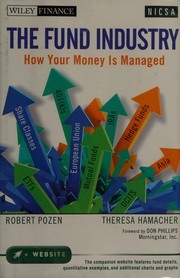
The Fund Industry

The Fund Industry

Robert C. Pozen, Theresa Hamacher
2011
T3 525 pages · about 8h 45m to read Open Librarygoodreads

How funds are actually structured, distributed and regulated.

Summary

Robert Pozen ran Fidelity's investment operations and later chaired MFS, and Theresa Hamacher ran investment management at Nuveen. Together they wrote the standard textbook on the mutual fund business, covering it from the inside.

The content covers what funds are legally and operationally: the regulatory framework under the Investment Company Act, the board structure and the independent directors' role, the adviser relationship and the fee arrangement, and the distinction between the fund as a legal entity and the management company as a business. It covers portfolio management across equity and fixed income strategies, the measurement of performance and the problems with each measure, and the growth of index and exchange-traded products.

The business chapters are the distinctive part. They cover distribution, which the authors treat as the industry's actual competitive battleground, including the share class structures, the payments to intermediaries, and the platform economics; the operations including transfer agency, custody and pricing; the international variations in fund structure; and retirement plan channels. Pozen is candid about conflicts of interest between the management company's shareholders and the fund's investors, having run both sides. The book is used in university courses and by practitioners. Editions matter, since fee structures, distribution economics and the growth of passive investing have changed the industry substantially.

Key takeaways 7

  1. A mutual fund is a separate legal entity governed by its own board, and the management company that advises it is a different business with different owners.
  2. Distribution rather than investment performance is the industry's competitive battleground.
  3. Share class structures exist to route payments to intermediaries in ways that make the total cost difficult for investors to compute.
  4. Independent directors negotiate the advisory fee, and the effectiveness of that negotiation is the central governance question in the industry.
  5. Retirement plan channels determine flows for a large share of the industry, which makes plan sponsor relationships more valuable than retail marketing.
  6. The interests of the management company's shareholders and of the fund's investors conflict directly over fees and over asset growth.
  7. Fund performance measurement is confounded by survivorship, by benchmark selection and by the difference between fund and investor returns.

Who should read it

Anyone working in or investing in asset management who wants the industry's legal, operational and commercial structure explained by insiders.

Similar books 6

Chosen by shared topics, the entries that hold them, and the people who recommended both.
John C. Bogle · 1993

The earlier, more instructional Bogle book on fund selection.

Recommended by: Mr. Money Mustache
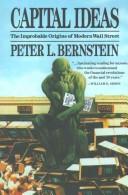
Peter L. Bernstein · 1992

How Markowitz, Sharpe, Fama, Black and Scholes built the theory of modern finance.
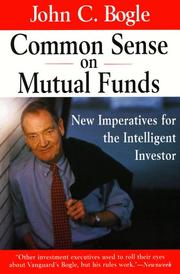
John C. Bogle · 1999

Vanguard's founder on costs, turnover and fund structure.

“Wonderful Book. I highly recommend all of John Bogle's writings to any investor.” — Mohnish Pabrai

Source: Mohnish's Bookshelf — Books on Investing & Capital Allocation, entry 50

Recommended by: Mohnish Pabrai, Jason Zweig and 3 others

Where it sits in the reference 1

Business models

Topics

Finance and MarketsInvesting