Updates

  1. Person pages list letters, writing, profiles and links as sortable tables with filters, and show each person's companies as links; Fund letters show each letter's description in its own column.
  2. Experts show a checked job title and a short description of each person; 30 more people have photographs.
  3. Every company, fund, university and publication the experts work for has a page listing the people there.
  4. Fund letters show each letter's thesis and filter by it; 225 person pages list the essays, columns and newsletter issues the person wrote.
  5. Person pages list every essay and newsletter issue a person wrote, and their own books as a table in List view.
  6. Recommends shows the five largest kinds of book and the rest under More; browse pictures load sooner.
  7. Podcasts and talks link the original episode, filter by Audio and video or Press, and list each publisher once.
  8. Pages are wider, Recommends has List and Grid, and a filter clicked again turns off.
  9. Book cards sit in a ruled grid with Open Library and Goodreads links and each book's one-line note.
  10. Funds is now Investors; each investor's styles are buttons that filter the table.
  11. Podcasts and talks on a person's page filter by year and publisher and show as a list or a grid of pictures.
  12. Quotes show only people's own words: 472 summaries written by list sites are gone.
  13. Country pages open from Browse again, and every link on the shelf lands on a page.
  14. Subject and person pages show their sections as tabs, and each book appears once on a person's page.
  15. Book cards show the quote, who said it and the source; grids show five cards to a row.
  16. On a phone, a menu holds the sections, search, Updates, Feedback and dark mode.
  17. Feedback takes a screenshot of the page with no browser prompt, opens a screenshot full size when you click it, and clears itself once sent.
  18. Book cards are centred, search names the topic each book sits in, and any text cut short shows whole on hover.
  19. Search groups its results by kind: people, companies, geographies, subjects, topics, books, funds, fund letters and papers.
  20. The Books table lists who recommended each book by name, and the browser tab names the section you are in.
  21. Feedback can take a screenshot of the page, or one you paste or choose, and opens in the corner beside Updates.
  22. Each rail button reopens its section where you left it, and Browse, Table and People show on every book and subject page.
  23. Filters grey out choices that hold nothing instead of hiding them, and Books › People filters by authors or recommenders.
  24. Feedback takes a subject line and up to three screenshots.
  25. Biographies are grouped by the person they are about: 41 new pages, from Abraham Lincoln to Lee Kuan Yew.
  26. Sport splits into 23 sports, and Religion into one topic per faith.
  27. Book lists show as cards: the cover, one recommendation quote and every recommender by name.
  28. Seventeen subjects that had two or three pages under different names now have one page each.
  29. Every page lists its Experts as authors and recommenders, with a link to them on the Experts tab.
  30. Economics, Financial history, Financial panics and Accounting are subjects of their own, with one page per financial crisis.
  31. Book, person and subject pages open inside the app, so the tabs stay in view.
  32. 996 more book covers, and photographs or logos for 227 more people and companies.
  33. Books › Browse shows every subject as cards, and the rail holds Fund letters, Papers, Experts, Books and Funds.
  34. Every topic over 150 books splits into narrower topics, each with a page of its own.

Send feedback

What is it?
Screenshots, up to 3 (optional)
or paste one with Ctrl+V

We use your email only to reply to you.

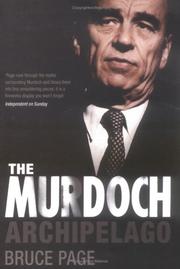
The Murdoch Archipelago

The Murdoch Archipelago

Bruce Page
2003
T3 580 pages · about 9h 40m to read Open Librarygoodreads

Structural argument about how the papers trade coverage for political favour.

Summary

Bruce Page, formerly of the Sunday Times Insight team and editor of the New Statesman, wrote this as a sustained argument that Rupert Murdoch's business rests on the exchange of political support for regulatory and commercial advantage.

His thesis is specific. Page argues that Murdoch's newspapers and broadcasters do not primarily seek profit through journalism but function as instruments for obtaining favourable decisions from governments, and that the pattern is visible across Australia, Britain and the United States. He documents the specific cases: Australian media ownership rules and their adjustment, the acquisition of the Times and Sunday Times in Britain without referral to the Monopolies and Mergers Commission, the launch of Sky and the regulatory treatment of satellite broadcasting, the American citizenship taken to permit television station ownership, and the relationships with successive political leaders.

Page also argues that Murdoch's operations damage journalism as an institution, and he contrasts them with what he considers proper newspaper practice. The book is hostile throughout and Page makes no attempt at balance; he is a professional opponent writing about a subject he regards as a menace. Readers should weigh that. The documentation of specific regulatory decisions and their political context is well researched. It was published in 2003, before the phone hacking scandal that supplied its strongest evidence.

Key takeaways 7

  1. Page argues that Murdoch's media assets function to obtain regulatory decisions rather than primarily to earn returns from journalism.
  2. The acquisition of the Times and Sunday Times proceeded without referral to competition authorities, which Page treats as the pattern's clearest case.
  3. Murdoch took American citizenship because United States law restricted foreign ownership of television stations.
  4. Regulatory treatment of satellite broadcasting in Britain determined Sky's viability and was politically influenced.
  5. Political leaders across three countries sought Murdoch's support and adjusted media policy accordingly.
  6. Page writes as a professional opponent and makes no attempt at balance, which readers should weigh throughout.
  7. The book predates the phone hacking scandal, which supplied the strongest evidence for its thesis.

Who should read it

Readers who want the sustained hostile case against Murdoch's business model, understood as advocacy rather than assessment.

Similar books 6

Chosen by shared topics, the entries that hold them, and the people who recommended both.
William Shawcross · 1993

The standard biography of the first four decades.

Recommended by: Mohnish Pabrai
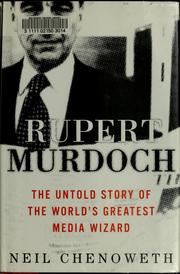
Neil Chenoweth · 2001

The financial engineering behind News Corp, traced by a forensic reporter.
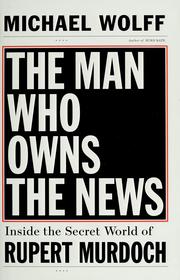
Michael Wolff · 2008

Fifty hours of interviews plus the family; the closest to authorised.

Tom Watson, Martin Hickman · 2012

Phone hacking, by the MP who pursued it in Parliament.

Neil Chenoweth · 2013

The pay-TV smartcard hacking operation; the strangest corner of the empire.

David Folkenflik · 2013

The empire after the phone-hacking scandal.

Where it sits in the reference 2

Companies
Biographies

Topics

Biography and MemoirCompany HistoriesTycoons and Business Dynasties