
Updates

  1. Person pages list letters, writing, profiles and links as sortable tables with filters, and show each person's companies as links; Fund letters show each letter's description in its own column.
  2. Experts show a checked job title and a short description of each person; 30 more people have photographs.
  3. Every company, fund, university and publication the experts work for has a page listing the people there.
  4. Fund letters show each letter's thesis and filter by it; 225 person pages list the essays, columns and newsletter issues the person wrote.
  5. Person pages list every essay and newsletter issue a person wrote, and their own books as a table in List view.
  6. Recommends shows the five largest kinds of book and the rest under More; browse pictures load sooner.
  7. Podcasts and talks link the original episode, filter by Audio and video or Press, and list each publisher once.
  8. Pages are wider, Recommends has List and Grid, and a filter clicked again turns off.
  9. Book cards sit in a ruled grid with Open Library and Goodreads links and each book's one-line note.
  10. Funds is now Investors; each investor's styles are buttons that filter the table.
  11. Podcasts and talks on a person's page filter by year and publisher and show as a list or a grid of pictures.
  12. Quotes show only people's own words: 472 summaries written by list sites are gone.
  13. Country pages open from Browse again, and every link on the shelf lands on a page.
  14. Subject and person pages show their sections as tabs, and each book appears once on a person's page.
  15. Book cards show the quote, who said it and the source; grids show five cards to a row.
  16. On a phone, a menu holds the sections, search, Updates, Feedback and dark mode.
  17. Feedback takes a screenshot of the page with no browser prompt, opens a screenshot full size when you click it, and clears itself once sent.
  18. Book cards are centred, search names the topic each book sits in, and any text cut short shows whole on hover.
  19. Search groups its results by kind: people, companies, geographies, subjects, topics, books, funds, fund letters and papers.
  20. The Books table lists who recommended each book by name, and the browser tab names the section you are in.
  21. Feedback can take a screenshot of the page, or one you paste or choose, and opens in the corner beside Updates.
  22. Each rail button reopens its section where you left it, and Browse, Table and People show on every book and subject page.
  23. Filters grey out choices that hold nothing instead of hiding them, and Books › People filters by authors or recommenders.
  24. Feedback takes a subject line and up to three screenshots.
  25. Biographies are grouped by the person they are about: 41 new pages, from Abraham Lincoln to Lee Kuan Yew.
  26. Sport splits into 23 sports, and Religion into one topic per faith.
  27. Book lists show as cards: the cover, one recommendation quote and every recommender by name.
  28. Seventeen subjects that had two or three pages under different names now have one page each.
  29. Every page lists its Experts as authors and recommenders, with a link to them on the Experts tab.
  30. Economics, Financial history, Financial panics and Accounting are subjects of their own, with one page per financial crisis.
  31. Book, person and subject pages open inside the app, so the tabs stay in view.
  32. 996 more book covers, and photographs or logos for 227 more people and companies.
  33. Books › Browse shows every subject as cards, and the rail holds Fund letters, Papers, Experts, Books and Funds.
  34. Every topic over 150 books splits into narrower topics, each with a page of its own.

Send feedback

What is it?
Screenshots, up to 3 (optional)
or paste one with Ctrl+V

We use your email only to reply to you.

The Wreck of the Penn Central

The Wreck of the Penn Central

Joseph R. Daughen, Peter Binzen
1971
T2 365 pages · about 6h 5m to read Open Librarygoodreads

The largest US bankruptcy of its era and a merger-integration failure.

Summary

Joseph Daughen and Peter Binzen, both Philadelphia journalists, reconstructed the collapse of the Penn Central Transportation Company, which filed for bankruptcy in June 1970 in what was then the largest corporate failure in American history.

The company was created by the 1968 merger of the Pennsylvania Railroad and the New York Central, two long-standing competitors whose managements did not merge with them. The authors document the operational consequences: incompatible computer systems and accounting, freight cars lost for weeks, yards congested, customers leaving, and two management groups that continued to work as rivals inside one company. Stuart Saunders from the Pennsylvania and Alfred Perlman from the Central occupied positions that gave neither the authority to resolve it.

The financial material covers the diversification into real estate, pipelines, hotels and other businesses, funded by borrowing against the railroad; the accounting that reported profits and paid dividends while the operating business consumed cash; the reliance on commercial paper that could not be rolled once the position became apparent; and the political dimension, including the government support sought and the questions about what directors and executives knew and when. The bankruptcy led eventually to Conrail and to the restructuring of American freight railways. The book is thorough journalism and remains the standard account.

Key takeaways 7

  1. The Pennsylvania and New York Central merged as corporations while their managements continued to operate as rivals inside the combined company.
  2. Incompatible operating and accounting systems produced freight service failures that drove customers away within months of the merger.
  3. The company diversified into real estate and other businesses funded by borrowing against a railroad that was consuming cash.
  4. Reported profits and continued dividend payments concealed an operating business that was losing money throughout.
  5. Reliance on commercial paper meant the company failed as soon as lenders declined to roll short-term borrowing.
  6. Neither of the two senior executives had the authority to resolve the conflict between the merged organisations.
  7. Merger accounting and diversification concealed the operating deterioration from directors as well as from investors.

Who should read it

Investors and operators studying merger integration failure and the concealment of operating deterioration behind reported earnings.

Similar books 6

Chosen by shared topics, the entries that hold them, and the people who recommended both.
Kim Phillips-Fein · 2017

New York's 1975 fiscal crisis and the austerity politics it taught the nation.
Rush Loving Jr. · 2006

Conrail, deregulation and how US railroads returned to profit.
Robert E. Gallamore, John R. Meyer · 2014

Why US railroads declined under regulation and recovered after the Staggers Act.
David Haward Bain · 1999

The building of America's first transcontinental railroad, from plan to completion.
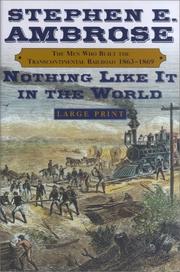
Stephen E. Ambrose · 2000

The investors, politicians and workers who built the transcontinental railroad.

Where it sits in the reference 2

Industries
Financial panics

Topics

Company HistoriesFinancial History