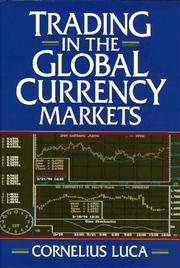
Trading in the Global Currency Markets
A guide to the currency market: spot, forwards, options and how they are traded.
Mechanics of spot, forward and options FX trading.
Summary
Cornelius Luca worked in foreign exchange and wrote this as a comprehensive guide to the currency market, covering its structure, its instruments and the methods traders use.
The structural material explains what makes foreign exchange different from other markets: it is decentralised with no exchange, it trades continuously across time zones, it is dominated by interbank dealing rather than by exchange-based order matching, and its largest participants are banks and central banks rather than investors. He covers the instruments including spot, forwards, swaps, futures and options, and the mechanics of quoting, settlement and the credit exposure that arises between trade and settlement.
The analytical material covers the theories relating exchange rates to fundamentals, including purchasing power parity, interest rate parity and balance of payments approaches, and Luca is honest that none of them forecasts well at short horizons. He covers the economic data releases that move currencies, central bank intervention and its effectiveness, and technical analysis methods as applied to currency charts. Later material covers risk management for a currency book. The book has been revised across editions. It dates in its market description, since electronic trading platforms have transformed execution since the 1990s, and readers should use a current edition. The explanation of market structure and of why exchange rate models forecast poorly is durable.
Key takeaways 7
- Foreign exchange is decentralised with no exchange, and dealing occurs between banks rather than through order matching.
- The market's largest participants are banks and central banks rather than investors, which makes flow analysis different from other markets.
- Interest rate parity determines forward rates arithmetically, so a forward price contains no forecast information.
- Purchasing power parity and balance of payments models forecast exchange rates poorly at horizons shorter than several years.
- Settlement risk between trade and delivery was the market's central credit exposure before continuous linked settlement addressed it.
- Central bank intervention affects rates durably only when it signals a change in monetary policy rather than acting alone.
- The book's market description dates from before electronic platforms transformed execution, so a current edition is necessary.
Who should read it
Practitioners entering currency markets who need the structure, instruments and an honest account of why exchange rate models forecast badly.
Similar books 6
Chosen by shared topics, the entries that hold them, and the people who recommended both.
Reflexivity, where beliefs move prices and prices move facts, tested in a live diary.
Recommended by: Guy Spier, Li Lu, Paul Tudor Jones and 3 others

Why competitive devaluations resumed, and the monetary crisis they could bring.
A currency strategist tests common beliefs about the dollar against the evidence.
Financial crises follow a repeated sequence of boom, mania, panic and crash.
“Here’s how Kindleberger put it in the first edition of Manias, Panics, and Crashes: . . .” — Howard Marks
Source: On Bubble Watch
Recommended by: Howard Marks, Jason Zweig, Li Lu and 1 other
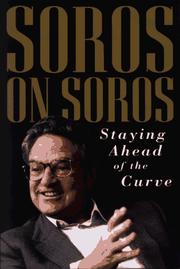
Long interviews on his life, his investing philosophy and his political views.
“George Soros, Soros on Soros (New York: John Wiley & Sons, 1995), 17” — Michael Mauboussin
Source: A Tail of Two Worlds: Fat Tails and Investing, page 4
Recommended by: Michael Mauboussin, Li Lu
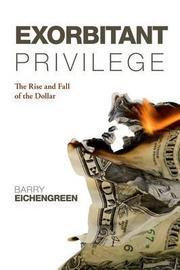
How the dollar became the world's currency, what it gives the US, what may follow.
Where it sits in the reference 1
Topics 2
As an Amazon Associate I earn from qualifying purchases.