
Genentech
Robert Swanson and Herbert Boyer founded Genentech in 1976 to turn recombinant DNA into products, and it delivered human insulin, licensed to Eli Lilly, then growth hormone and later Rituxan, Herceptin and Avastin. Roche took majority control in 1990 and bought the remaining shares for $46.8 billion in 2009. Readers get the template for biotech finance, in which a young company licenses its first product to a large partner to fund the second, and they get a working example of research autonomy inside a public company. Sally Smith Hughes wrote the scholarly founding history from oral interviews, and Barry Werth's account of Vertex documents the same discovery-and-funding model as it was lived a decade later.
| April Cryptocurrency Update | Van Tharp argues that the 67% Bitcoin crash is normal for its history of 70% to 93% drops, and that institutions are buying crypto while disparaging it. | Van Tharp Institute | Van K. Tharp | Q2 2018 |
 Van K. Tharpdiscussed it in 1 letter
 Sebastian Mallabynamed it in 1 interview“But it’s changing fast.” (27:45) “Genentech was the beginning of staged investments.” ⏰ Timestamps: (00:00) Speaker and Book Intro (02.25) Storytelling Methods and a Writer's Work Process (08:00) Development of the Methodology – From Nelson Mandela to Venture Capital (10:33) What is Venture Capital – From the Writer's Perspective (16:00) How Did Silicon Valley Evolve into the Center of the Innovation World?” — #92: Sebastian Mallaby - The Power Law - A Brief History of Venture Capital (Beginner's Mind, 2022)
 Anthony Philippakisnamed it in 1 interview“Genentech’s Aviv Regev on the Promise of Single Cell Genomics” (Theory and Practice, 2021)
| Going back to the foundation of Kleiner Perkins with Mamoon Hamid through clear busines model focus and culture | Mamoon Hamid | Venture Unlocked: The playbook for venture capital managers | 2023-11-01 | Follow me @samirkaji for my thoughts on the venture market, with a focus on the continued evolution of the VC landscape. We are excited to bring you our latest episode with Mamoon Hamid , Partner at Kleiner Perkins . As many know, Kleiner Perkins, founded over 50 years ago is one of the most storied franchises in the history of venture capital, having backed companies companies such as Genentech, Sun Microsystems, Amazon, Google, and Uber. After stints at USVP and Social Capital (which he co-founded), Mamoon joined Kleiner in 2017 as part of a generational succession process. As part of this, Mamoon has focused heavily on returning Kleiner to the roots of it’s history as a premier boutique venture capital fund focused on early-stage investing. Since then, they’ve backed companies such as Rippling and Figma. Mamoon and I spoke about how he and the team have executed the mission of bringing Kleiner to what they have coined as going back to the future. We covered a number of topics but dug deep into the importance of culture and focus. About Mamoon Hamid: Mamoon Hamid is a Partner at Kleiner Perkins. He has been an early investor in and served on the boards of some of the most innovative software companies of recent times including Slack, Figma, Box and Rippling. Prior to joining Kleiner Perkins, Mamoon was a co-founder of Social Capital. He started his venture career in 2005 at U.S. Venture Partners (USVP) where he eventually became Partner. | |
| #92: Sebastian Mallaby - The Power Law - A Brief History of Venture Capital | Sebastian Mallaby | Beginner's Mind | 2022-11-29 | 56 min | How did Venture Capital evolve? When did it start? Get the answers right here in the book The Power Law by Sebastian Mallaby. ⭐ In this episode, we talk about: • Storytelling Methods and a Writers Work Process • What is Venture Capital – From the Writers Perspective • How Did Silicon Valley Evolve into the Center of the Innovation World? • The 3 Most Crucial Moments in the Development of Venture Capital • The Future of the European Tech Eco-System • And much, much more ⭐ EPISODE Links: Today’s speaker is Sebastian Mallaby . Youtube 📚 Book mentions in the episode: The Power Law 📖 Memorable Quotes: (09:39) “In a Content Creators Economy where a lot of people spend a lot of time creating, it is worthwhile to spend 5 years writing a book” (12:46) “Do Venture Capitalists create innovation, or do they just show up for it?” (18:51) “Europe is fundamentally full of great engineers. It is a great market. Why wouldn’t it rival the United States if it got the right Venture Capital to take the risk.” (23:10) “The European culture is not as risk-friendly as the US. But it’s changing fast.” (27:45) “Genentech was the beginning of staged investments.” ⏰ Timestamps: (00:00) Speaker and Book Intro (02.25) Storytelling Methods and a Writer's Work Process (08:00) Development of the Methodology – From Nelson Mandela to Venture Capital (10:33) What is Venture Capital – From the Writer's Perspective (16:00) How Did Silicon Valley Evolve into the Center of the Innovation World? |
| Genentech’s Aviv Regev on the Promise of Single Cell Genomics | Anthony Philippakis | Theory and Practice | 2021-06-03 | It's rare to meet a true visionary, someone who sees where the world can go before anyone else sees it. And it's even rarer to meet someone who not only recognizes the opportunity, but also has the conviction and energy to make it a reality. For us, the person who most exemplifies these characteristics is Dr. Aviv Regev , who leads Genentech's Research and Early Development (gRED) team. Human genetics has had a transformative impact on drug development. Single cell genomics is at a similar place to where human genetics was ten years ago, and I can't imagine a better person than Aviv to lead us on this journey. Theory and Practice is a presentation of GV and Google AI . Hosted by Anthony Philippakis (Venture Partner at GV) and Alex Wiltschko (Staff Research Scientist with Google AI), Theory and Practice opens the doors to the cutting edge of biology and computer science through conversations with leaders in the field. |
 VGoing back to the foundation of Kleiner Perkins with Mamoon Hamid through clear busines model focus and cultureVenture Unlocked: The playbook for venture capital managers · 2023-11-01
 B#92: Sebastian Mallaby - The Power Law - A Brief History of Venture CapitalBeginner's Mind · 2022-11-29
 TGenentech’s Aviv Regev on the Promise of Single Cell GenomicsTheory and Practice · 2021-06-03
Start here
- Genentech: The Beginnings of BiotechSally Smith Hughes, 2011
- The Billion-Dollar MoleculeBarry Werth, 1994
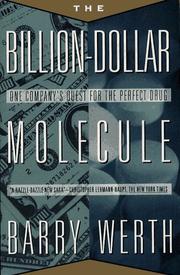
Inside Vertex's first years: how a new drug company tries to discover a drug.
Recommended by: Laura Deming
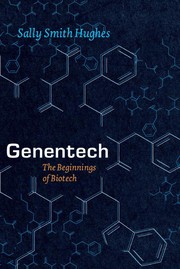
How Genentech turned genetic engineering into a company, from its founders' accounts.
Recommended by: Laura Deming, Patrick Collison