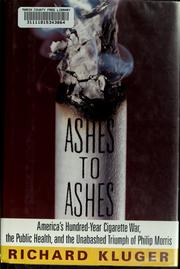
Ashes to Ashes
Pulitzer-winning history of the cigarette war; R.J. Reynolds is a principal actor.
Summary
Kluger wrote a very long history of the American cigarette industry, covering roughly a century from the rise of the mass-market cigarette to the litigation of the 1990s. It won the Pulitzer Prize for general non-fiction.
The corporate history traces the major companies: the American Tobacco Company under James Buchanan Duke and its dissolution under antitrust, and then Philip Morris, R J Reynolds, Liggett, Lorillard, Brown and Williamson and British American Tobacco through the twentieth century. Kluger covers the marketing that built the category, including the campaigns that brought women into smoking, the filter introduction after the first health reports, and the development of light and low-tar products marketed as safer without evidence that they were.
The science and response sections cover the epidemiology of the 1950s, the industry's coordinated formation of a research committee designed to sustain the appearance of controversy, and the internal documents showing what companies knew about addiction and about the manipulation of nicotine delivery.
The legal history is the most detailed part. Kluger traces the litigation from the early individual cases that the industry won by arguing assumption of risk, through the second wave that also failed, to the third wave in the 1990s built on documents obtained through discovery and on state attorney general claims for healthcare costs, which changed the industry's position entirely.
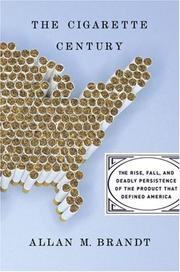
The book is exhaustively researched and correspondingly long. Kluger is a narrative historian rather than an analyst, and readers seeking a compact treatment should read Brandt's The Cigarette Century, also in this reference, which covers similar ground with more analytical framing and less detail. Kluger's book was published before the 1998 Master Settlement Agreement concluded.
Key takeaways 7
- The mass-market cigarette was created by manufacturing technology and by marketing rather than by any change in demand.
- Filter and low-tar products were introduced after health reports and marketed as safer without evidence supporting the claim.
- The industry formed a research committee in the 1950s designed to sustain scientific controversy rather than to resolve it.
- Internal documents showed the companies understood addiction and nicotine delivery decades before they acknowledged it publicly.
- Early litigation failed because juries accepted that smokers had assumed the risk voluntarily.
- Litigation succeeded only when document discovery produced the internal record and when states sued for healthcare costs rather than individuals for personal injury.
- Changing the plaintiff from an individual smoker to a state paying healthcare costs removed the assumption of risk defence.
Who should read it
Readers wanting the exhaustive history of the American tobacco industry and of the litigation that eventually changed it.
Where it sits in the reference 2
Similar books 6
Chosen by shared topics, the entries that hold them, and the people who recommended both.