Bear Trap: The Fall of Bear Stearns and the Panic of 2008
Insider account by a former Bear senior managing director.
Summary
The reference has not verified this book in detail; the summary states only what the title, author and subject establish.
Bamber, a former senior managing director at Bear Stearns, wrote this with Andrew Spencer as an insider account of the firm's collapse in March 2008.
The reference has not verified the book's detailed claims. The established facts are that Bear Stearns was the smallest of the major American investment banks, had the highest leverage, was heavily concentrated in mortgage securities and in the repurchase agreement funding market, and had two internal hedge funds holding subprime-related assets that collapsed in mid-2007 and were partially supported by the firm. Over four days in March 2008, counterparties and prime brokerage clients withdrew, repurchase agreement lenders refused to roll funding, and the firm's liquidity fell from around eighteen billion dollars to nothing. The Federal Reserve arranged a sale to JPMorgan Chase, initially at two dollars a share and revised to ten, with the Federal Reserve taking on a portfolio of the firm's assets.
Bamber's argument, as insiders at the firm generally argued, is that Bear Stearns was solvent and was destroyed by a loss of confidence that became self-fulfilling, that rumours circulated by market participants with short positions contributed, and that the firm was allowed to fail in a way that other institutions were not.
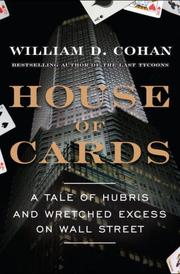
That framing is contested. The firm's leverage, its asset concentration and its dependence on overnight secured funding meant it could not survive any loss of confidence, which is a solvency question rather than only a liquidity one. Cohan's House of Cards is the more thorough account. Read this as a participant's defence.
Key takeaways 7
- Bear Stearns had the highest leverage of the major American investment banks and the greatest concentration in mortgage securities.
- Dependence on overnight repurchase agreement funding meant the firm needed to refinance a large balance sheet every day.
- The firm's liquidity fell from around eighteen billion dollars to nothing within four days once counterparties withdrew.
- Supporting its own failed internal hedge funds in 2007 signalled to the market that the firm stood behind exposures it had not disclosed.
- Prime brokerage clients withdrawing removed both funding and revenue simultaneously, which accelerated the collapse.
- The Federal Reserve took on a portfolio of the firm's assets to enable the sale, which was the first such intervention of the crisis.
- The insider claim that the firm was solvent and destroyed by rumour does not address whether its funding structure could have survived any loss of confidence.
Who should read it
Readers wanting the insider's defence of Bear Stearns, with Cohan's account for the fuller record.
Where it sits in the reference 2
Similar books 6
Chosen by shared topics, the entries that hold them, and the people who recommended both.