Benjamin Franklin: An American Life
Isaacson's Franklin: printer, investor and builder of durable institutions
Summary
Isaacson covers Franklin's full life: the Boston apprenticeship and flight to Philadelphia, the printing business and its franchise network, Poor Richard's Almanack, the retirement from business at forty-two to pursue science, the electricity experiments, the postal service, the colonial agency in London, the diplomacy in France that secured the alliance winning the Revolutionary War, and the Constitutional Convention.
The business material is unusually relevant for a founder. Franklin built a network of printing partnerships across the colonies, financing former apprentices in exchange for a share of profits, which was an early franchise structure. He retired from active management at forty-two while retaining the income, having deliberately built a business that ran without him. He created subscription libraries, a fire company, a hospital and a university through a repeatable method of forming associations rather than acting alone.
Isaacson emphasises Franklin's practical approach to virtue, including the thirteen virtues tracked on a chart, and his deliberate management of reputation, including cultivating the appearance of industry as well as its substance. His account of the Junto, a weekly self-improvement and civic discussion club, describes a mechanism many readers copy.
The treatment of Franklin's failings is present but light. He was largely absent from his family for decades, his relationship with his loyalist son William was destroyed, and he owned slaves before becoming an abolitionist late in life. Isaacson's argument that Franklin represents a distinctly American middle-class pragmatism is asserted more than demonstrated, and some historians consider it anachronistic. The book is long and comprehensive rather than analytical.
Key takeaways 8
- Franklin built his printing business as a network of financed partnerships with former apprentices, taking a share of profits rather than expanding under direct management.
- He retired from active business at forty-two having deliberately structured operations that produced income without his involvement.
- Civic institutions including libraries, fire companies and hospitals can be created by organising a small group of committed people rather than by petitioning authority.
- Franklin tracked thirteen virtues on a chart and treated character as a set of habits to be practised rather than as an innate quality.
- Managing the appearance of industry and reliability was a deliberate business practice that he describes without embarrassment.
- He proposed ideas anonymously or attributed them to others when that made adoption more likely, treating credit as a cost rather than a reward.
- His scientific work was pursued as a public good and he refused to patent his inventions, including the stove.
- The French alliance that decided the Revolutionary War was secured by personal diplomacy and cultivated social position rather than by formal negotiation.
Who should read it
Founders and civic-minded operators who want a model of building businesses and institutions that outlast personal involvement.
About Walter Isaacson
American biographer and professor of history at Tulane University; formerly editor of Time and chief executive of CNN and the Aspen Institute.
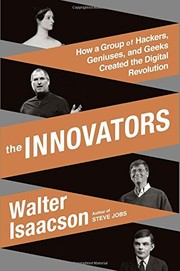
The biographies are built on long direct access - years of interviews with Jobs, then with Musk - and reconstruct how each subject decided, hired and treated the people around them. The Innovators does the same for computing, presenting it as a chain of collaborations rather than a sequence of lone inventions.
Where it sits in the reference 3
Who recommended it 10 · 3 direct
Similar books 6
Chosen by shared topics, the entries that hold them, and the people who recommended both.