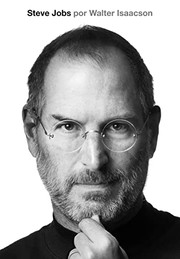
Steve Jobs
Authorised biography; the default account of Jobs and Apple.
Summary
Isaacson wrote the authorised biography with Jobs' cooperation and roughly forty interviews with him, plus more than a hundred interviews with family, colleagues, competitors and adversaries. Jobs asked for no editorial control and did not read the manuscript. The book covers the adoption, the Reed College period, the founding of Apple with Wozniak, the Macintosh, the ouster in 1985, NeXT, Pixar, the 1997 return and the product sequence from iMac through iPad, ending with Jobs' illness and death.
The book's most substantial business material concerns the 1997 turnaround. Isaacson documents the product line cull, the Microsoft investment and patent settlement, the reorganisation around a simple four-quadrant product grid, and the retail and supply chain decisions. He also documents the reality distortion field, Jobs' capacity to force people to do what they believed impossible and equally to deny facts he found inconvenient.
Isaacson does not soften the portrait. Jobs is shown denying paternity of his daughter, taking credit for others' work, parking in disabled spaces, humiliating employees, and refusing conventional cancer treatment for nine months after diagnosis in favour of diet and alternative therapies, a decision Isaacson reports Jobs later regretted.
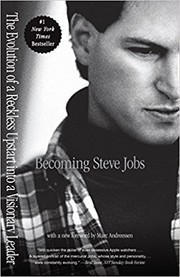
The book has been criticised, including by Apple insiders. Tim Cook and Jony Ive both said it failed to capture Jobs accurately. Becoming Steve Jobs by Schlender and Tetzeli argues that Isaacson overweighted the young, abusive Jobs and underweighted the growth of the later executive. The technical explanations are thin and the treatment of Apple's actual operations, particularly the supply chain that Cook built, is minimal. The cruelty is documented but rarely analysed as a management question.
Key takeaways 8
- Jobs built products by starting from the desired user experience and working backwards to the technology, reversing the usual engineering sequence.
- Controlling both hardware and software produced Apple's advantage, and Jobs treated the integrated system as the unit of product rather than any component.
- Focus meant saying no to almost everything, and the 1997 recovery began by cutting the product line to four machines.
- A leader can force people past what they believe possible by refusing to accept their constraints, and the same refusal produces denial of real facts.
- Jobs treated employees with documented cruelty, and the book presents this as inseparable from rather than incidental to his results.
- A company should be built to outlast its founder, which is why Jobs treated Apple itself as the product he was making.
- Design is how a thing works rather than how it looks, and Jobs enforced that definition against marketing and engineering alike.
- Jobs delayed surgery for a treatable pancreatic tumour for nine months in favour of alternative therapies, a decision the book treats as consistent with his general refusal to accept unwelcome facts.
Who should read it
Founders and operators who want a documented account of Apple's turnaround and product method, alongside an unsanitised record of the personal cost imposed on those around him.
About Walter Isaacson
American biographer and professor of history at Tulane University; formerly editor of Time and chief executive of CNN and the Aspen Institute.
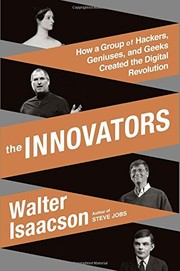
The biographies are built on long direct access - years of interviews with Jobs, then with Musk - and reconstruct how each subject decided, hired and treated the people around them. The Innovators does the same for computing, presenting it as a chain of collaborations rather than a sequence of lone inventions.
Where it sits in the reference 3
Who recommended it 19 · 2 direct
Similar books 6
Chosen by shared topics, the entries that hold them, and the people who recommended both.