Elon Musk
Authorised biography with substantial Starship and Starlink material.
Summary
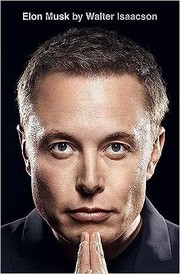
Isaacson shadowed Musk for two years and had access to him, his family and his companies, publishing in 2023. The book covers the South African childhood in more detail than previous accounts, the early companies, SpaceX, Tesla, the Boring Company, Neuralink, and the Twitter acquisition and its aftermath.
The operational material is the most substantive part. Isaacson documents the algorithm Musk applies to engineering and manufacturing problems: question every requirement and attach a name to it, delete any part or process you can, simplify or optimise only after deletion, accelerate cycle time, and automate last. He shows this applied at the Fremont and Austin factories and at SpaceX, including cases where the deletion step removed things that had to be restored.
The Twitter chapters cover the acquisition, the staff reductions, the product changes and the advertiser departures in detail, with Isaacson present for much of it. The psychological framing is the book's organising claim. Isaacson argues that Musk's childhood, including his father's treatment of him, produced a person who requires crisis and generates it when absent, and that the demon mode he describes is inseparable from the results.
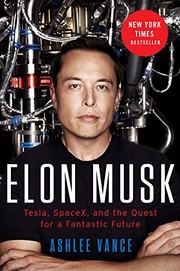
The access shapes the book substantially. Isaacson was criticised for reporting Musk's claims without verification, notably an account of Starlink over Crimea that he corrected after publication. He gives limited weight to the people harmed by the working conditions described, and the treatment of Musk's political turn is thin. Vance's earlier biography is better on the founding years.
Key takeaways 8
- Musk applies a five-step algorithm to engineering problems: question every requirement with a name attached, delete parts and processes, simplify, accelerate cycle time and automate last.
- Deleting first and restoring later is deliberate, on the argument that a process which never has to restore anything has not deleted enough.
- Requirements must be attributed to a named person rather than to a department, since an unattributed requirement cannot be challenged.
- Musk sets deliberately impossible deadlines and treats the resulting shortfall as acceptable, which produces speed and high turnover.
- Isaacson argues that Musk requires crisis and generates it when absent, which he presents as inseparable from the results.
- Vertical integration was chosen at both SpaceX and Tesla to control cost and schedule against the industry's standard supplier model.
- The Twitter acquisition applied the same deletion-first approach to a business whose value depended on relationships rather than on physics.
- Isaacson reported some of Musk's claims without independent verification, including an account he corrected after publication.
Who should read it
Operators interested in the engineering and manufacturing method, with the access-driven framing and the verification problems in view.
About Walter Isaacson
American biographer and professor of history at Tulane University; formerly editor of Time and chief executive of CNN and the Aspen Institute.
The biographies are built on long direct access - years of interviews with Jobs, then with Musk - and reconstruct how each subject decided, hired and treated the people around them. The Innovators does the same for computing, presenting it as a chain of collaborations rather than a sequence of lone inventions.
Where it sits in the reference 5
Who recommended it 2 · 1 direct
Similar books 6
Chosen by shared topics, the entries that hold them, and the people who recommended both.