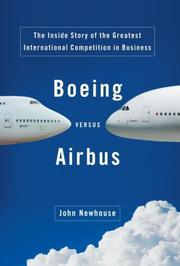
Boeing versus Airbus
The duopoly rivalry and the 787 and A380 bets.
Summary
Newhouse, who had written The Sporty Game about the commercial aircraft industry two decades earlier, returned to it to cover the competition between Boeing and Airbus through the early 2000s.
The industry analysis is what makes the book useful. Commercial aircraft development requires investment that can exceed a manufacturer's market value, with a payback period measured in decades, against demand that is cyclical and driven by airline profitability. Each programme is effectively a bet on the company. The duopoly structure follows from this: no third entrant can fund the development, and the two incumbents compete on programme decisions made years before the market that will judge them exists.
The strategic divergence is the narrative. Boeing, under management that had moved from Seattle to Chicago and that emphasised shareholder returns after the McDonnell Douglas merger, declined to build a new large aircraft and instead pursued the 787, betting on point-to-point routes served by efficient mid-size long-range aircraft. Airbus bet on the A380, a very large aircraft assuming continued growth in hub-to-hub traffic. Newhouse argues Boeing's read of the market was correct and Airbus's was not.
He also covers the subsidy dispute, with Airbus receiving launch aid from European governments and Boeing benefiting from defence contracts and tax arrangements, and the trade cases each side brought.
Newhouse is critical of Boeing's cultural change after the McDonnell Douglas merger, arguing that financial management displaced engineering authority. That argument was substantially vindicated by the 787's outsourcing problems and later by the 737 MAX. The book predates both. Robison's Flying Blind, also in this reference, covers what followed.
Key takeaways 7
- A commercial aircraft programme requires investment comparable to the manufacturer's market value with payback measured in decades.
- The duopoly structure follows from development costs that no third entrant can fund rather than from any regulatory barrier.
- Boeing bet on point-to-point routes served by efficient mid-size long-range aircraft while Airbus bet on very large hub-to-hub aircraft.
- Boeing's read of the route structure was correct and the A380 did not find the market Airbus assumed.
- The McDonnell Douglas merger shifted Boeing's culture from engineering authority toward financial management.
- Airbus received launch aid from European governments while Boeing benefited from defence contracts and tax arrangements, and both disputed the other's support.
- Programme decisions are made years before the market that will judge them exists, which makes them bets on a forecast rather than responses to demand.
Who should read it
Investors and operators in aerospace and other long-cycle capital goods industries who need the economics of programme-level bets and duopoly competition.
Where it sits in the reference 2
Similar books 6
Chosen by shared topics, the entries that hold them, and the people who recommended both.