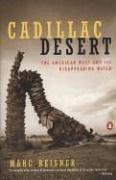
Cadillac Desert
The canonical account of western water politics and who ended up owning it.
Summary
Reisner wrote a history of water development in the American West, covering the dam-building era from the early twentieth century through the 1980s.
The institutional argument is the core. Two federal agencies, the Bureau of Reclamation and the Army Corps of Engineers, competed for projects across the West. Reisner argues that this competition, combined with congressional politics in which each member wanted projects in their district, produced a system that built dams and diversions regardless of whether they made economic sense. He documents the cost-benefit analyses, which were constructed to produce favourable ratios by counting speculative benefits and by using discount rates and allocation methods chosen to reach the required answer, and shows that many projects delivered water at a small fraction of its cost, with the difference paid by taxpayers.
The substantive cases include the Central Valley Project and the California State Water Project, the Colorado River allocation under a compact based on flow measurements from an unusually wet period, the Los Angeles acquisition of Owens Valley water, the Teton Dam failure, and the Garrison Diversion.
The environmental and physical argument is that the West's water is finite and that the development assumed otherwise. He documents groundwater depletion in the Ogallala aquifer at rates far exceeding recharge, salinisation of irrigated land, and the sediment accumulation that will eventually fill the reservoirs.
Reisner writes with a clear position and the book is polemical. Some of his cost figures and his characterisation of specific projects have been disputed by the agencies. The central factual claims about Colorado River over-allocation, about groundwater depletion and about the subsidy structure of irrigation water have been amply confirmed by subsequent decades, including the current Colorado River shortage.
Key takeaways 7
- Competition between two federal agencies for projects drove dam construction independent of whether the projects made economic sense.
- Cost-benefit analyses were constructed to reach favourable ratios by counting speculative benefits and choosing discount methods accordingly.
- Irrigation water was delivered to farmers at a small fraction of its cost, with the difference paid by taxpayers.
- The Colorado River was allocated among states on flow measurements taken during an unusually wet period, so the compact promises more water than exists.
- Ogallala aquifer groundwater is being extracted at rates far exceeding recharge, which makes the agriculture depending on it temporary.
- Irrigation without adequate drainage salinises soil, which eventually removes land from production.
- Reservoirs accumulate sediment continuously, so every dam has a finite operating life that the projects' economics did not account for.
Who should read it
Investors and operators in agriculture, water and infrastructure who need the institutional and physical constraints behind Western water supply.
Where it sits in the reference 2
Similar books 6
Chosen by shared topics, the entries that hold them, and the people who recommended both.