Everyone Else Must Fail: The Unvarnished Truth About Oracle and Larry Ellison
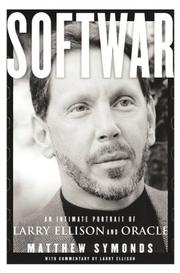
Hostile counterweight to Symonds's authorised Softwar, published the same year.
Summary
Southwick, a technology journalist, wrote a critical account of Oracle and Larry Ellison, published in 2003 without the company's cooperation.
The business content covers Oracle's rise: the founding after Ellison read the IBM paper describing relational databases, the decision to build a commercial product on that basis before IBM did, the aggressive sales culture, the 1990 crisis when revenue recognition practices were corrected and the company nearly failed, the recovery, and the move into applications software competing with SAP.
The argument concerns the culture. Southwick documents a sales organisation compensated and managed to close deals at any cost, including selling products before they worked and recognising revenue before it was earned, which is what produced the 1990 restatement. She documents extremely high executive turnover, with a long sequence of presidents and senior executives who departed after conflict with Ellison, and argues that the company was structurally unable to develop a successor because Ellison would not tolerate anyone who might become one. She covers the competitive practices, the litigation, the public attacks on competitors and the corporate espionage episode in which investigators hired on Oracle's behalf sought Microsoft-related documents from waste.
The title states her thesis: that Ellison's motivation was defeating competitors rather than building anything, and that this produced both the aggression that made the company successful and the internal damage that recurred.
The book is hostile and one-sided, and Oracle disputed it. Its predictions about the company's prospects were wrong, since Oracle grew substantially afterward through the PeopleSoft, Siebel and Sun acquisitions and remained one of the largest software companies. The account of the sales culture and the executive turnover is corroborated by other sources.
Key takeaways 7
- Oracle built a commercial relational database on the basis of a published IBM paper before IBM commercialised the idea itself.
- A sales organisation compensated purely on closing produced deals for products that did not yet work.
- Revenue recognised before it was earned produced the 1990 restatement that nearly destroyed the company.
- Extremely high executive turnover followed from a founder who would not tolerate anyone who might succeed him.
- Competitive aggression directed at named rivals was a management method rather than only a public posture.
- The company's culture produced both its commercial success and the internal instability that recurred for decades.
- The book's predictions about the company's prospects were wrong, since Oracle grew substantially in the following two decades.
Who should read it
Readers interested in a critical account of Oracle's sales culture and succession problems, treating the predictions as having failed.
Where it sits in the reference 2
Similar books 6
Chosen by shared topics, the entries that hold them, and the people who recommended both.